Flowers in a Basket and a Vase by Brueghel the Elder, Jan
View the artwork: Flowers in a Basket and a Vase →
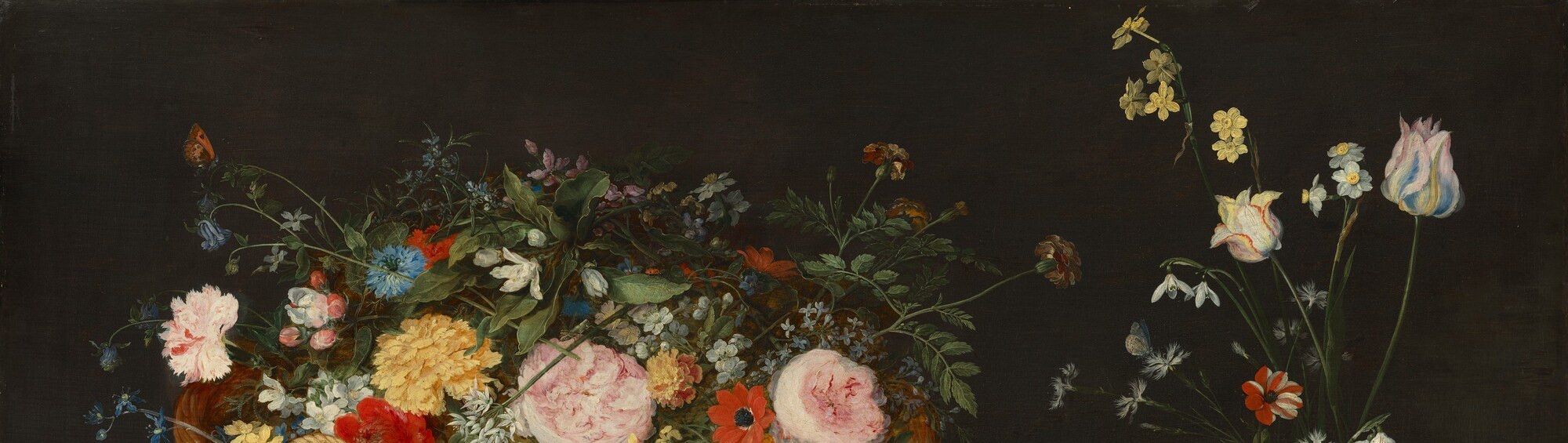
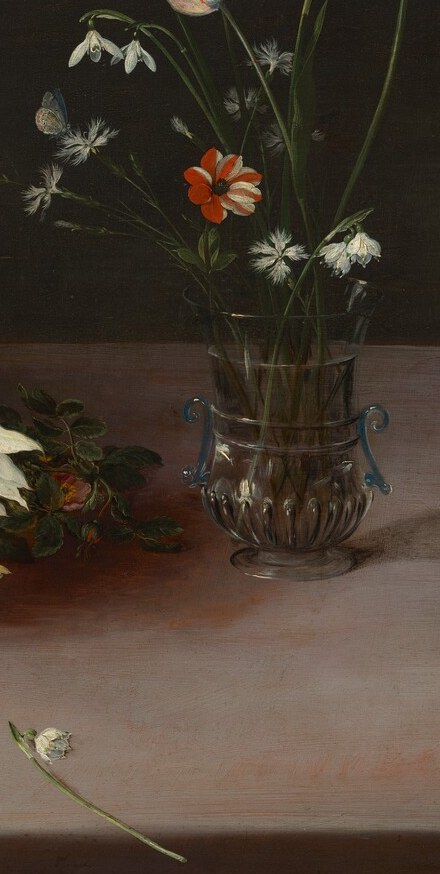
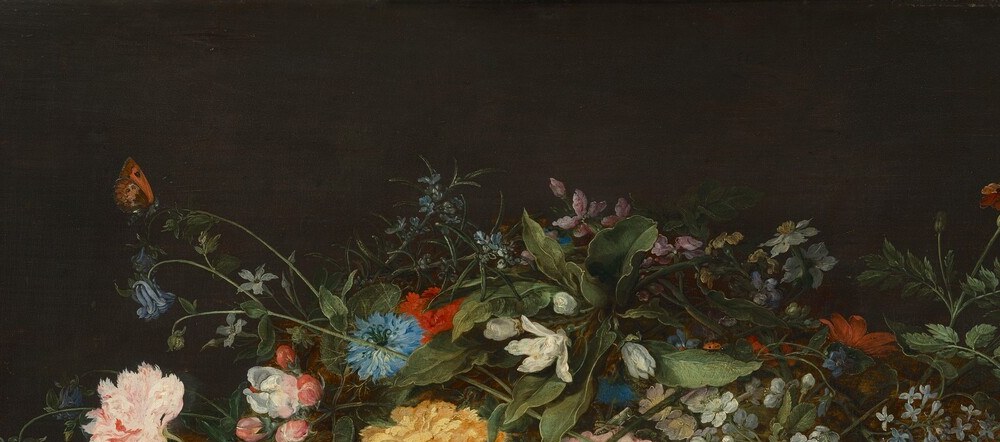
Jan Brueghel the Elder painted Flowers in a Basket and a Vase in 1615, and the whole composition is a sermon on time. The painting, now at the National Gallery of Art in Washington, arranges flowers that bloom in different seasons into one impossible bouquet. Brueghel meant for you to notice: this abundance never existed in nature, and it never will again.
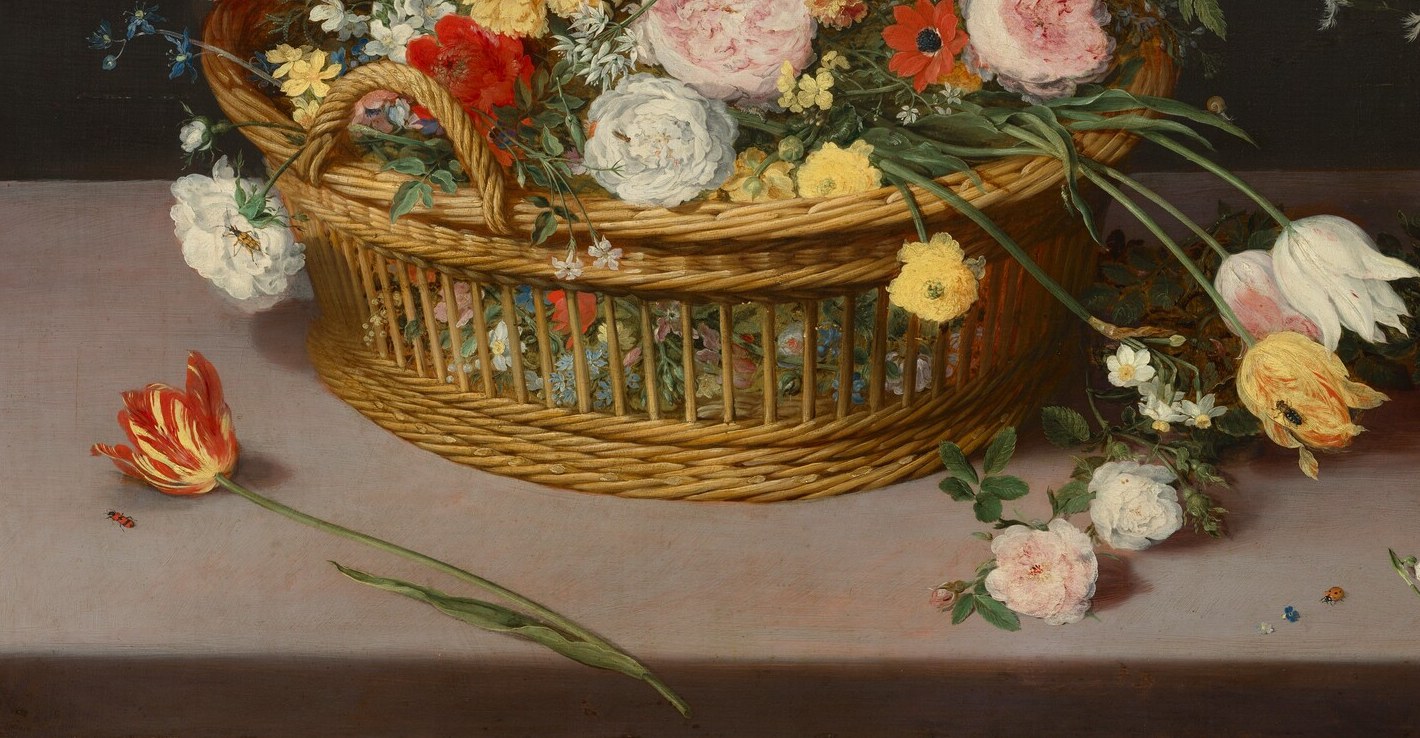
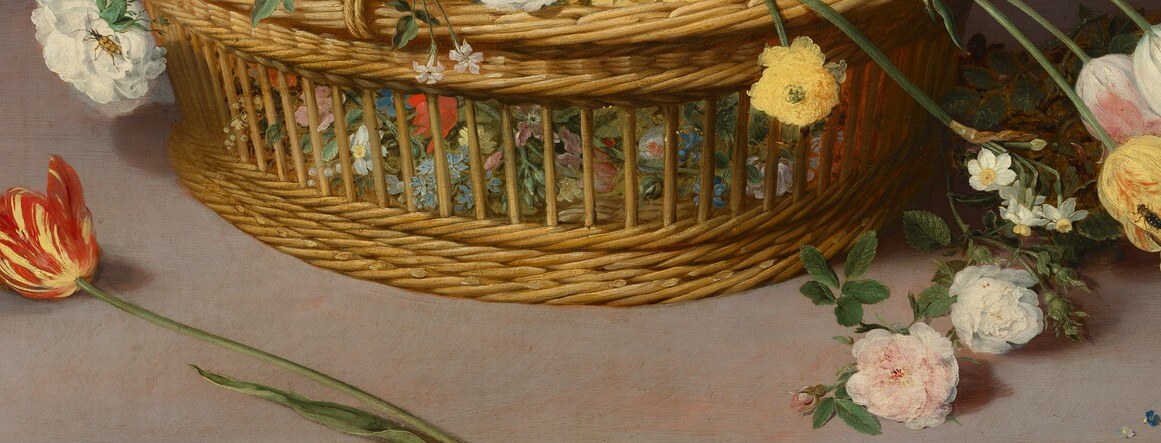
Find the white rose at the heart of the basket. It is fully blown, open to the point of collapse. A petal seems ready to fall. That is the vanitas clock of the still-life tradition: the moment just before the bloom turns. Then let your eye drop to the lower left ledge, where a cut red tulip lies discarded, separated from its vase and already beginning to wither.
Brueghel was a pioneer of independent flower painting in Flanders, traveling to study rare specimens and working from life when he could. He signed and dated this panel in the lower right corner, tucked into the shadow where most viewers never look. The painting passed from a Belgian general through London dealer Edward Speelman to Paul Mellon in 1968. Mrs. Paul Mellon gave it to the National Gallery in 1992.
The bouquet is theological too: gathering such rare and varied blooms was seen as a celebration of the fullness of God's creation. But Brueghel never let you forget what a cut flower is. Beauty, briefly held. What do you notice first when you look at the center rose?
#arthistory #stilllife #janbrueghel
Details
Transcript
Spring, summer, and autumn in one arrangement. In 1615, no garden could produce all these flowers at once. The painter built this from sketches made across an entire year. Now look at the white rose at the very center. Fully open. A petal about to drop. Peak beauty, hours from collapse. And below it, on the ledge, a tulip already cut and wilting.