Landscape by Ruisdael, Jacob van

Jacob van Ruisdael's "Landscape" (c. 1670) spent much of the twentieth century missing. The canvas hangs today in the Museum of Fine Arts, Boston, but for roughly forty years after World War II, its whereabouts were a mystery.

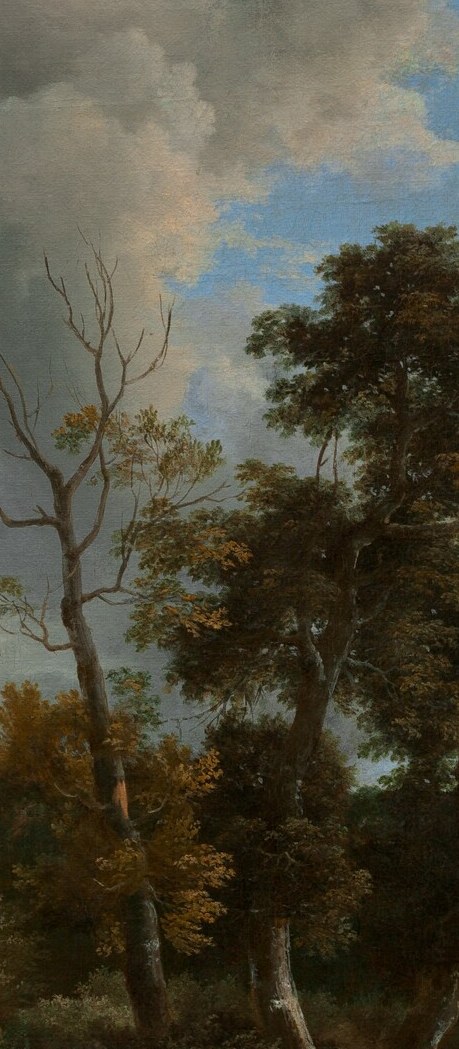
Look at the blasted, leafless tree standing beside the massive living oak. Ruisdael placed this skeletal trunk in scene after scene as a memento mori, a reminder of mortality woven into a flourishing world. The tiny figures crossing the bridge beneath that turbulent sky are walking through a place that is beautiful and transient at once.

The painting was looted from a French chateau by a Nazi officer in 1944. It resurfaced quietly in the Netherlands, where it sat for eight years rolled up in a bank vault, unclaimed. Its story finally entered the light in 1984 when it was legally acquired and brought to Boston.

A landscape about passage, hidden away for decades. Does knowing a painting was stolen change how you see it?

#arthistory #ruisdael #dutchgoldenage

Details
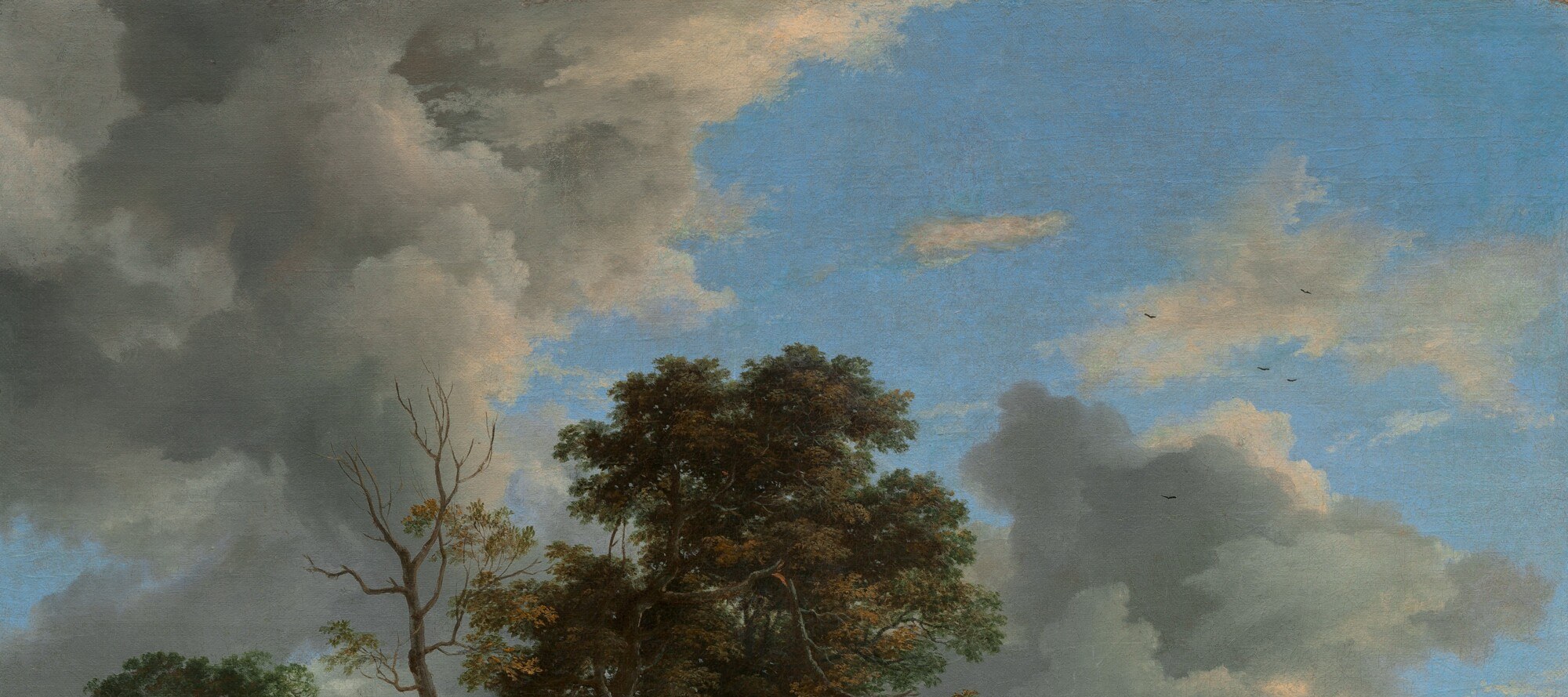
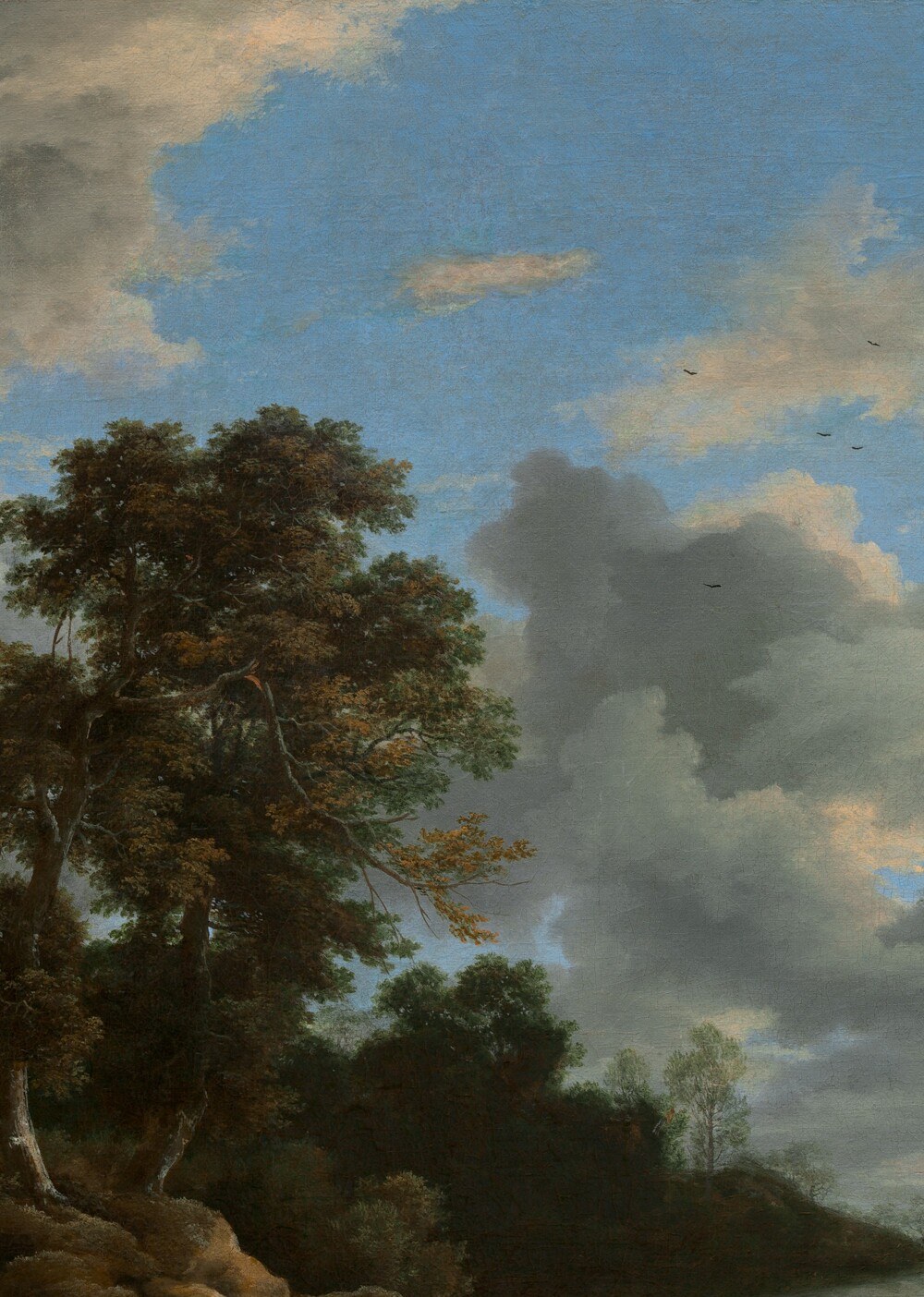
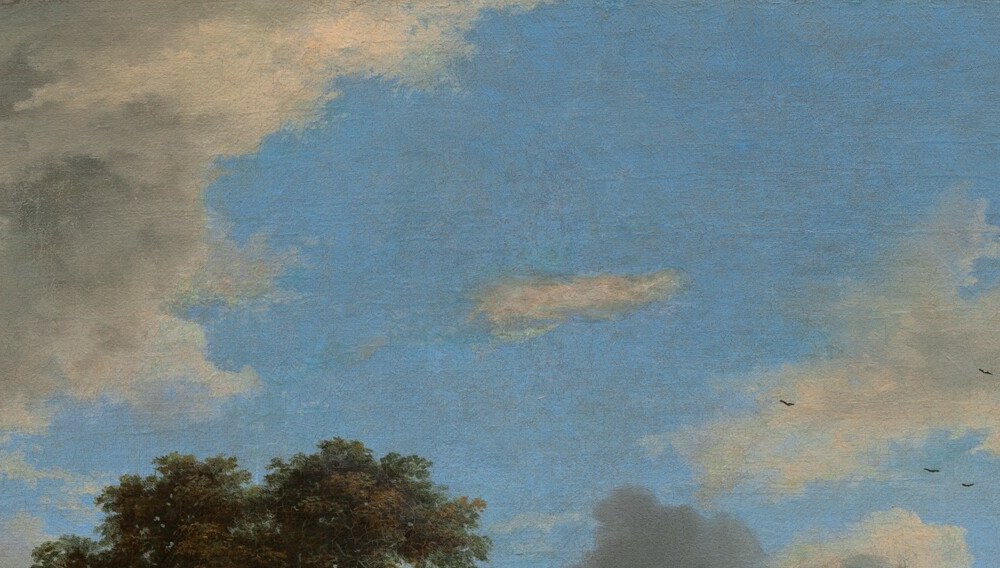
Ruisdael's signature sky , more than half the canvas; the turbulent, layered clouds with a bright sunlit break demonstrate his ability to make weather a protagonist, not just a backdrop.
The compositional anchor; densely rendered foliage shows Ruisdael's technical command of leaf-mass differentiation and the shifting green-to-dark tonal range within a single tree crown.
Classic Ruisdael memento mori symbol , the leafless, shattered trunk placed beside living oaks is a deliberate vanitas contrast, signaling transience amid flourishing nature.
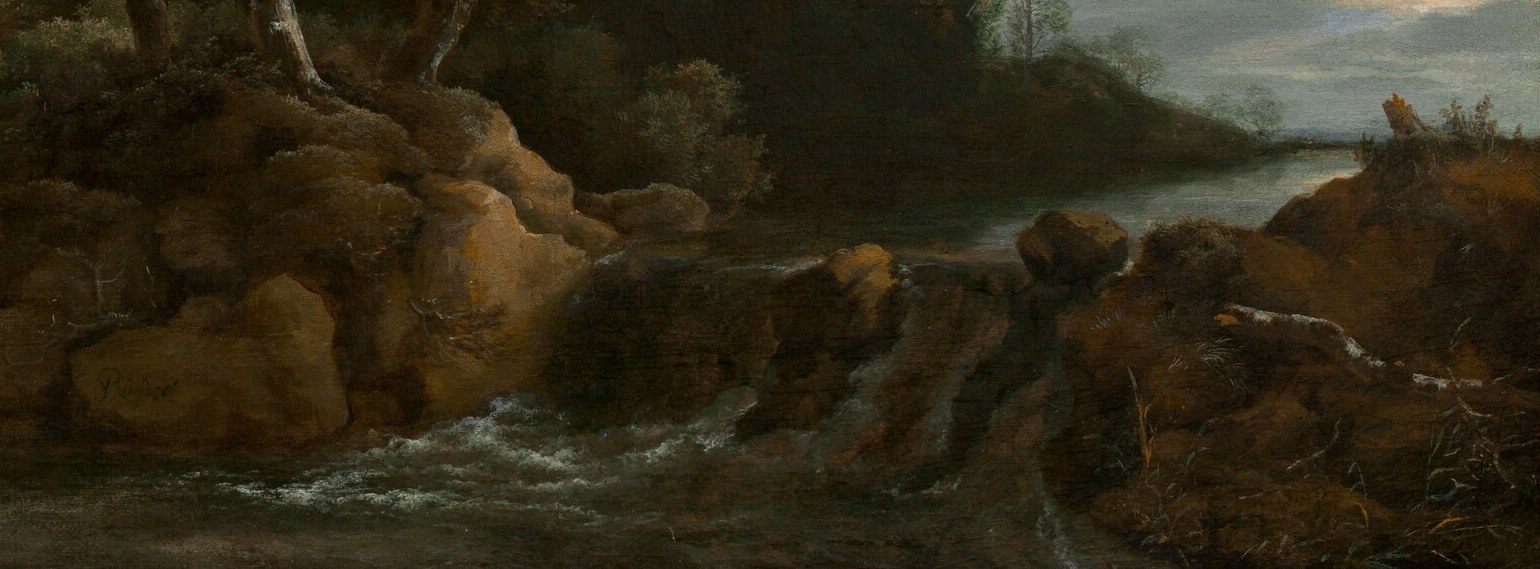
The mirror surface picks up cloud and tree tones , shooting here reveals Ruisdael's subtle wet-on-wet blending and how still water unifies sky and earth in Dutch landscape convention.
The main light source in the scene; its warm golden backlight silhouettes the treetops and controls the entire tonal drama of the painting.
Transcript

For forty years, no one knew where this painting was. It vanished from a French chateau in 1944. A Nazi officer took it. Then vanished too. For eight years it sat inside a Dutch bank vault. Rolled tight. The owner never claimed it. That dead tree against the sky was Ruisdael's signature. A memento mori. Even here, death stands beside life. The painting finally surfaced in 1984 and went to Boston.