The Adoration of the Shepherds by Ortolano
View the artwork: The Adoration of the Shepherds →
This is “The Adoration of the Shepherds,” painted around 1519 by Ortolano, a Renaissance artist of the Ferrara School. It hangs in the Galleria Doria Pamphilj in Rome. The scene is the Nativity: the Virgin Mary and Saint Joseph receive shepherds who have come to worship the newborn Christ. But the painting’s most telling detail is one almost no one notices.
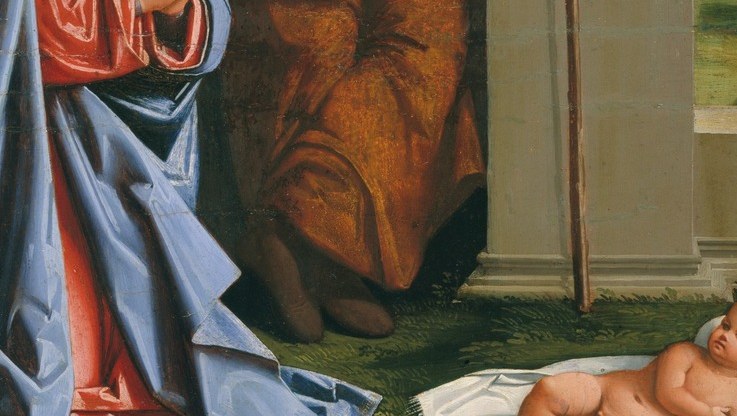
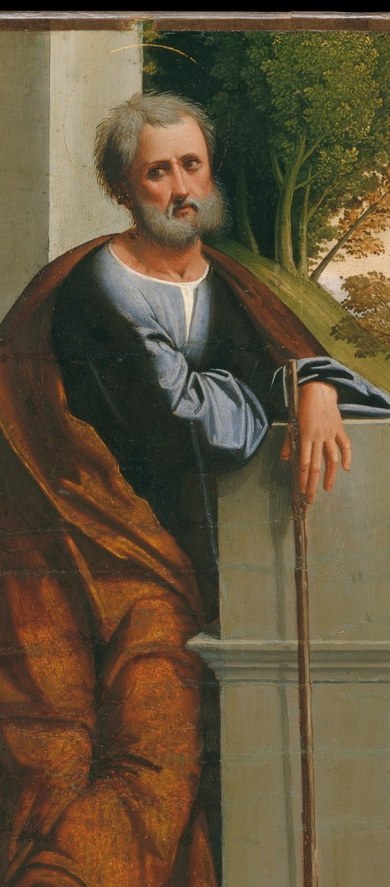
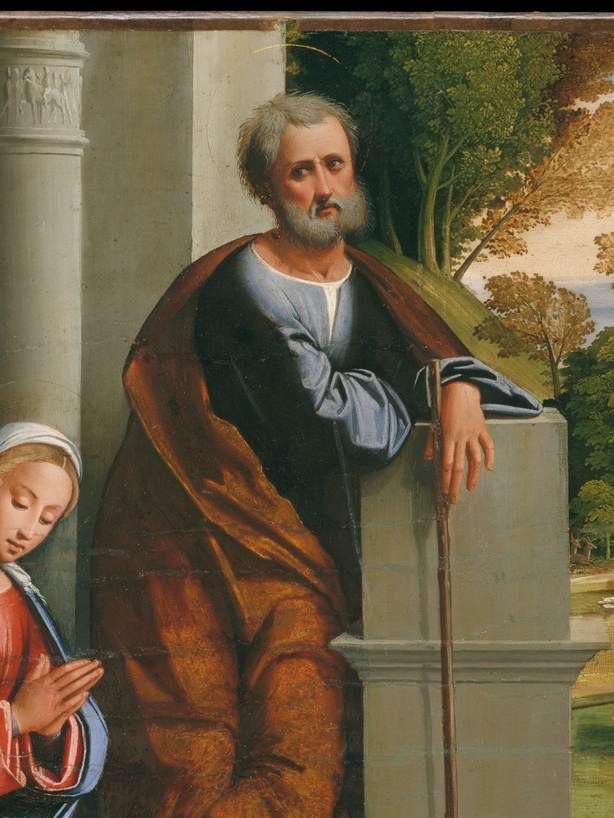
Look at the foreground first. Mary’s hands are pressed in prayer, her blue mantle pooling dramatically to the left. The Christ Child lies on a white cloth that doubles as a spotlight and a quiet foreshadowing of a burial shroud. Two shepherds mirror Mary’s gesture, their clasped hands linking ordinary people to the sacred. Joseph stands partially hidden behind a column, a visual convention marking his secondary role.
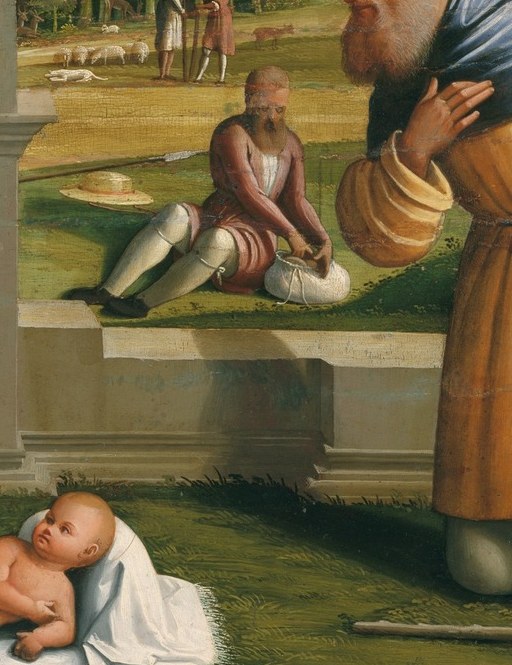
Now find the distant hills beyond the column. A tiny figure is out there, tending livestock with his back to the holy family. While the shepherds in the foreground kneel in recognition, this man goes about his work, completely unaware. Ortolano painted the Incarnation as a world-changing event that, for many, was just another day. The miracle has happened, and life continues unchanged just a few fields away.
That small, oblivious shepherd is the painting’s sharpest theological point. Revelation is not automatic; it depends on where you are standing and whether you turn around. What do you think Ortolano wanted us to feel about the figure who missed it?
#arthistory #renaissance #ortolano
Details
Transcript
A holy night. Shepherds arrive, hands clasped in wonder. The Virgin kneels. Joseph watches. The scene feels complete. But Ortolano hid a sharper truth in the landscape. Look past the column, into the distant green hills. A lone shepherd. Tending animals. His back turned. He has no idea the divine has entered the world behind him.