The Adoration of the Shepherds by Girolamo da Carpi
View the artwork: The Adoration of the Shepherds →
The Adoration of the Shepherds by Girolamo da Carpi, painted around 1537, is a masterclass in theological coding, a painting designed to be read, not just seen. Every object in the darkness carries a specific meaning that a 16th-century viewer would have understood immediately, from the color of a robe to animals half-hidden in the shadows.
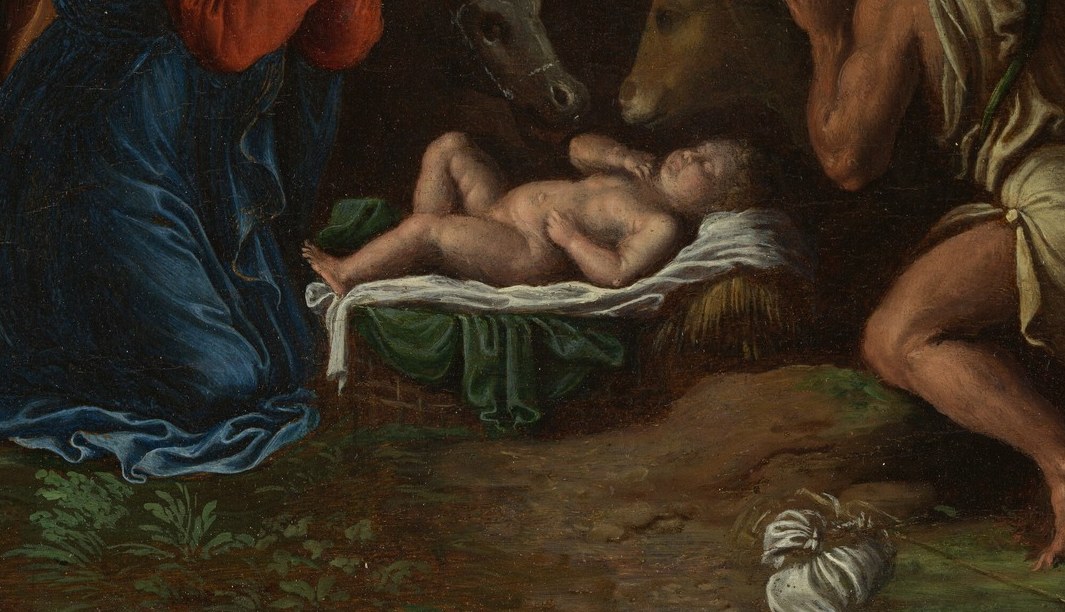
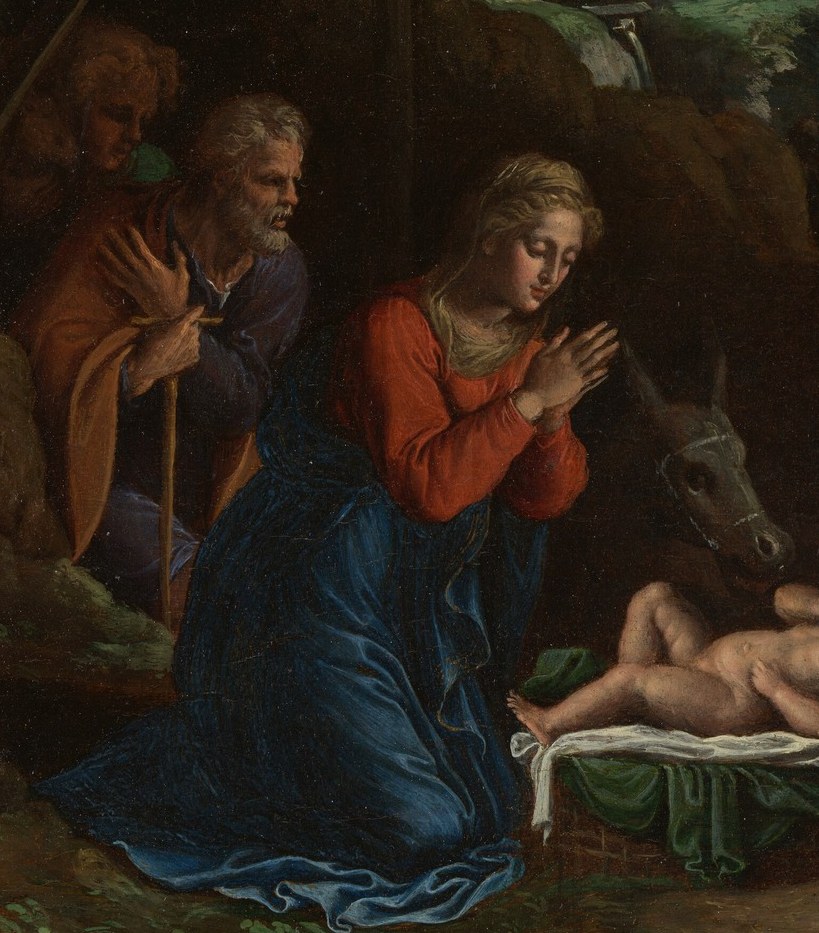
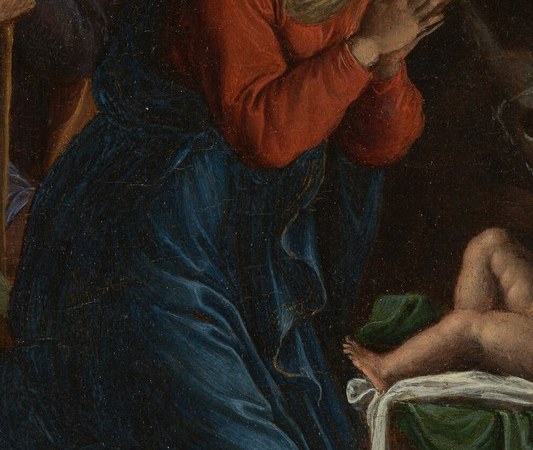
Look first at Mary's clothing, red dress, blue mantle. These aren't arbitrary choices: red signified her humanity, and blue her divine role as the mother of God. Now find the donkey and ox barely visible in the cave's darkness behind her. Their inclusion fulfills the opening chapter of Isaiah: 'The ox knows its owner, and the ass its master's crib.' The animals serve as witnesses, recognizing what the world has not yet understood.
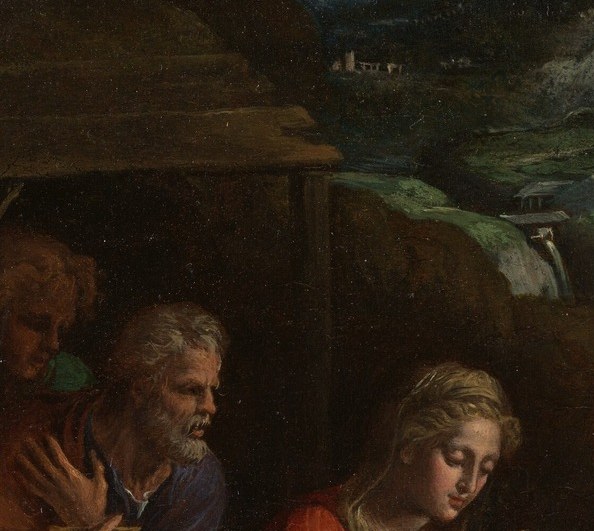
This scene takes place in a cave rather than a wooden stable, following an apocryphal tradition distinct from Luke's Gospel. Da Carpi, working in the Bolognese School after training in Ferrara, used dramatic chiaroscuro, the contrast of deep shadow and concentrated light, borrowed from Correggio's experiments. The entire composition funnels your eye toward the Christ Child, where divine light seems to originate from the infant himself, not an external source.
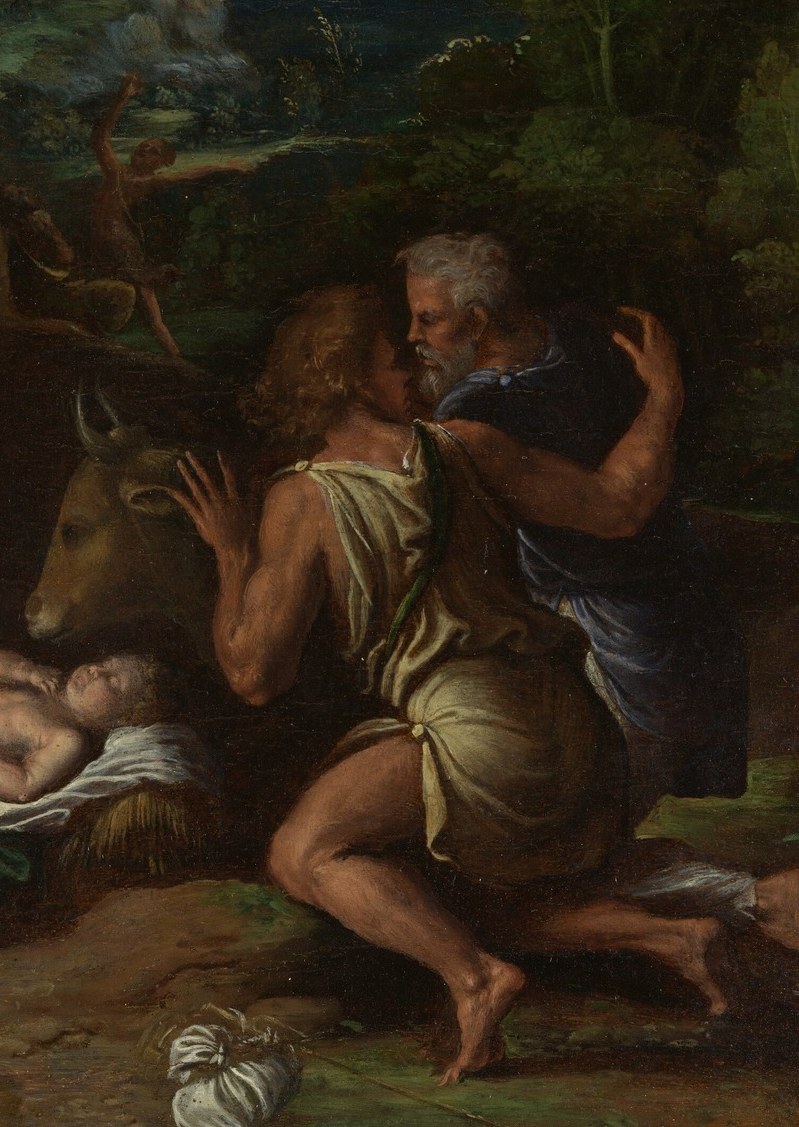
The painter has given you a visual catechism. The shepherd's weathered face, the clasped hands of Mary, the star above, none of it is decoration. It's a message. What else do you see hiding in the shadows?
#arthistory #renaissanceart #nativity
Details
Transcript
Not a stable. A cave outside Bethlehem. Tradition said Christ was born in a rocky grotto. Her red dress: humanity. Her blue mantle: divinity. The ox and the ass, nearly lost in the dark. Their presence fulfills a prophecy from Isaiah. All light leads to a single point. The code adds up: heaven has entered the world.