Antwerp Cathedral by Neeffs the Elder, Peeter
View the artwork: Antwerp Cathedral →
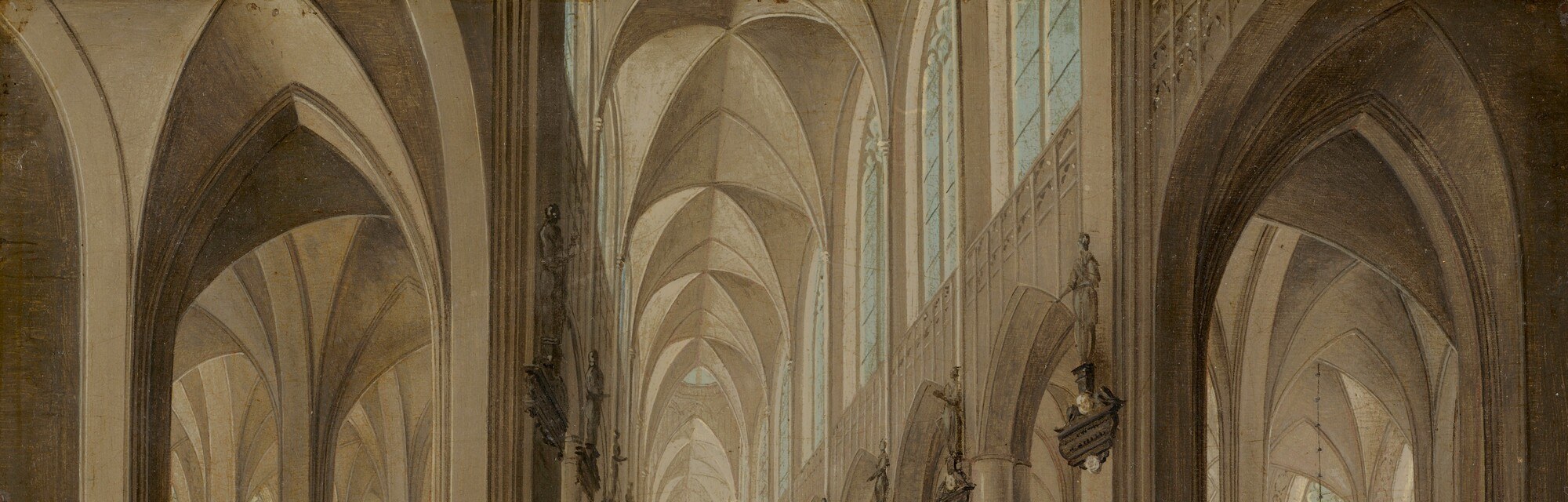
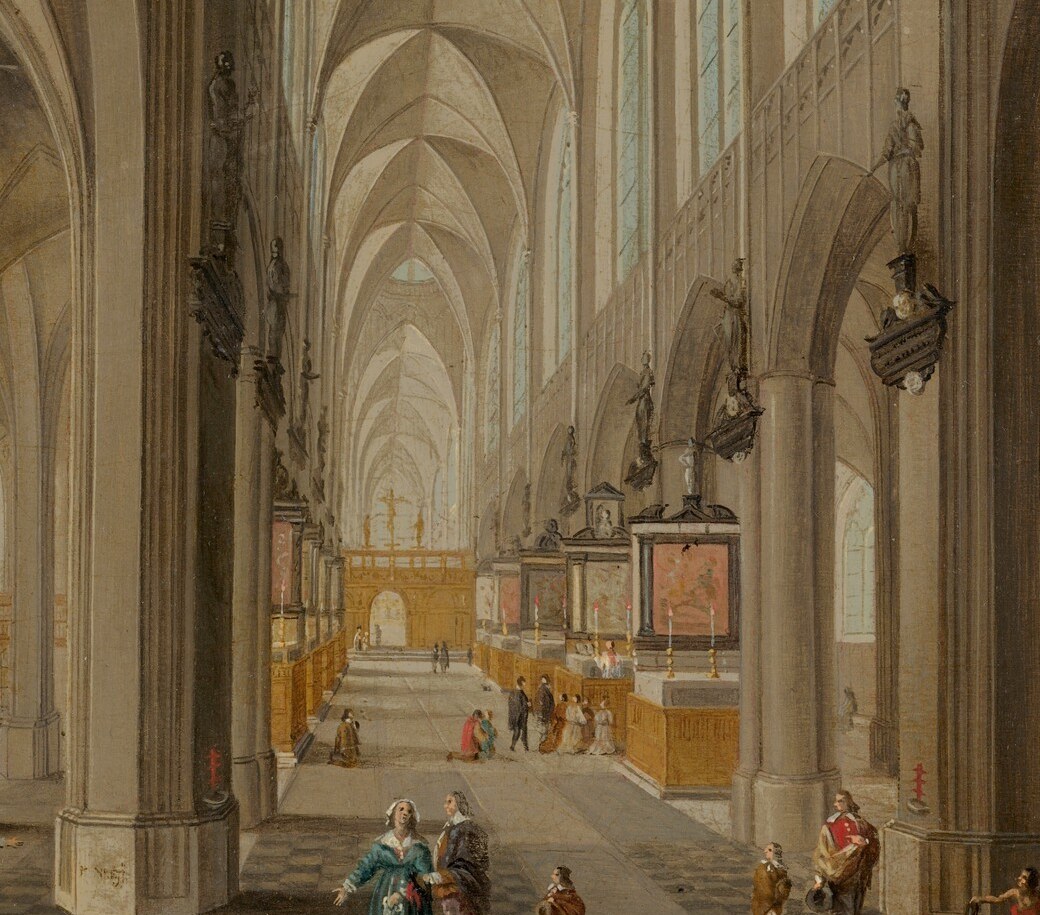
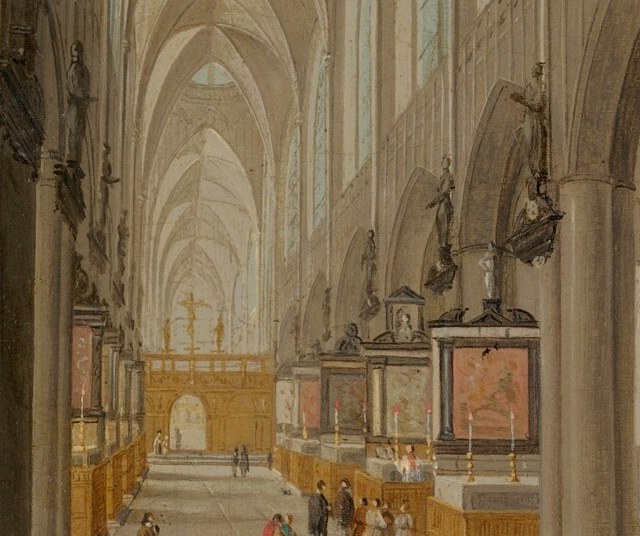
This is 'Antwerp Cathedral' by Peeter Neeffs the Elder, painted around 1650. It lives in a museum collection now, but it was made to be held in the hand, it is oil on copper, small and jewel-like, a private window into the largest Gothic church in the Low Countries.
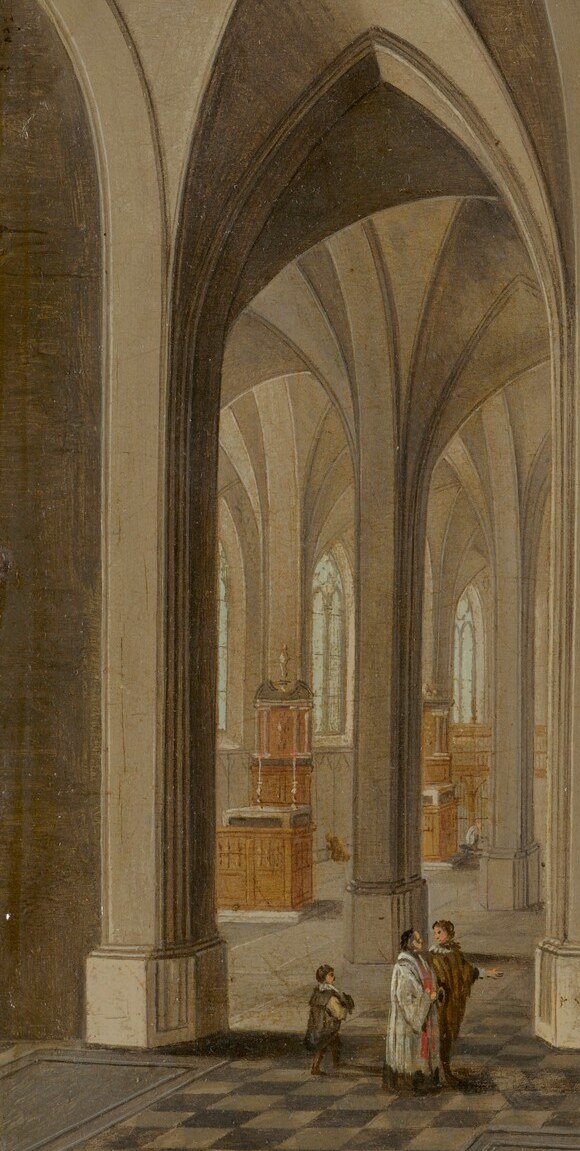
Look first at the architecture. Neeffs was a specialist; he built these interiors with surveyor-like precision. The ribbed vaults, the arcade columns, the checkerboard floor, every line recedes to a single glowing point at the distant altar. Painting on copper let him lay in each rib with a sharpness canvas could not match, and the thin oil glazes give the stone walls their warm, breathing luminosity.
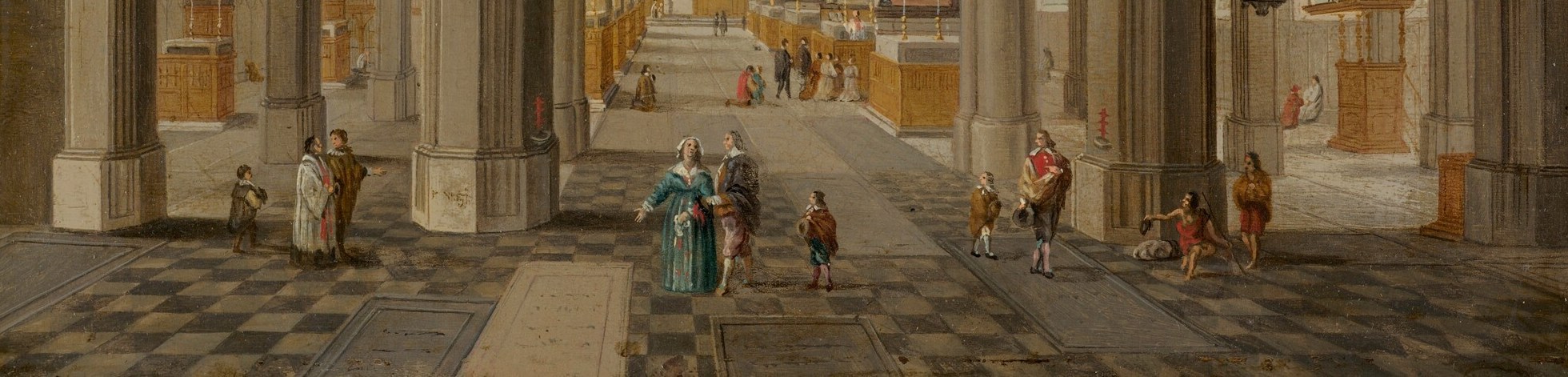
Then look down. Standing on that vast marble floor, dwarfed by the columns, is a family. Two adults in period dress, and a little girl. She is the reason the painting works. Without her, it is a beautiful diagram of a church. With her, it is a lived moment, a child waiting patiently while the grown-ups talk, sunlight falling across the tiles, a Monday morning four centuries ago.
Neeffs the Elder ran a workshop in Antwerp and repeated this composition many times. But in this version, on copper, the light holds a particular stillness. What do you imagine the little girl is thinking?
#arthistory #flemishart #peeterneeffs
Details
Transcript
A cathedral built to overwhelm you. Stone ribs pull your eye toward heaven. Then the floor pulls you back down to earth. And standing on it: a family of three. A little girl, waiting while the adults talk. The painter made her small on purpose. Without her, this is just an architectural study. With her, it is a Monday morning.