Self-Portrait as a Lute Player by Molenaer, Jan Miense
View the artwork: Self-Portrait as a Lute Player →
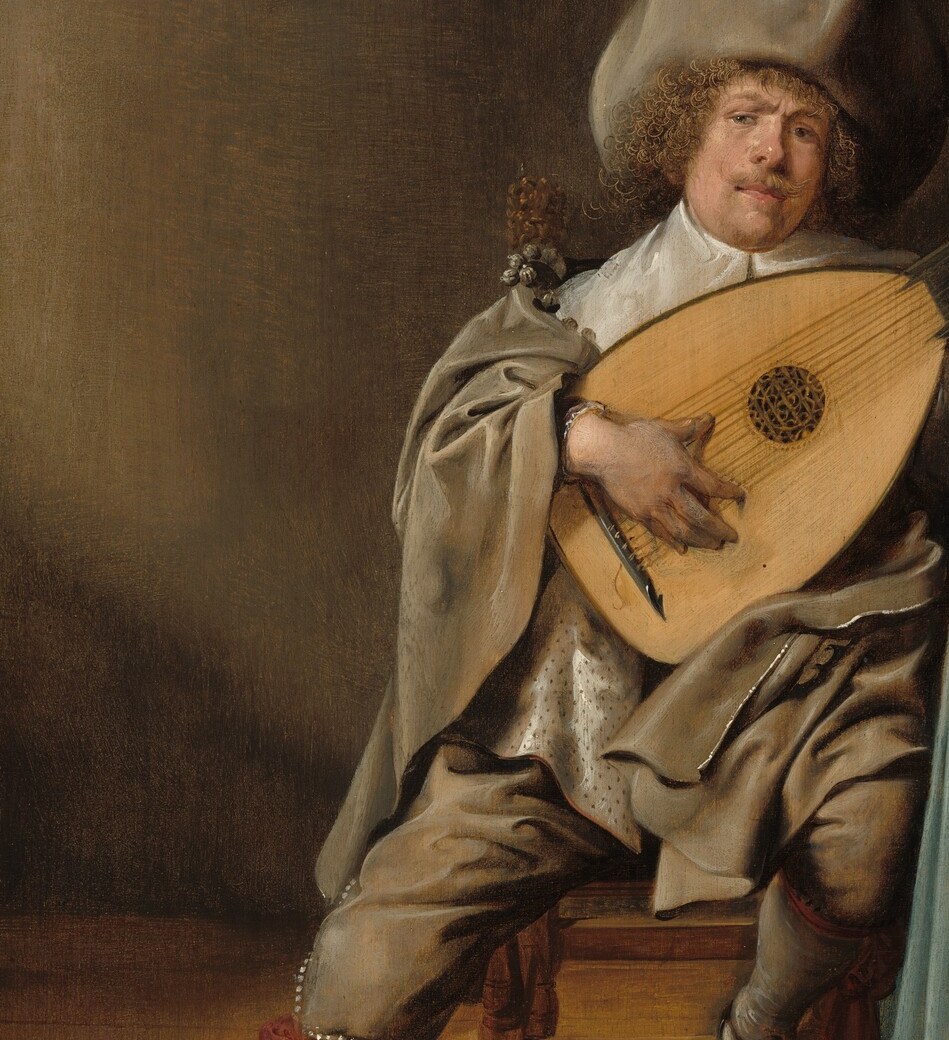
This is Jan Miense Molenaer's Self-Portrait as a Lute Player, painted around 1637. He was a Dutch Golden Age genre painter, married to the painter Judith Leyster, and likely a pupil of Frans Hals. But this panel is not a typical scene of peasants merrymaking. It is a calling card.
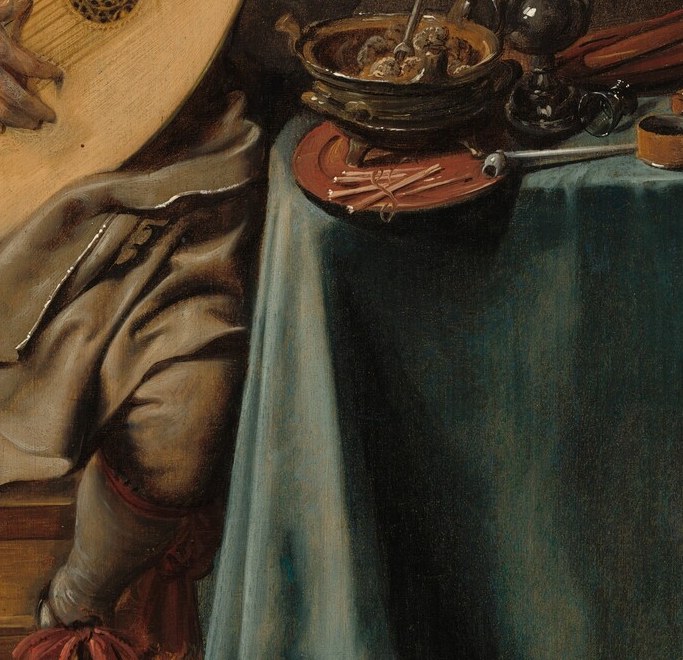
The first thing that catches the eye is the feather in his hat and the clay pipe at his lips, a deliberately rakish, unheroic self-image. Look past the swagger, though, and the painting becomes a quiet demonstration of range. The luminous blue-green silk draped over the table edge is rendered with a tactile weight that rivals any specialist still-life painter in Haarlem.
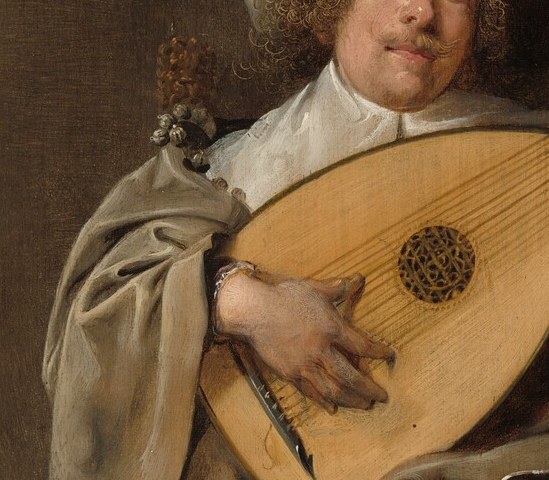
Then move to the roemer wine glasses. Molenaer catches a hard point-source highlight on each one, the same light that models his own face. And the lute itself: the ribbed wooden back glows with a warmth that makes the instrument feel present in the room. These are three distinct illusionistic problems, liquid, textile, polished wood, solved on one small panel.
Molenaer was known for crowded interiors full of figures. Here he steps forward alone, instrument in hand, and proves he could paint anything. What detail holds your eye the longest?
#arthistory #dutchgoldenage #molenaer
Details

Transcript
The man in the feathered hat is the painter. He gave himself a lute, a pipe, and a very casual pose. But the real subject is the silk. Molenaer was a genre painter. Still life was not his trade. Yet he gave the glass the same attention as the face. And turned a lute back into a study of glowing wood. Three textures, one painting, all to say: I can do this too.