The Banker's Table by William Michael Harnett
View the artwork: The Banker's Table →
William Michael Harnett's The Banker's Table (1877) looks at first like a casual pile of desk objects, but every element is a deliberate symbol of American commerce in the years after the Civil War.
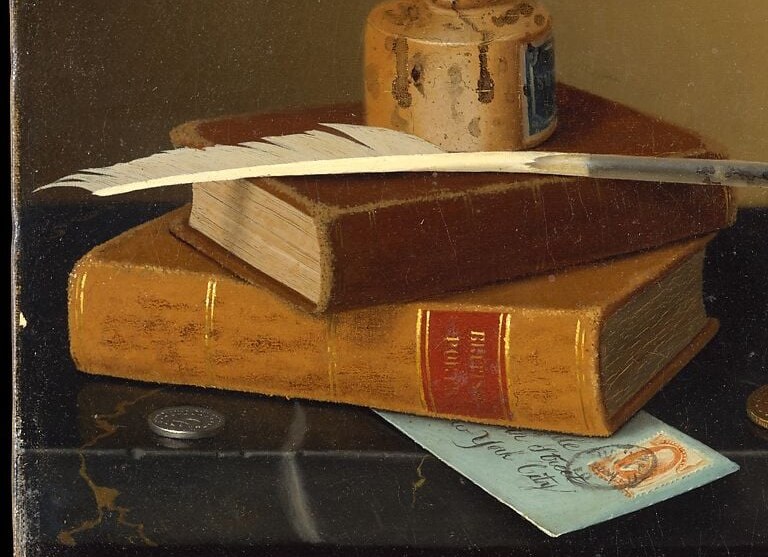
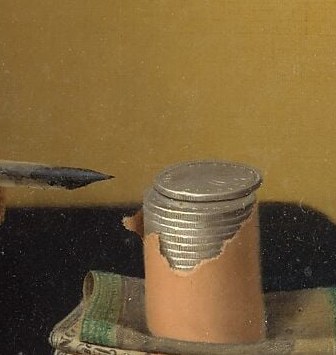
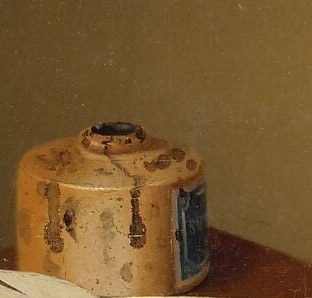
The thick stack of leather ledgers dominates the composition, these are the physical record of credit, debt, and obligation. A dark inkwell rests at the apex, suggesting the next entry is imminent. Below it, a banknote and a single glinting coin anchor the entire financial narrative.
Harnett was the undisputed master of American trompe-l'œil. His paintings so convincingly mimicked real currency that he was actually investigated by the Secret Service, who suspected him of counterfeiting. Here, he painted for a nation rebuilding its financial system, the National Banking Act had recently created a uniform currency, and the economy ran on physical paper and metal.
Look closely at the bottom book's spine and the dark reflective tabletop. Harnett's ability to differentiate worn leather from polished wood from cool metal is the whole point. The painting is a quiet argument that everyday commercial objects deserve the precision once reserved for saints and kings.
What does a still life of your own desk say about you?
#arthistory #americanart #trompeloeil
Details

Transcript
These are not just random objects. Ledgers bound in worn leather: a life spent recording other people's money. The inkwell sits on top. The next entry is about to be written. A printed banknote lies in the foreground. Real enough to touch, but only paint. Harnett painted for a country rebuilding its economy after the Civil War. A single coin anchors a world of credit, debt, and trust.