Children and a Cow by Aelbert Cuyp
View the artwork: Children and a Cow →
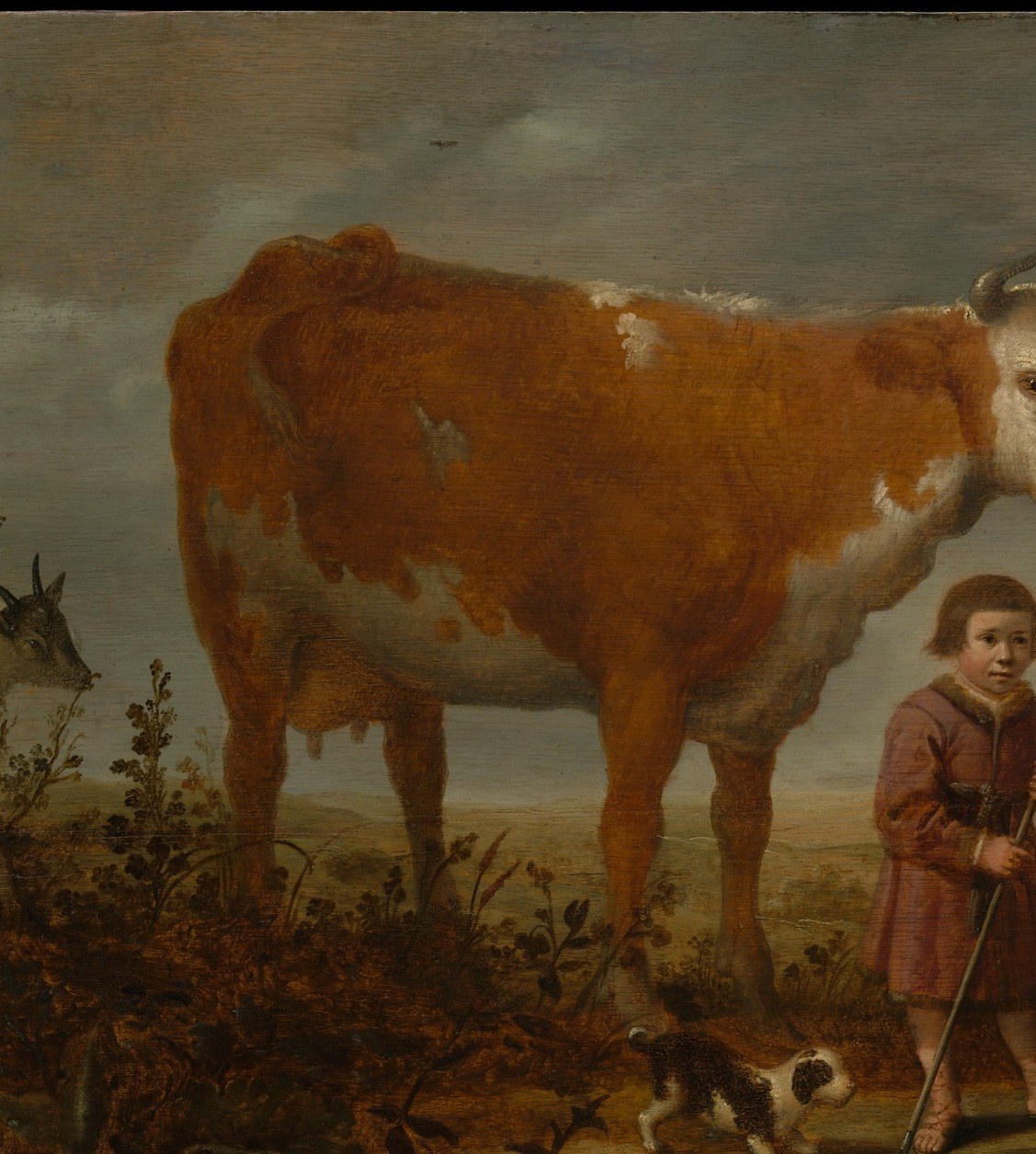
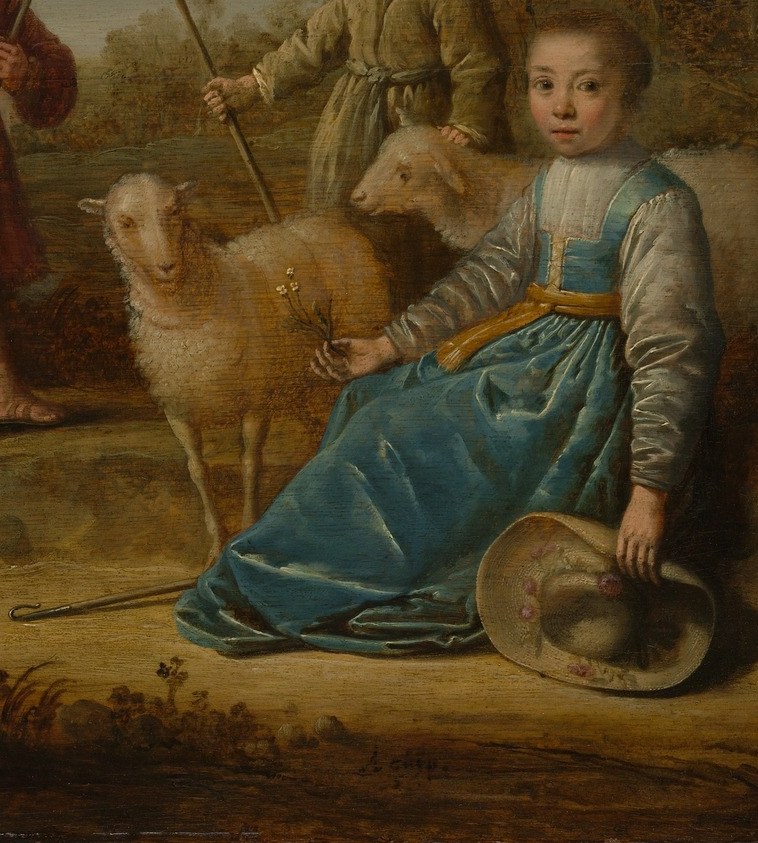
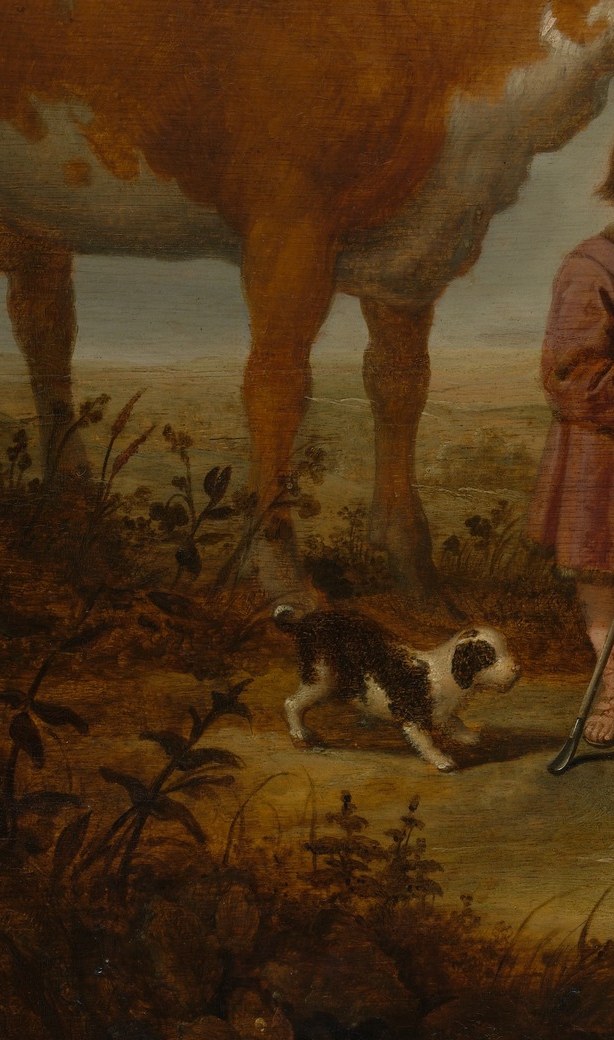
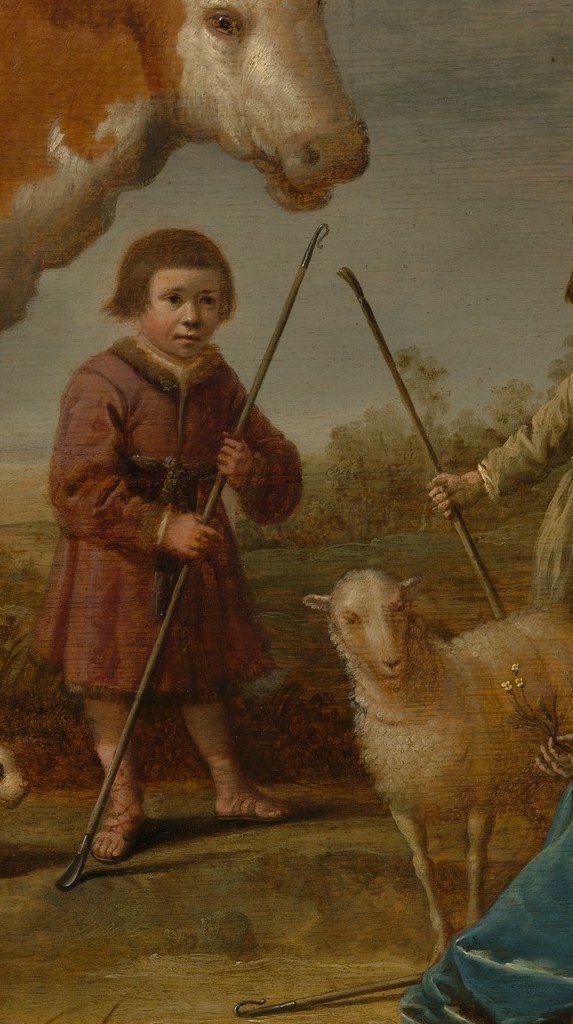
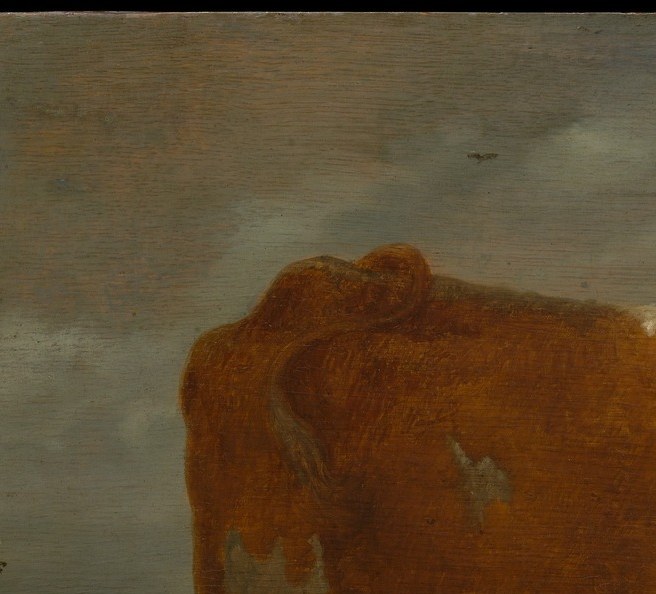
This is 'Children and a Cow' by Aelbert Cuyp, painted around 1650. It now hangs in the Metropolitan Museum of Art in New York, but it captures an idealized Dutch countryside bathed in Cuyp's signature Italianate golden light. The painting is a picture of pastoral innocence: three children minding a massive cow, a lamb, and a small dog in a hazy meadow.
Look past the enormous cow, and you'll find the real heart of the painting in the seated girl at the lower right. She cradles a lamb with a gentle, unstudied affection, her straw hat discarded beside her in the grass. The cow's gentle eye and the soft texture of the animals' coats reward a close look.
Aelbert Cuyp was not a struggling artist. He was one of the wealthiest men in Dordrecht, coming from a prominent family of painters. His landscapes were highly sought after, and his serene river scenes defined a generation. But the subject of this peaceful painting is its own irony.
In 1658, at the age of 38, Cuyp married Cornelia Boschman, a widow with three children from a previous marriage. The union was a scandal for his strictly orthodox Calvinist family, who seemed to have disapproved so strongly of the match that they socially and professionally sidelined him. Whether by force or by choice, Cuyp's artistic output nearly ceased after his marriage. He traded his brushes for church administration and business, leaving behind only the idyllic, silent landscapes of his youth.
#arthistory #dutchgoldenage #aelbertcuyp
Details
Transcript
Three children, a cow, and a hazy golden sky. This was the Dutch Golden Age ideal: rural harmony, simple virtue. She cradles a lamb with genuine tenderness. The painter, Aelbert Cuyp, was Dordrecht's wealthiest citizen. But at 38, he married a widow with three children. His strictly Calvinist family was horrified by the scandal. He never painted seriously again.