Rio de Janeiro Bay by Heade, Martin Johnson
View the artwork: Rio de Janeiro Bay →
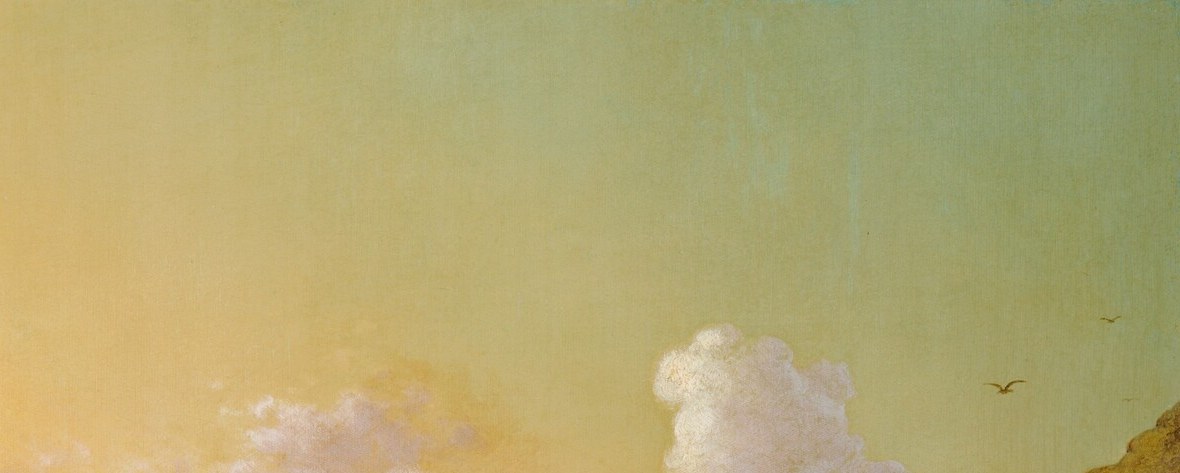
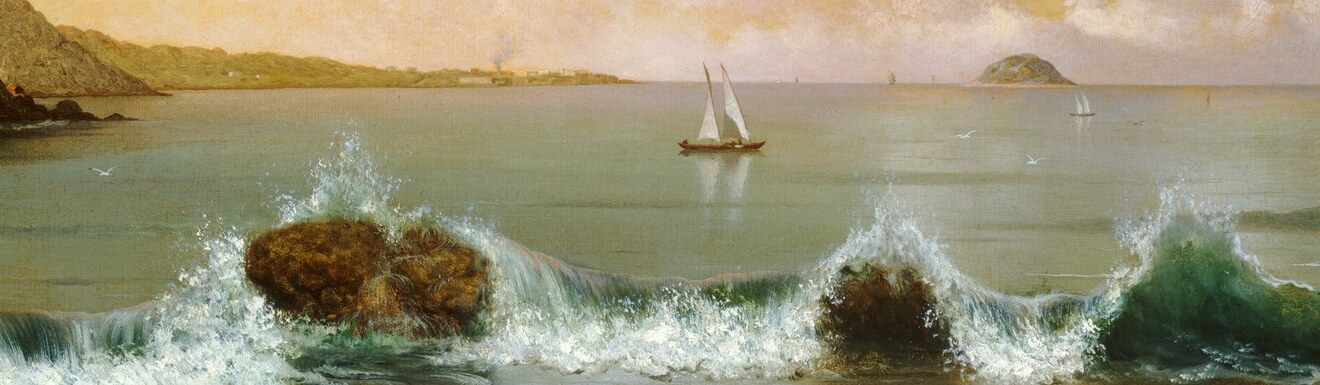
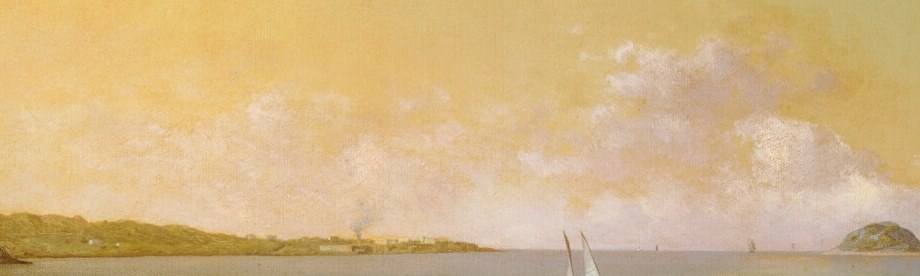
Martin Johnson Heade painted Rio de Janeiro Bay in 1864, but the reason he was in Brazil at all is the real story. Heade had traveled south to illustrate hummingbirds for a lavish chromolithographic book. That project fell apart and was never published. During his brief, formative stay, he produced only a small group of coastal landscapes, and this luminous view of Guanabara Bay is one of the rarest survivors.
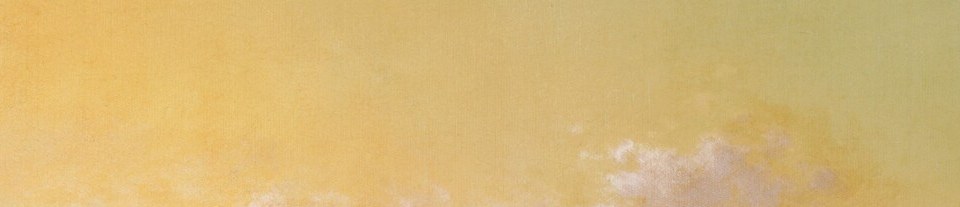
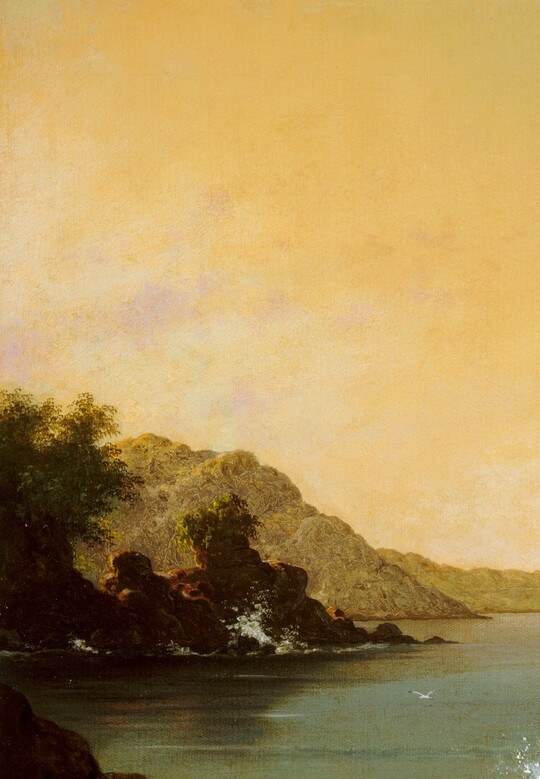
Look first at the horizon, where Heade turns pale light into something almost tactile, a smooth eggshell band between water and sky. Then find the lone sailboat, dwarfed by the expanse, the only human mark in an otherwise pristine world. The dark tropical canopy at the upper left edges the canvas with silhouetted palm fronds, the single botanical marker that places this firmly in South America, not the Hudson River Valley.
The painting measures just 45 by 91 centimeters, small for a panorama this vast. After Heade's death, it passed through the collection of John H. Lidgerwood, whose family home, Speedwell, had been founded by telegraph co-inventor Alfred Vail. The work then moved through New York galleries before the Avalon Foundation donated it to the National Gallery of Art in 1965, where it hangs today under accession number 1965.2.1. For many years it was listed simply as Brazilian Seascape, its true subject uncertain.
Heade returned from Brazil without his hummingbird book, but he carried back a new way of seeing light on water. The failure of the expedition gave American art one of its quietest, most patient masterpieces.
#arthistory #martinjohnsonheade #luminism
Details
Transcript
He came to Brazil to paint hummingbirds. The book was never made. So he turned to the bay. He painted light as though it were a solid thing. A single boat, and the whole of Guanabara Bay. He left Brazil with only a handful of these canvases. It passed through a telegraph inventor's family before anyone saw it. Today, it's one of the few records of that failed trip.