A Home in the Wilderness by Sanford Robinson Gifford
View the artwork: A Home in the Wilderness →
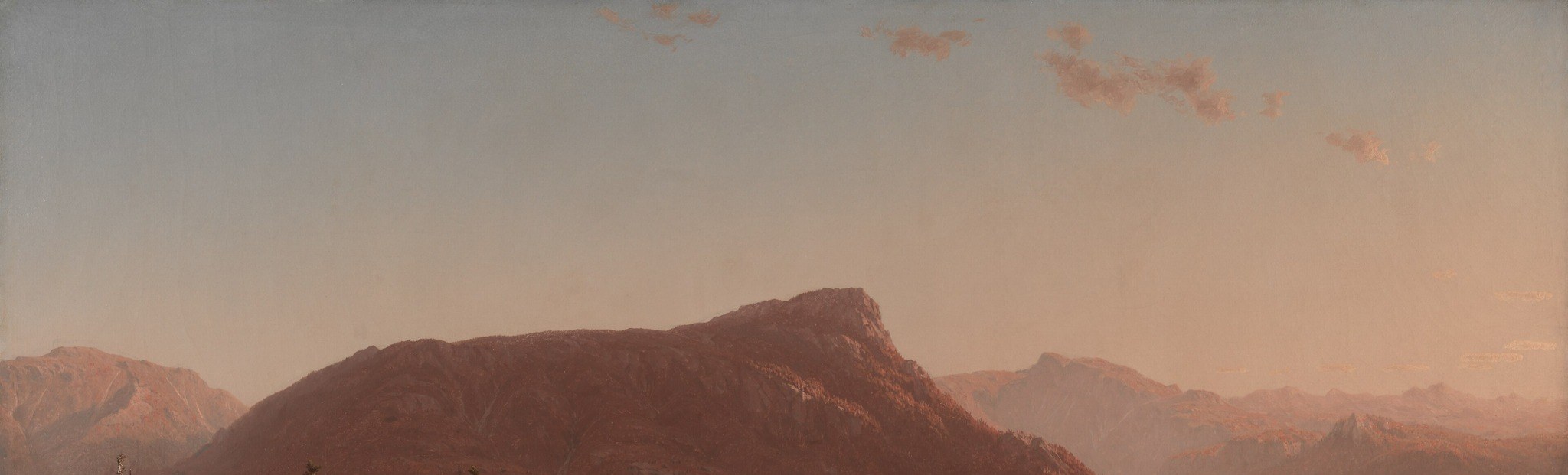
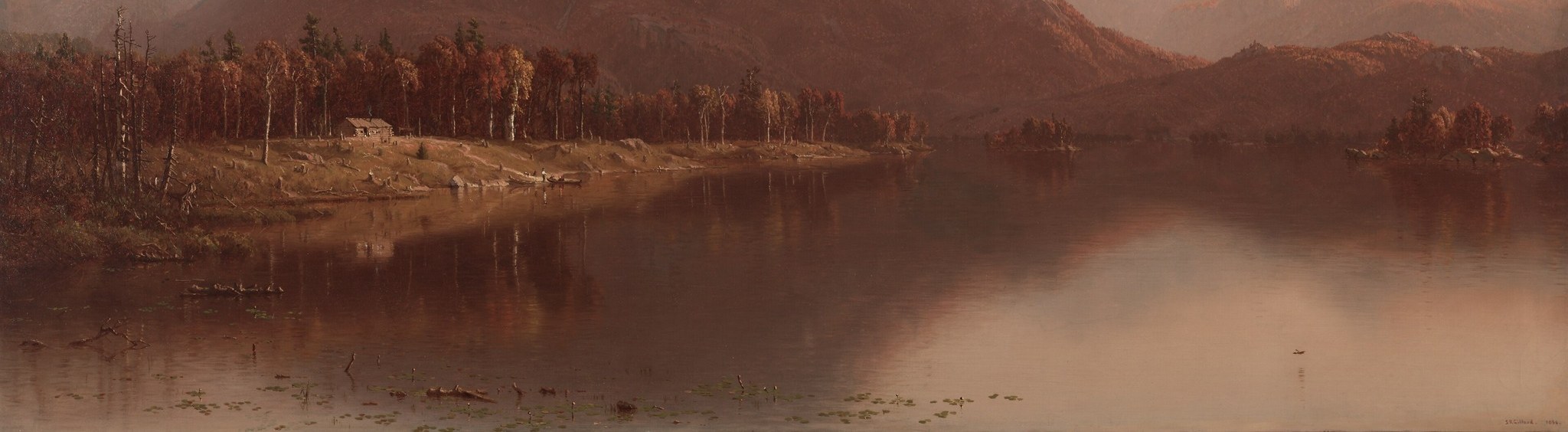
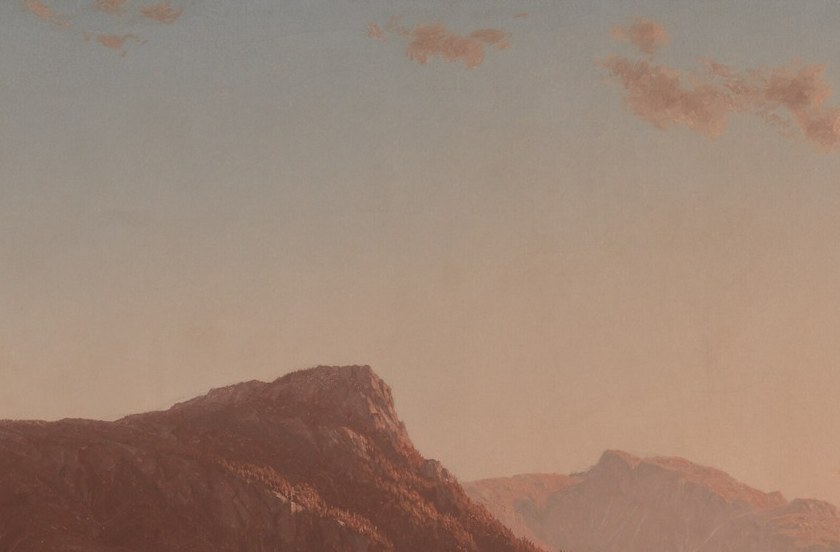
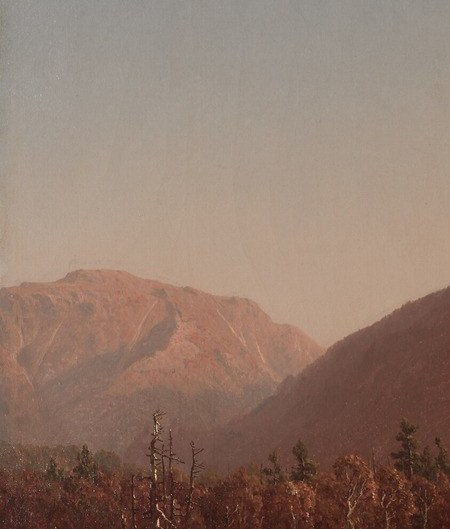
Sanford Robinson Gifford completed A Home in the Wilderness in 1866, the year after the American Civil War ended, and he believed it was the best work he ever painted. That judgment matters because Gifford was famously reluctant to praise his own pictures. The canvas looks across a still New Hampshire lake toward a tiny log cabin on a freshly cleared riverbank, dwarfed by Mount Hayes. It is now in the collection of the Cleveland Museum of Art.
Watch where the light seems to come from. Gifford was a master of Luminism, a style built on the idea that light lives inside the air itself rather than falling from a single source. The golden haze dissolves the horizon and the distant ridges, but the foreground details, the tree stumps, the canoe, the cabin doorway, are sharp. He is telling you where to look by controlling where the atmosphere lets you see.
The small group in the doorway is turning toward a man in a canoe loaded with supplies. It is an ordinary moment of arrival, but the scale around it makes it feel like a held breath. The surrounding wilderness is not hostile; it is simply vast, and the family has made a fragile clearing inside it. The stumps scattered around the cabin are the quiet evidence of that labor.
Gifford exhibited this painting at the 1867 Exposition Universelle in Paris, placing American landscape art before a jury of European eyes at a moment when the nation was still stitching itself back together. The picture is both a specific New Hampshire view and an argument about what American hope could look like: small, hard-won, and lit from within.
#arthistory #hudsonriverschool #luminism
Details

Transcript
1866. The Civil War has been over for one year. An entire nation is trying to imagine what comes next. Look at the tree stumps surrounding the cabin. This clearing was carved out of the forest by hand. A man arrives by canoe with supplies. His family turns to greet him in the doorway. Gifford considered this his finest painting. He sent it to Paris, to stand against all of Europe.