Law of the Wild by Raleigh, Charles S.
View the artwork: Law of the Wild →
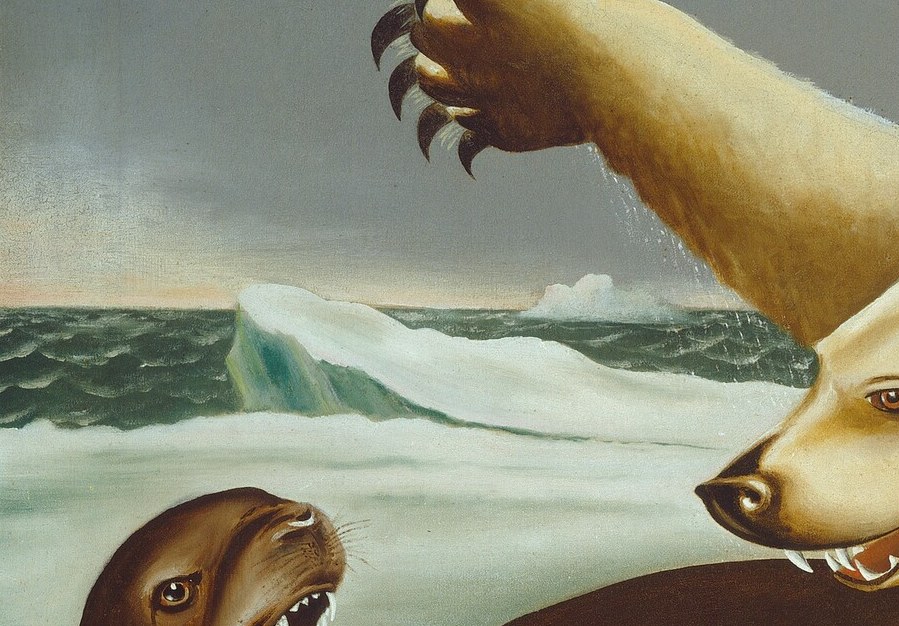
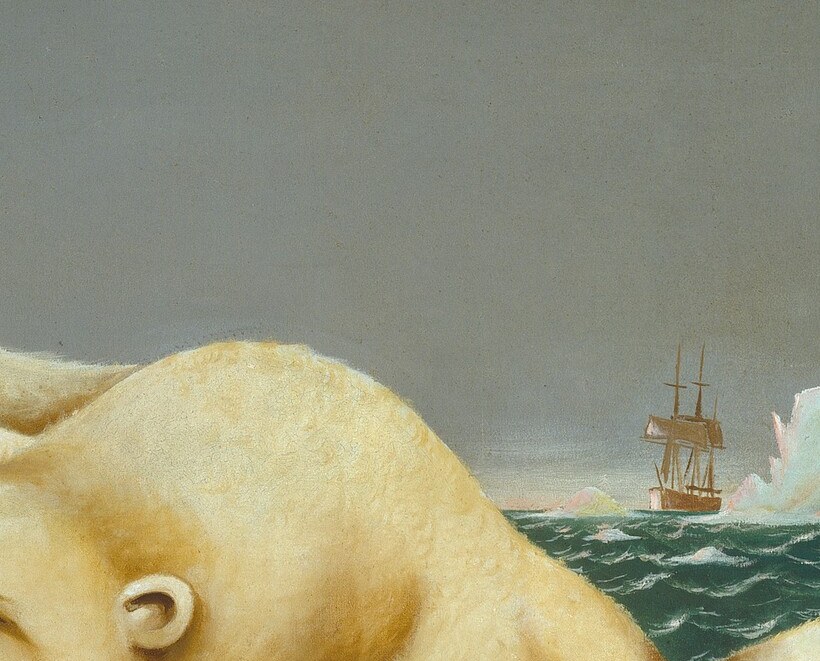
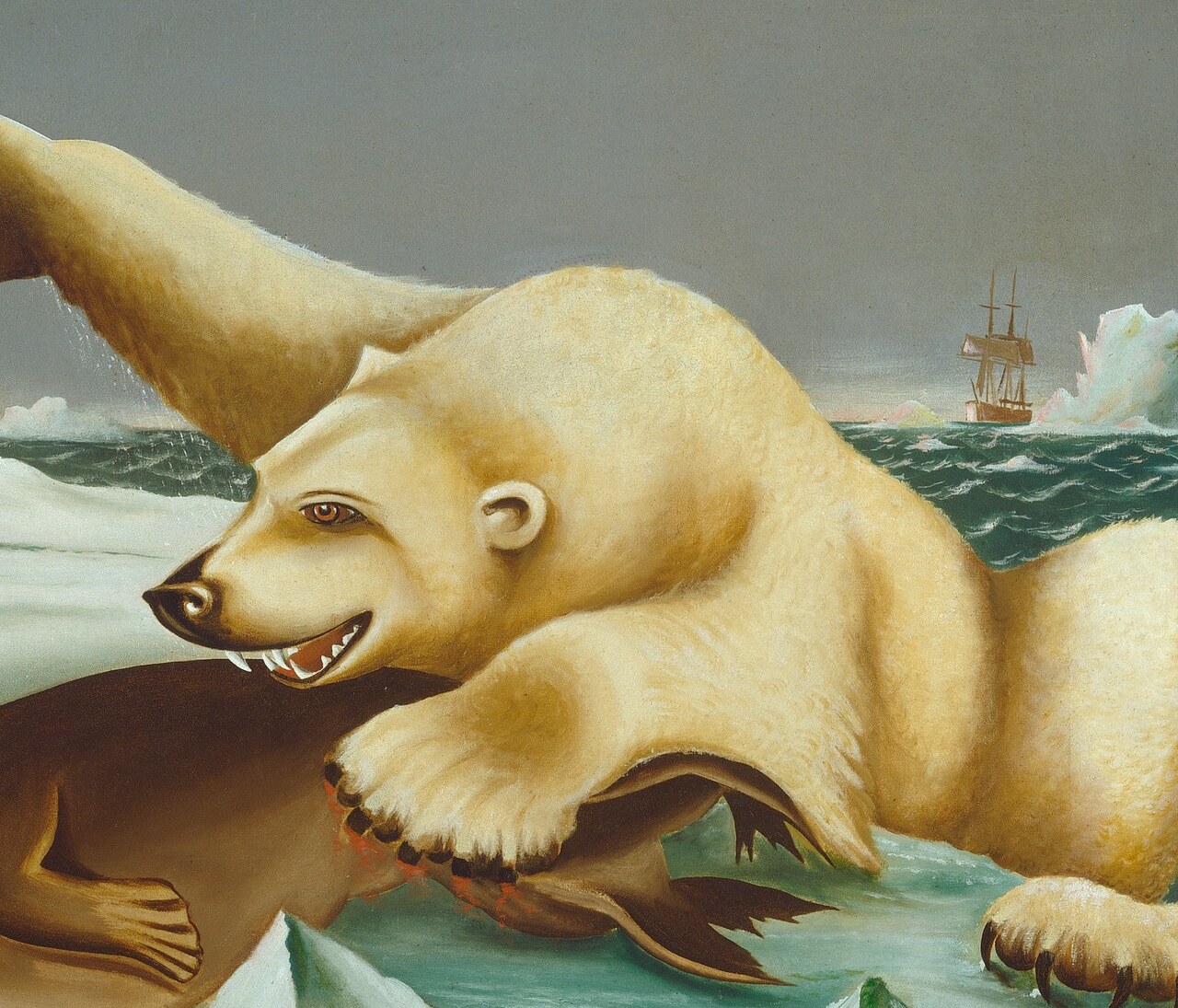
Charles S. Raleigh’s “Law of the Wild” (1881) is not just a wildlife scene. It is a quiet, devastating comparison. On the ice, a polar bear pins a seal in a moment of raw predation. But almost invisible on the horizon, a whaling ship sails the same pale sky. The painting asks you to hold both in your mind at once.
Look first at the seal’s dark eye, the emotional center of the painting. It is wide, glistening, and undeniably mammalian. The bear’s expression, by contrast, is not fury but a strange predatory calm. The real visual shock, however, waits in the upper right: a small sailing vessel, easy to miss, that transforms the title’s meaning from a natural law into a bitter irony.
The year was 1881, and the Arctic whaling industry was at its peak. Ships from New Bedford and beyond were hunting bowhead whales on a massive scale. Raleigh, born in Gloucester, Massachusetts, a city with deep whaling and fishing roots, clearly understood that the bear hunted to survive while humans hunted for oil and profit. The bear IS the Arctic; the ship is an intrusion.
What other details do you notice in the ice that show this is a frozen moment, not an aftermath?
#arthistory #americanart #polarbear
Details


Transcript
A polar bear hunting a seal in the Arctic. Brutal, but it looks like the law of nature. But this painting hides a second hunter. Look above the bear, on the horizon line. A whaling ship. Humans hunting the same waters at industrial scale. Charles S. Raleigh painted this in 1881, the height of Arctic whaling. The bear’s quiet focus is survival. The ship’s is commerce.