Shepherdess with a Flock of Sheep by Anton Mauve
View the artwork: Shepherdess with a Flock of Sheep →
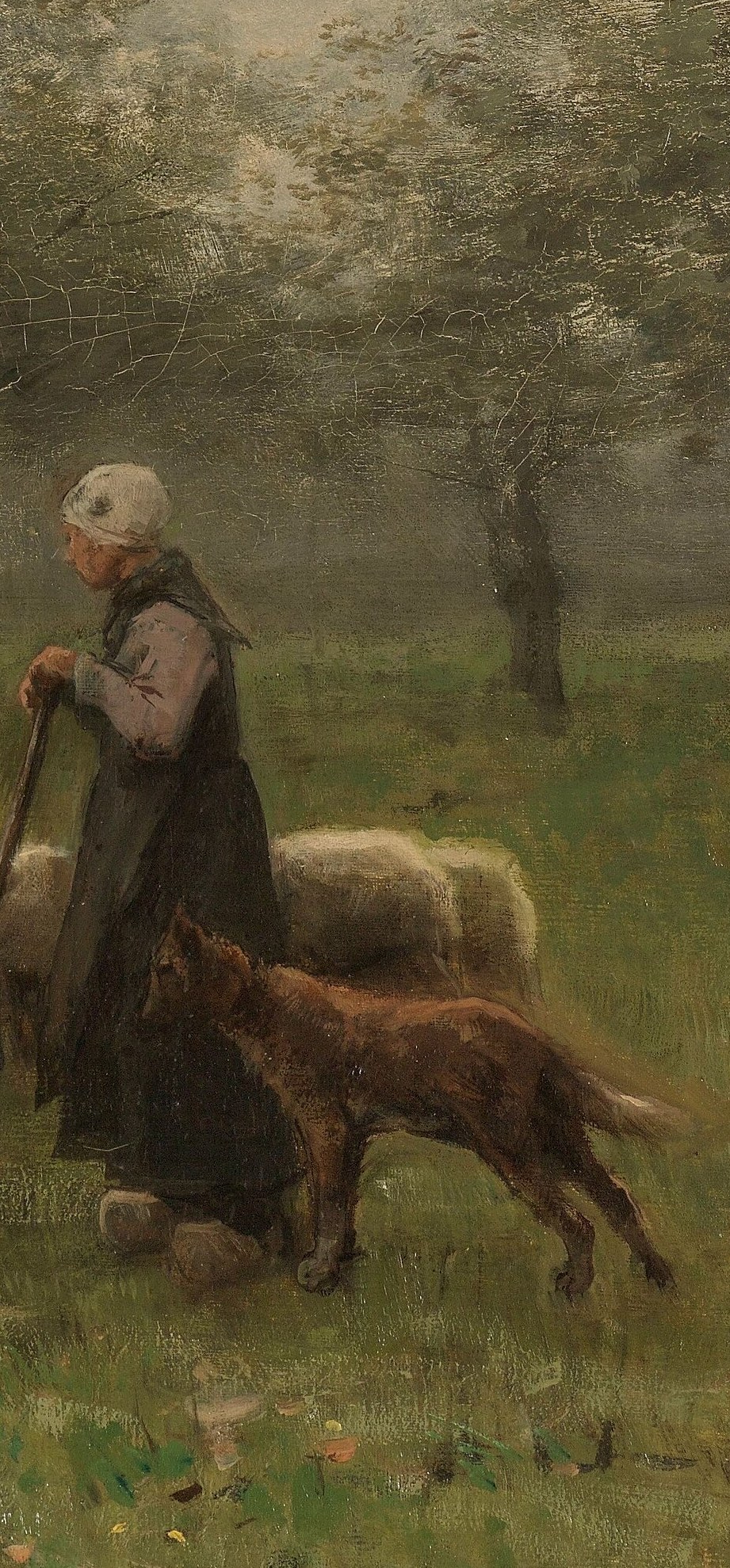
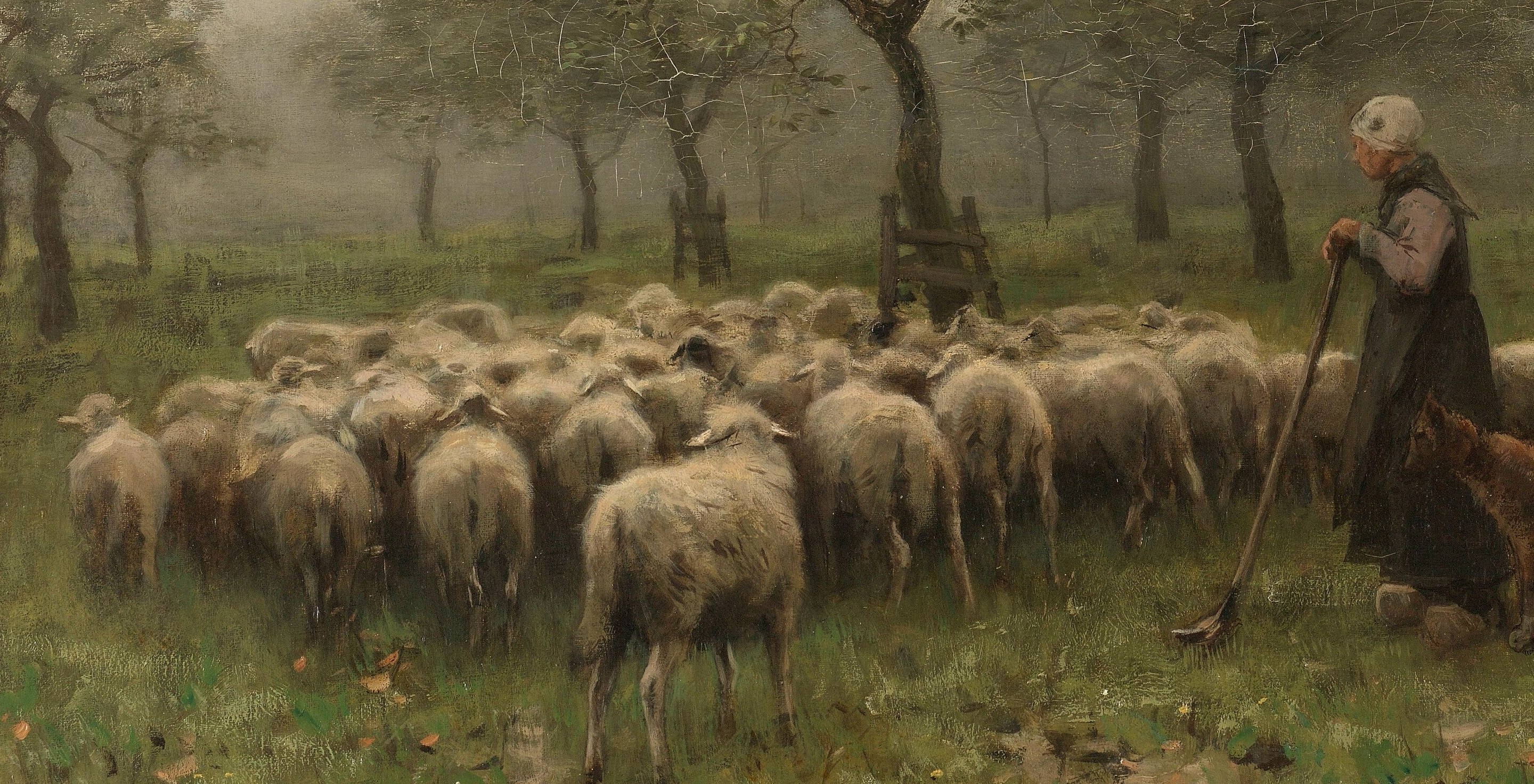
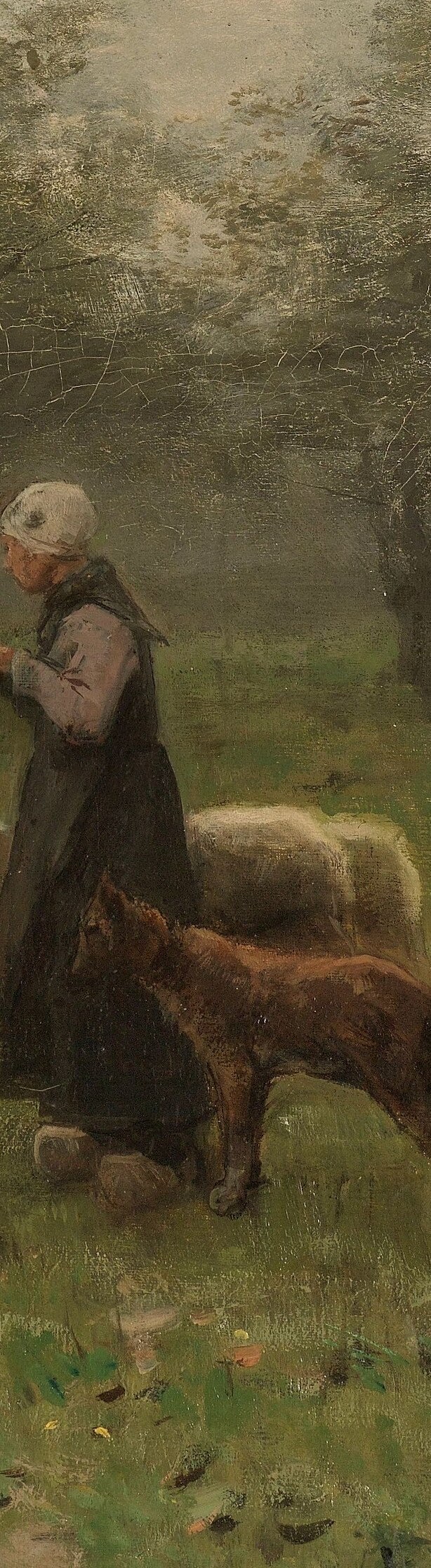
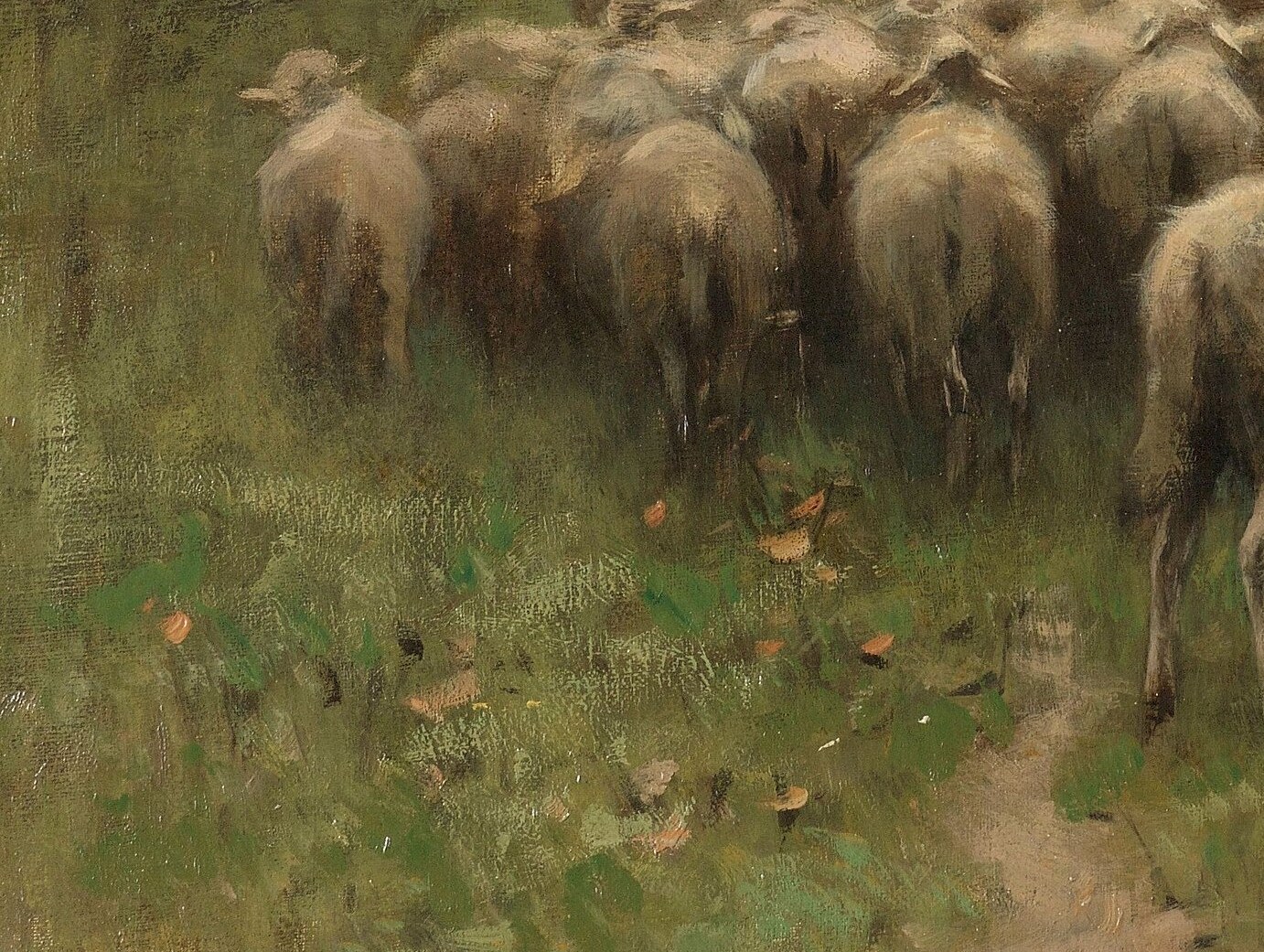
Anton Mauve's 'Shepherdess with a Flock of Sheep' (1888) is a masterpiece of the Hague School, currently held by a private collector. But here is what most people do not know: the market for Mauve's sheep was so overheated that a literal price differential developed. Paintings where the sheep appeared to be walking toward the viewer ('sheep coming') cost more than those where they were walking away ('sheep going').
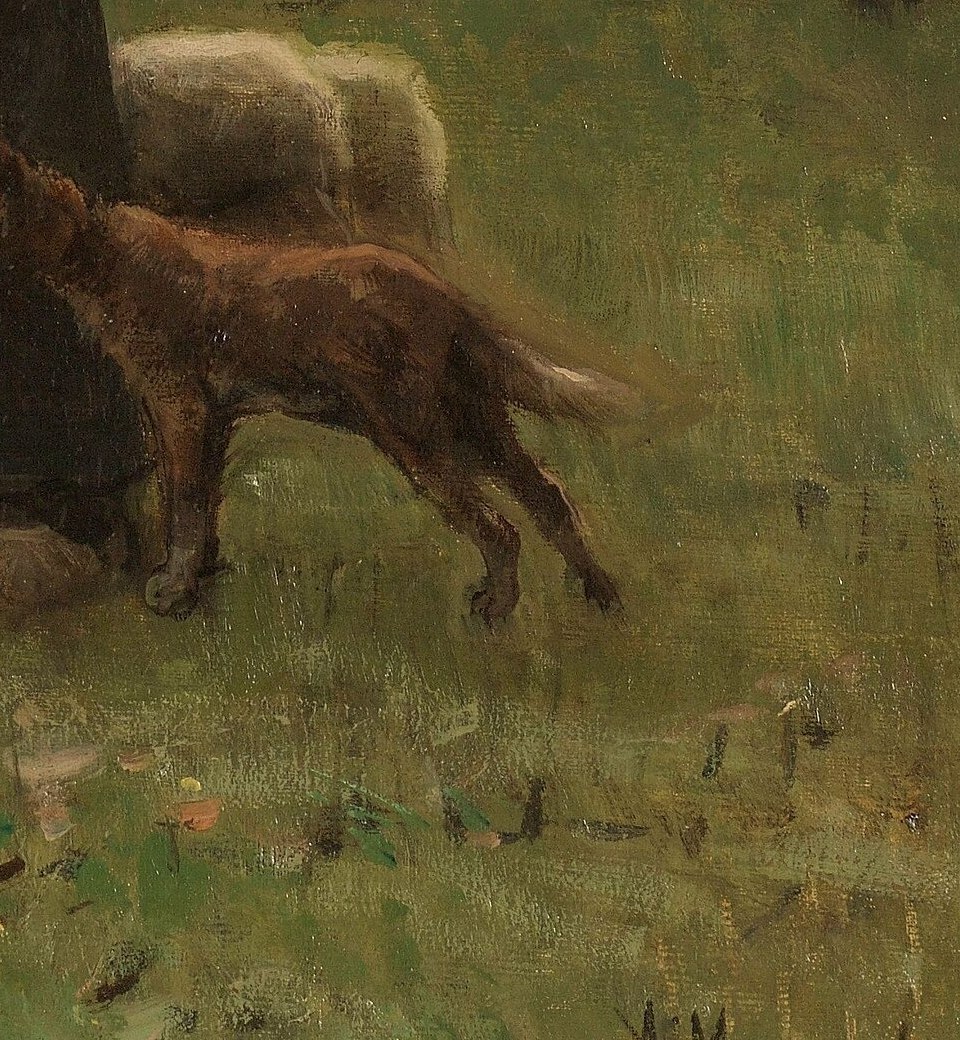
Look at the foreground sheep at the lower left. You can see the thick impasto brushwork that gives Mauve's wool its remarkable texture, a tactile, almost sculptural quality that made these animals feel alive enough to command a premium. The impasto is the selling point.
Mauve was more than a market darling. He was a central figure in the Hague School and an early, crucial mentor to his cousin-in-law, a struggling young painter named Vincent van Gogh. Van Gogh later wrote that when he heard Mauve died in 1888, he painted his famous peach trees in bloom and dedicated them to him, writing, 'They were started in a bad mood, but I painted them with a calm hand, thinking of Mauve.'
What do you think a collector saw, buying a 'sheep coming' at a premium? A promise of arrival?
#arthistory #hagueschool #antonmauve
Details
Transcript
In the late 1800s, American collectors couldn't get enough of one thing. Sheep. Flocks of them, painted by this man, Anton Mauve. He was a leading light of the Hague School, and Vincent van Gogh's cousin by marriage. Van Gogh called him 'Mauve the master' and kept a framed letter from him until he died. Look at the paint itself. Thick impasto builds each woolly back into a kind of sculpture. Dealers charged more for 'sheep coming' toward the viewer than 'sheep going' away. This flock is coming. Mauve knew his business.