Calvary with a Carthusian Monk by Jean de Beaumetz (French, c. 1335–1396)

A Carthusian monk kneels at the foot of the cross, not as a witness from the gospels but as a living man painted into the scene. 'Calvary with a Carthusian Monk' by Jean de Beaumetz, circa 1390, was made for a monk's cell and is now in the Cleveland Museum of Art.

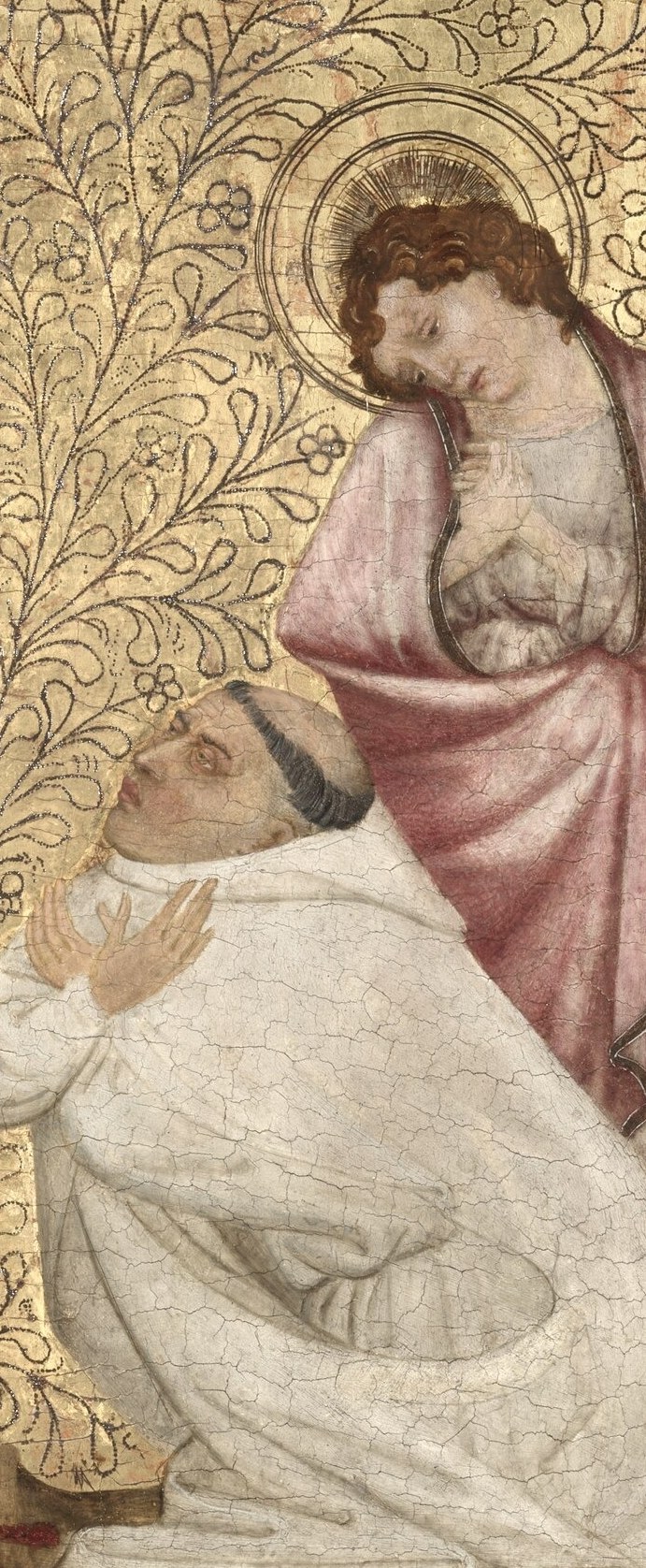
The monk wears the white robe of his order and is painted on the same scale as the Virgin Mary and Saint John. He is not smaller, not kneeling in a donor portrait. He is inside the event. The gold ground behind him is punched with the Trees of Life and Knowledge, linking the fall of Adam to the redemption on the cross directly above him.

Jean de Beaumetz was court painter to Philip the Bold, Duke of Burgundy. Between 1389 and 1395, he and his workshop produced twenty-six of these small devotional panels for the monks' cells at the Chartreuse de Champmol, the monastery built to house the ducal tombs. Only two panels survive. This one was acquired by the Cleveland Museum of Art in 1964.

A painting for one person, alone in a cell. The monk saw himself at Calvary, and Calvary looked back through the same white robes.

#arthistory #internationalgothic #jeandebeaumetz

Details
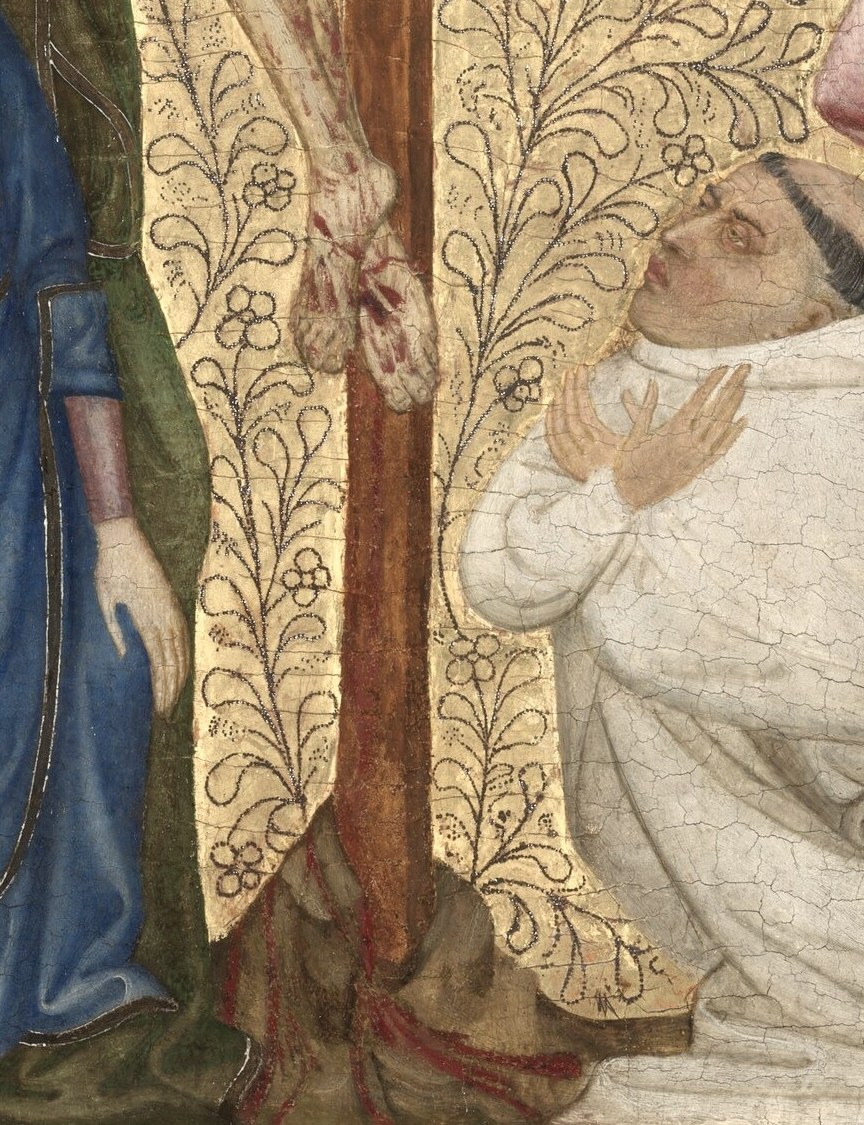
The panel's central conceit: a monk from 1390 inserted into the Passion narrative, collapsing 1,300 years , the original cell owner saw himself here, the painting a devotional mirror.
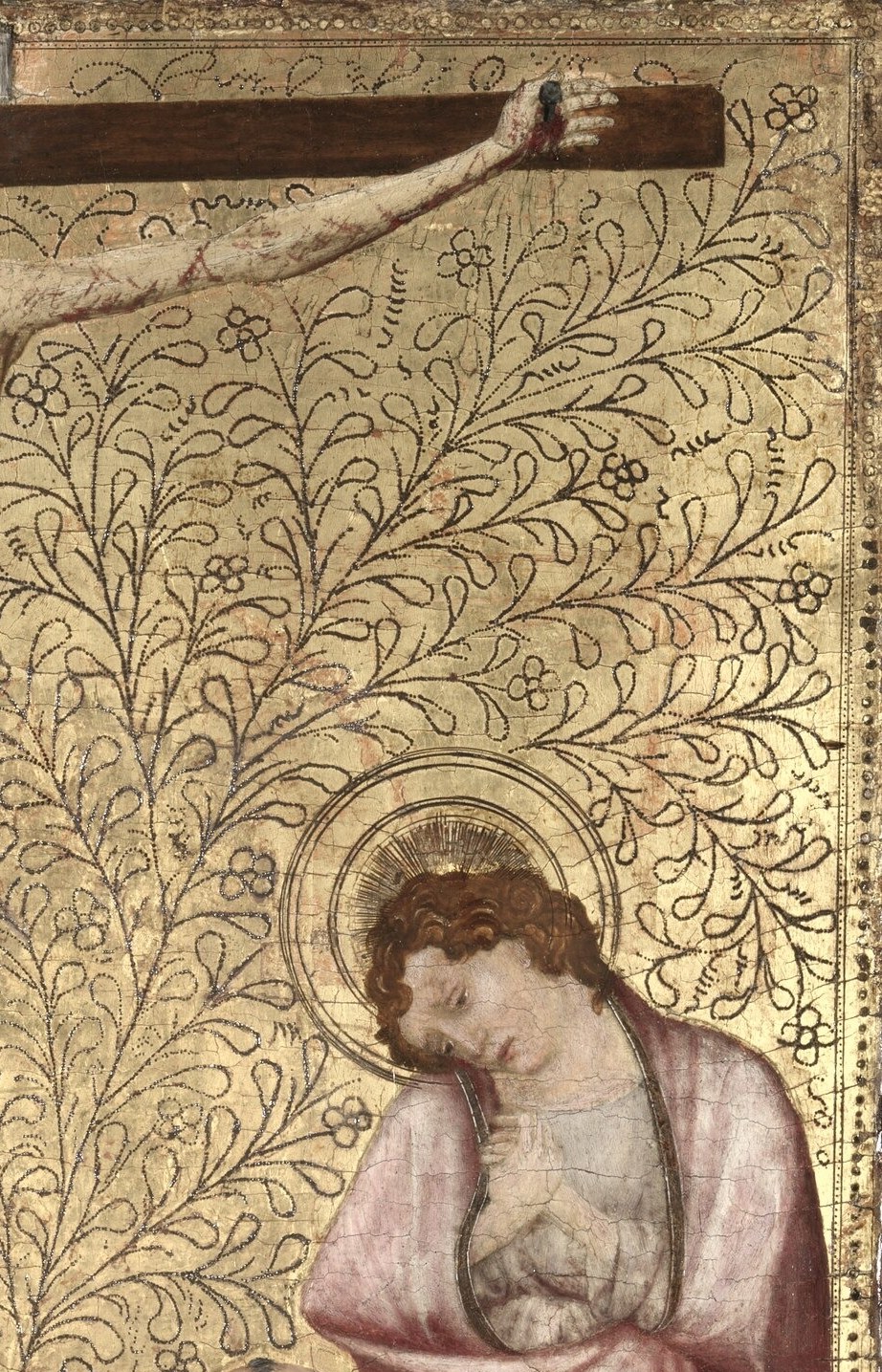
The gold tendrils are not decoration but a typological program: the Trees of Eden frame the cross, linking Adam's fall to the Redemption in a single continuous visual field , invisible until the camera moves in close.
His inclined, sorrowful head contrasts with the monk below , the witness of scripture placed beside the witness of fourteenth-century Burgundian devotion.
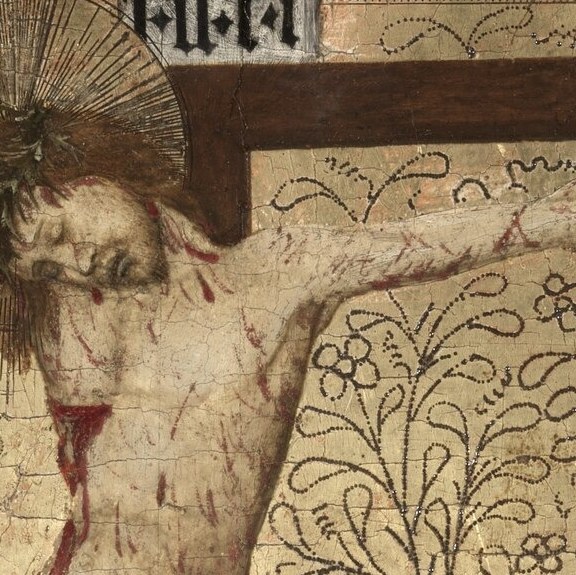
The head inclines forward in death, haloed in punched gold that merges with the background , divinity and suffering collapsed into a single posture.
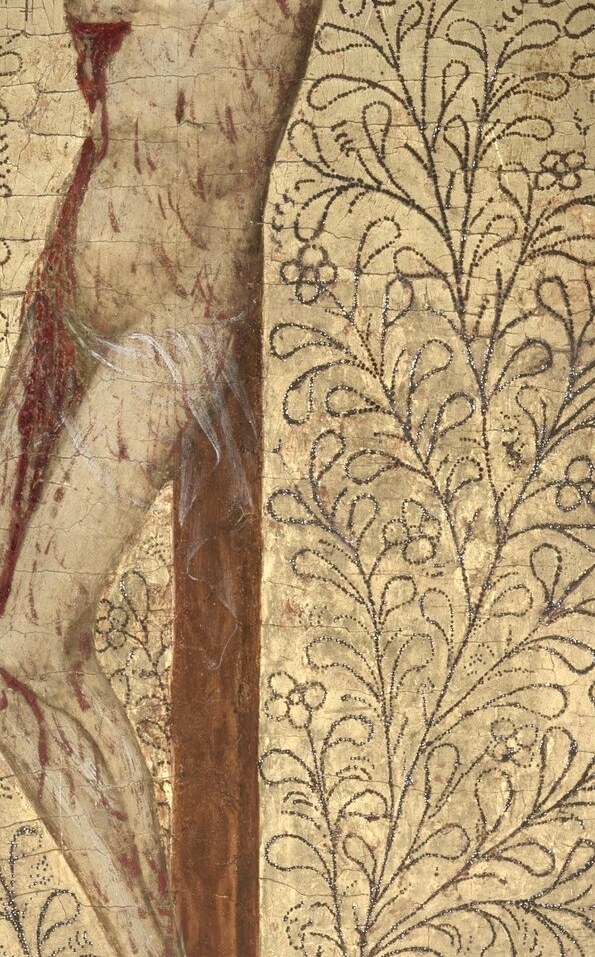
Visible ribcage and the gaping side wound were focal points for Carthusian meditation on the Passion; the blood trails are a map of suffering for the private viewer.
Transcript

A monk kneels at the crucifixion. Not a saint. A real monk. He wears the white robes of a Carthusian, painted from life. This was painted for a monk's cell, to mirror the man inside it. Twenty-four panels for twenty-four cells. Only two survive. The gold behind him is punched with the Trees of Life and Knowledge. From Adam's fall, all the way to this moment.