Lake George and the Village of Caldwell by Chambers, Thomas
View the artwork: Lake George and the Village of Caldwell →
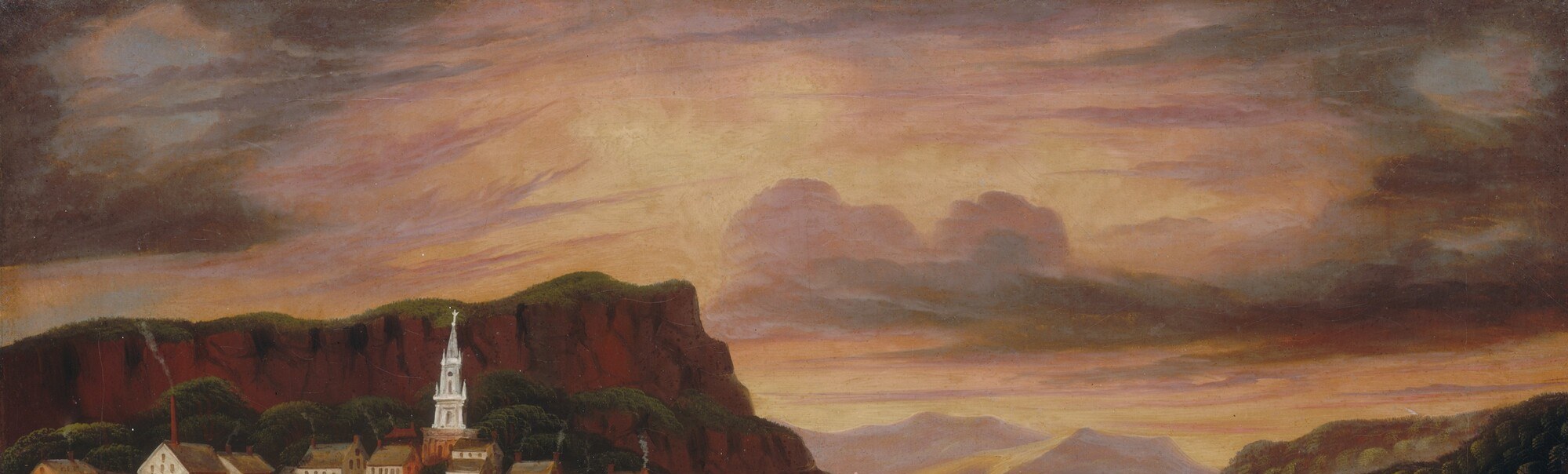
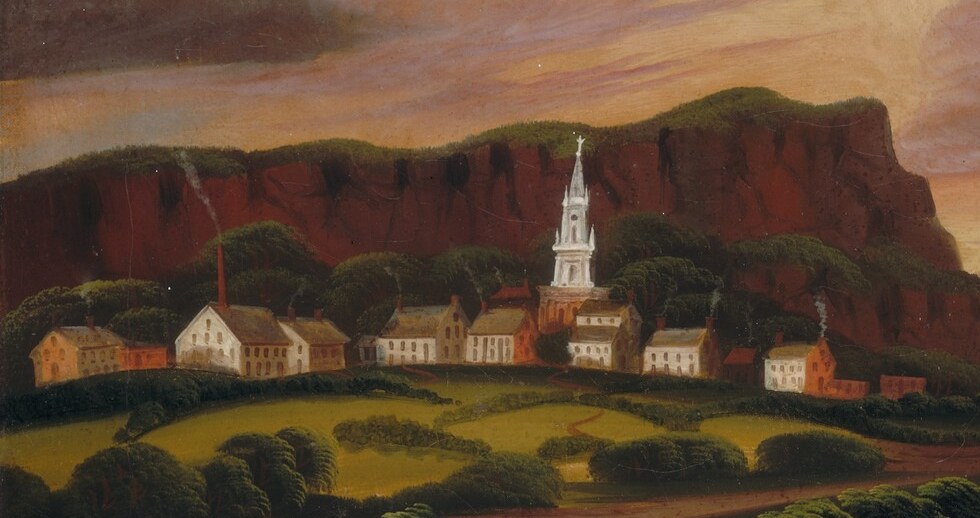
Look closely at Lake George and the Village of Caldwell, a mid-19th-century oil by the self-taught American painter Thomas Chambers.
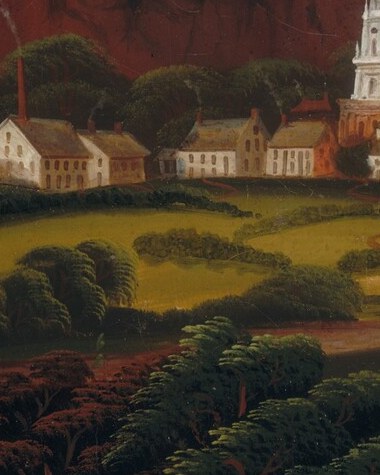
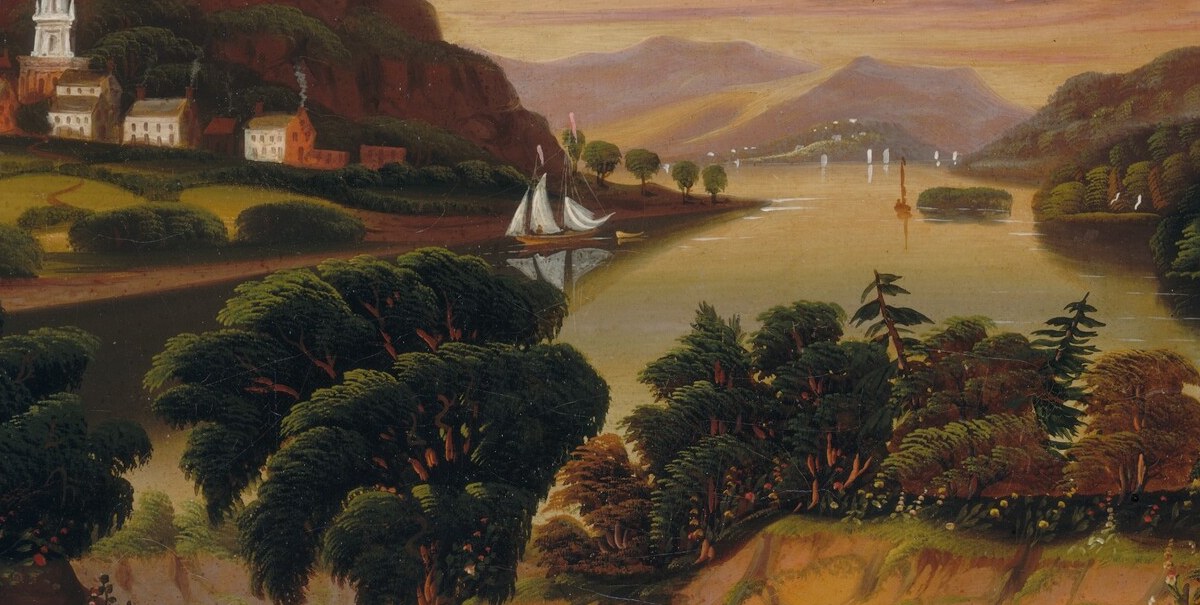
There is a church, a cluster of white houses, a lone sailboat on a mirror-still lake. But Chambers hid two tiny rewards for the patient observer. From one chimney, a single wisp of smoke rises, barely disturbing the sky. And far across the lake, a second boat sits so faint against the far shore that you can scroll straight past it.
Chambers was born in England in 1808 and emigrated to the United States, where he became a prolific painter of decorative landscapes for a middle-class market. He was not chasing gallery prestige. His bold, stylized approach to light and color made his paintings read clearly across a room, and the view of Lake George he painted was already a celebrated tourist pilgrimage in his own lifetime.
This is a painting that rewards stillness. The smoke, the distant vessel, the warm amber glow bleeding into violet cloud. These are not accidents. They are a self-taught artist showing you that he knew exactly what he was doing.
#arthistory #americanart #thomaschambers
Details
Transcript
First, the obvious. A white church, a calm lake, a lone sailboat. Thomas Chambers painted this in the mid-19th century, when Lake George was a booming tourist destination. He was a self-taught painter who made a living selling bold, decorative landscapes like this one. Now look at the chimney below the church tower. A single wisp of smoke. Chambers took the time to paint it. But the real hidden detail is out on the water. Far in the distance, a second vessel. So faint it almost disappears into the shore.