Oyster Sloop, Cos Cob by Hassam, Childe
View the artwork: Oyster Sloop, Cos Cob →
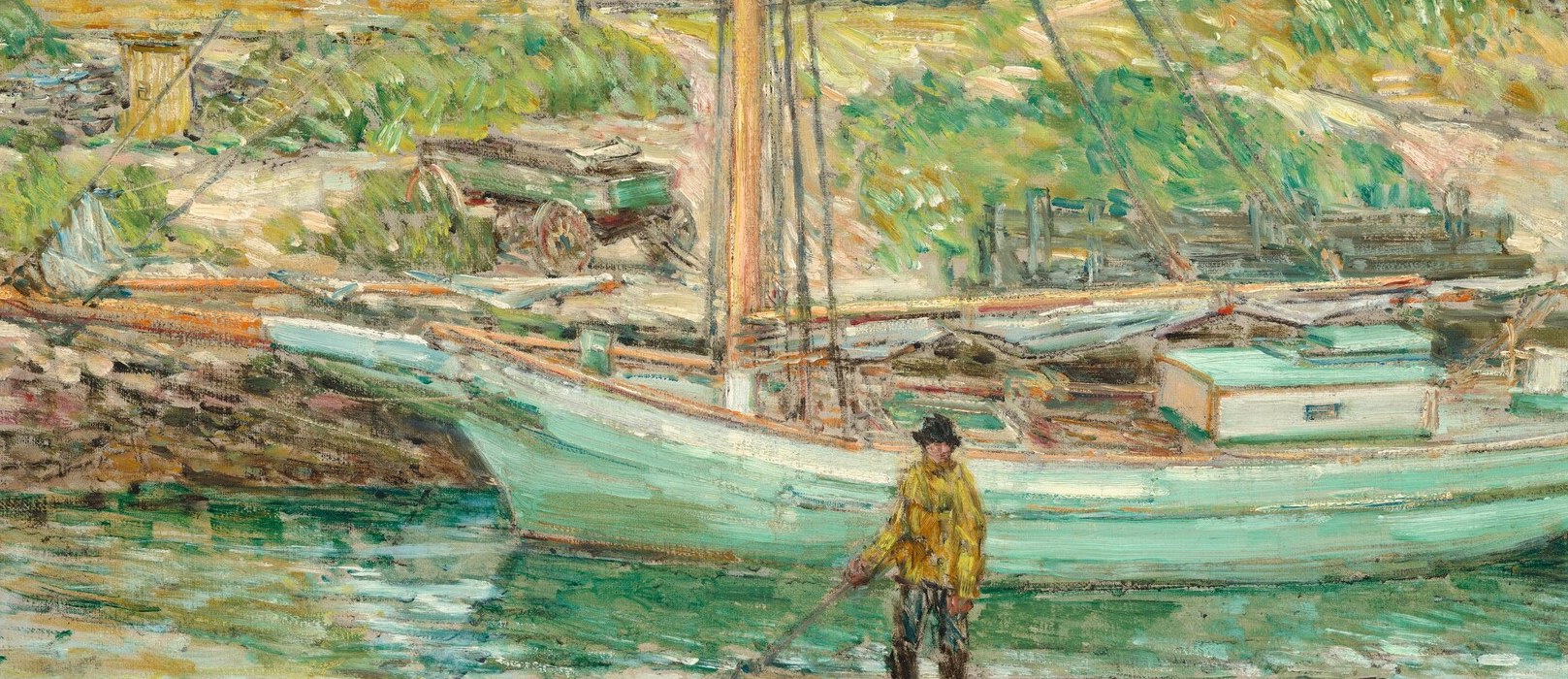
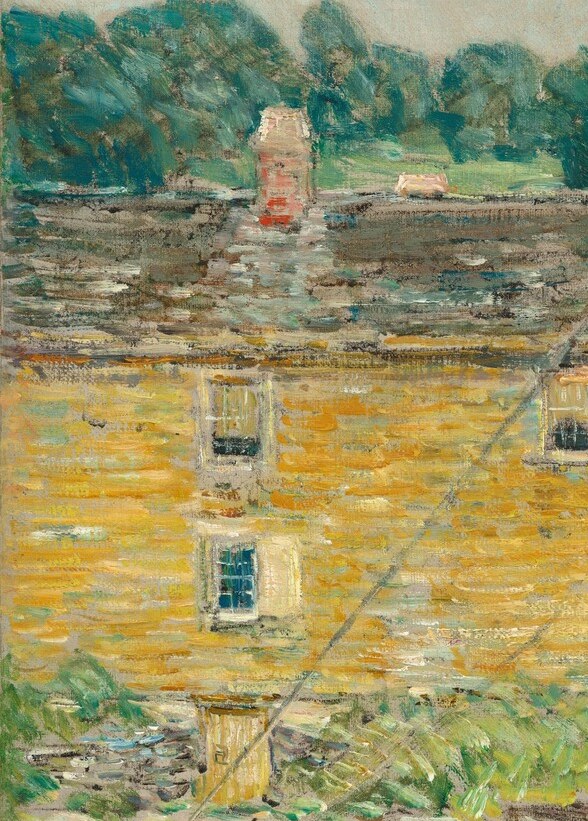
Childe Hassam's "Oyster Sloop, Cos Cob" (1902) lives at the National Gallery of Art, but it was born on the water in Connecticut. Hassam was a fixture of the Cos Cob art colony, painting outdoors alongside John Henry Twachtman and others. But while some artists romanticized the shoreline, Hassam paid attention to the people who worked it. This painting is a portrait of labor disguised as a landscape.
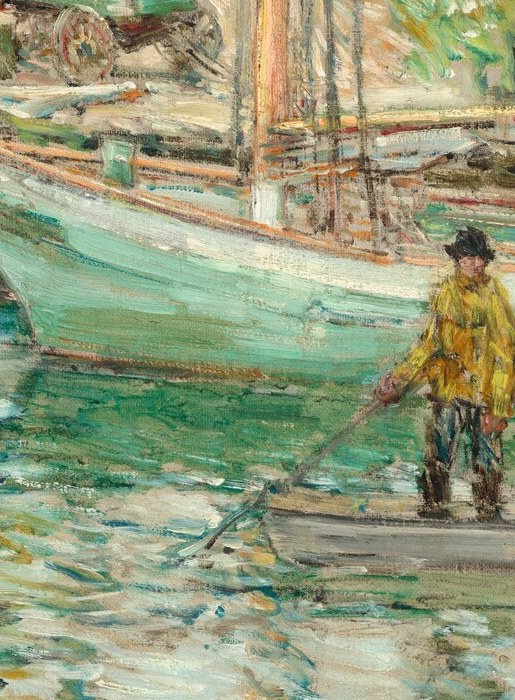
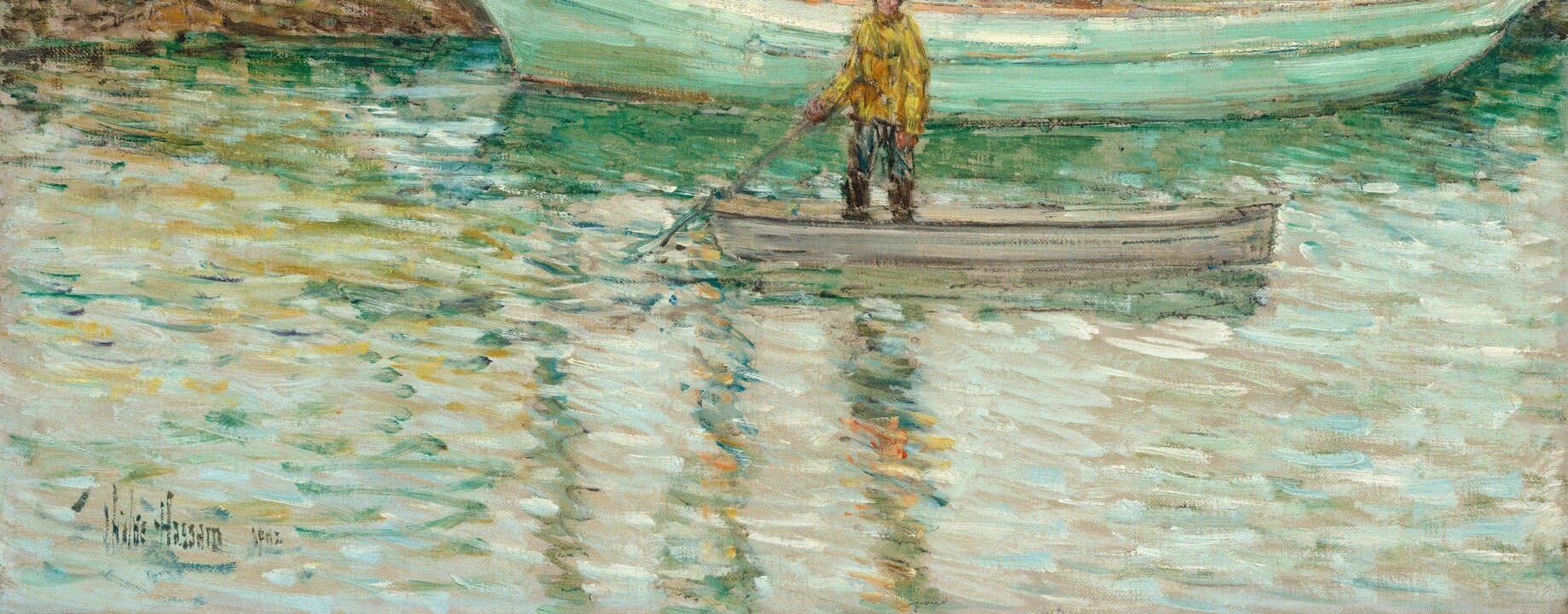
The enormous oyster sloop dominates the composition, its mint-green hull a daring, beautiful color choice. But your eye keeps returning to a tiny figure in a yellow slicker, standing in a dinghy near the shore. He is dwarfed by the very boat he serves. Look at his hands: he holds a long push-pole, frozen mid-stroke. He is not a decorative accent. He is working.
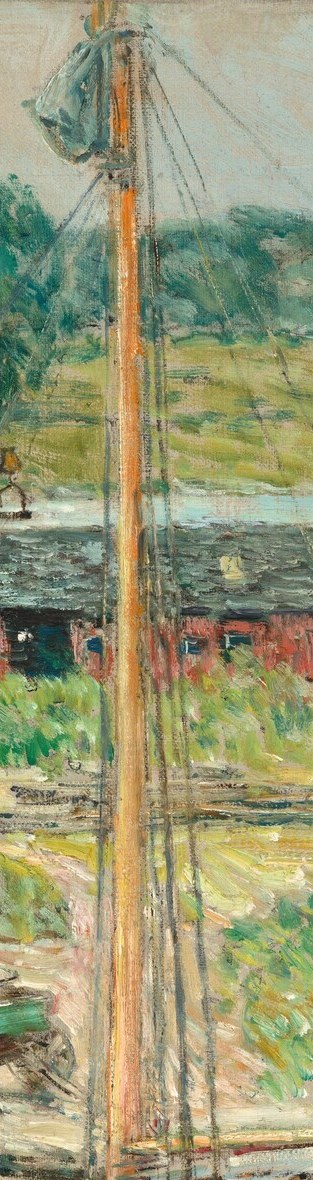
The lumber piled on the shore and the red boathouse behind him are not scenic props. They are the support economy of the oyster trade. Hassam's broken-color brushwork, so dazzling in the shimmering water, captures a specific light on a specific day. But the inclusion of a solitary working man in a yellow coat makes it more than an Impressionist exercise. It makes it a true document.
Hassam produced over three thousand works in his lifetime. He could have painted anything. At Cos Cob, he chose to paint the man in the dinghy.
#arthistory #childehassam #americanimpressionism
Details
Transcript
He seems like an afterthought, a dab of yellow in a big painting. But Childe Hassam put him exactly here for a reason. The sloop towers. Its mint-green hull fills half the canvas. Now look at the fisherman's hands. He grips a push-pole, mid-stroke. This is not a pose. He is working. And he is completely alone. Cos Cob was a working harbor, full of oyster men like him. Hassam didn't paint the millionaires' yachts. He painted this.