Still Life with Fruit and Nuts by Duncanson, Robert Seldon
View the artwork: Still Life with Fruit and Nuts →
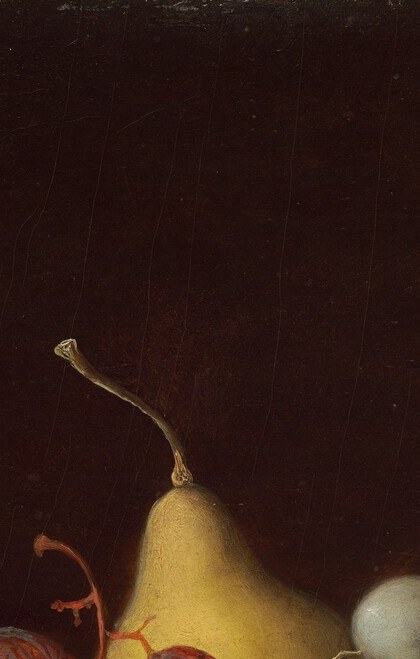
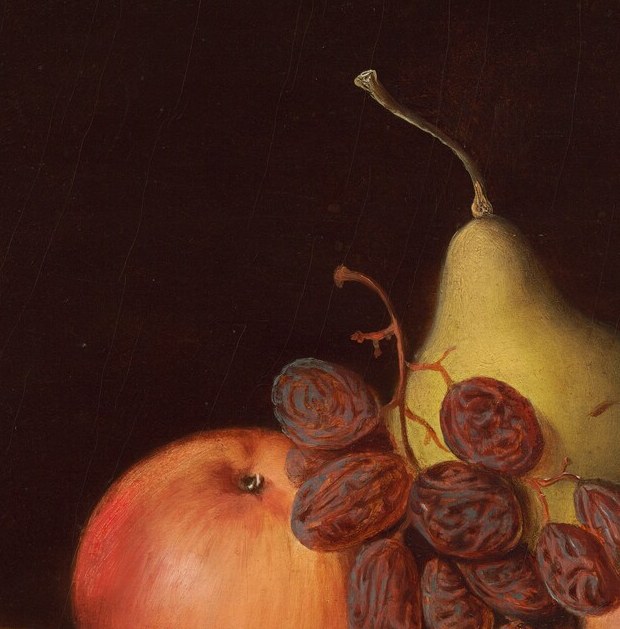
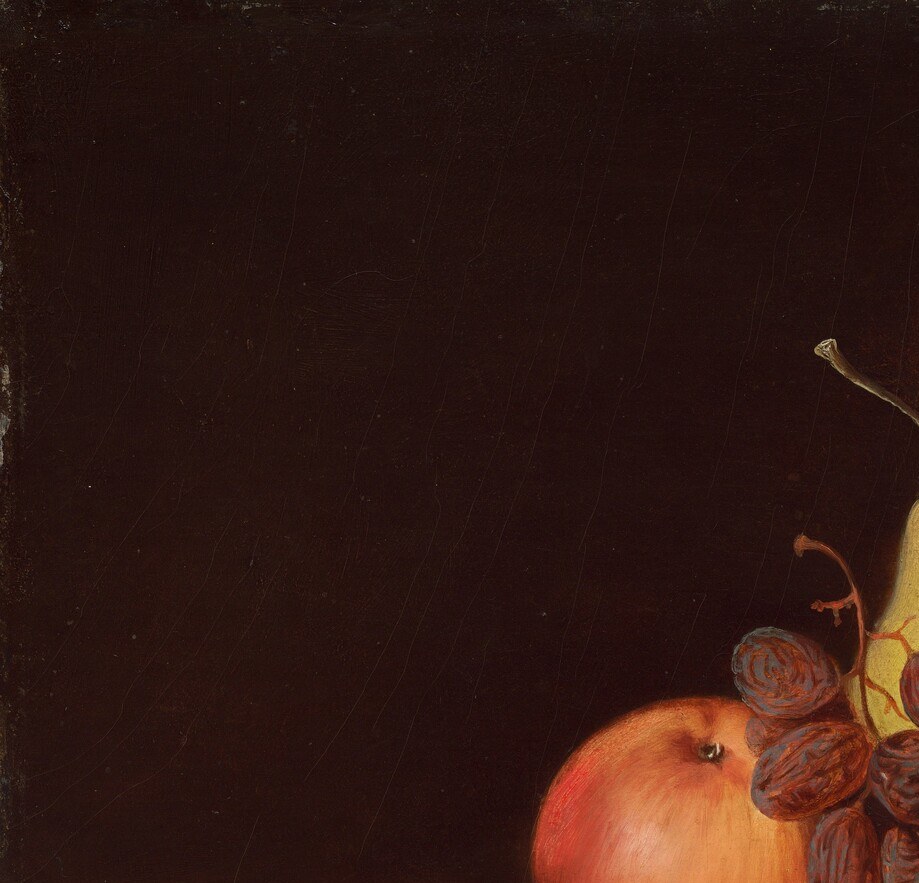
This is Still Life with Fruit and Nuts, painted in 1848 by Robert Seldon Duncanson. It hangs in the National Gallery of Art in Washington, D.C., where it became the first work by Duncanson to enter the museum's collection when it was acquired in 2011. The painting is only 12 by 16 inches, and it is one of fewer than a dozen known still lifes by an artist who would later become the first African American painter to achieve an international reputation.
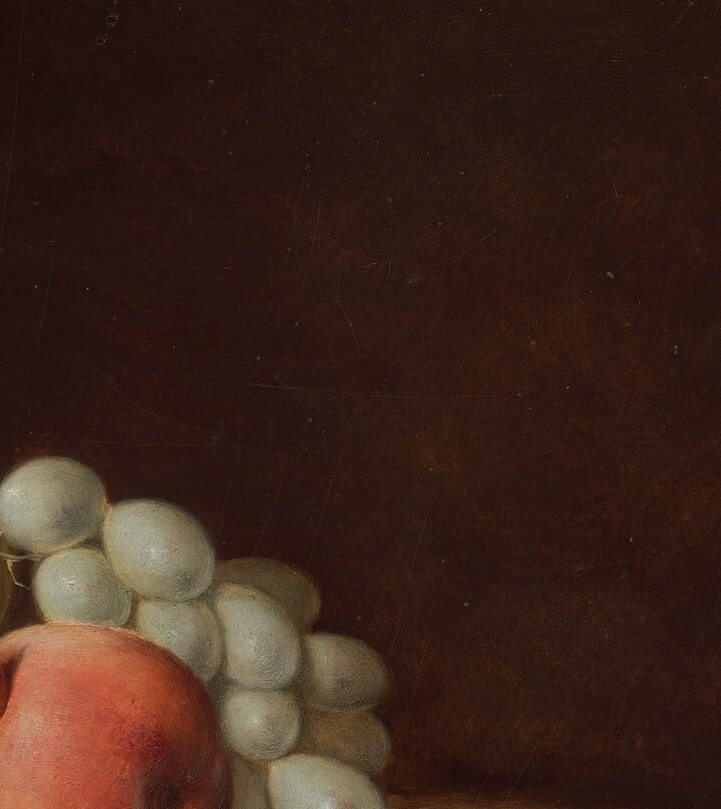
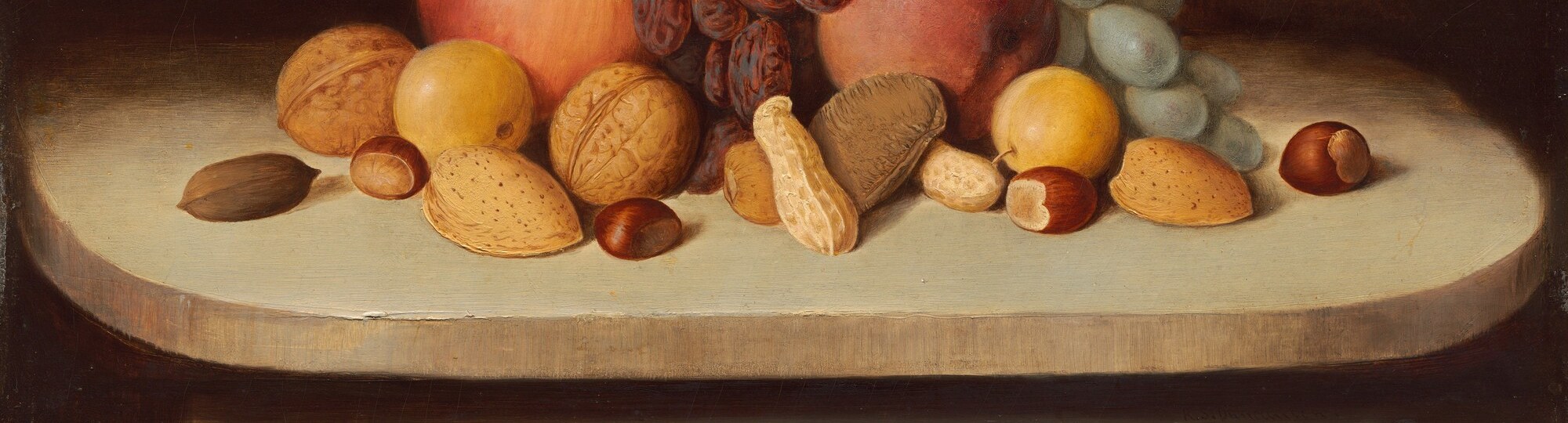
Take a moment with the green grapes on the right. Their translucency, the way the light seems to pass through them, is the most technically demanding passage in the whole work. Then move to the left side of the ledge, where a walnut and a cluster of almonds and hazelnuts sit. The rough, ridged shells are a deliberate contrast to the polished fruit skins, and contemporary critics singled out exactly this tactile play for praise. Notice the peanuts in the center. They are a quiet choice, but an American one, subtly grounding this classical European format in mid-19th-century Ohio.
Duncanson painted this in Cincinnati, then known as the 'Athens of the West,' where a free Black artist could find real, if fragile, opportunity. He was largely self-taught. He exhibited still lifes at the Michigan State Fair and earned real admiration, but a few years later, an encounter with Thomas Cole's allegorical landscapes redirected him entirely. By the 1860s, he was working internationally while the Civil War tore through the country he had left behind. The painting's path is known: sold at Phillips de Pury and Luxembourg in 2000, it passed through Babcock Galleries and into a private collection before the National Gallery secured it with support from Ann and Mark Kington and the Avalon Fund.
A small, quiet picture, made thirteen years before the Civil War, by a man teaching himself how to paint the light.
#arthistory #robertseldonduncanson #19thcenturyart
Details
Transcript
In 1848, a free Black painter in Cincinnati set up a small board. He built a perfect pyramid of fruit. Look at the skin on this apple. That is self-taught skill. Now the grapes. Light passes through each one. Critics here praised the contrast: smooth fruit against rough shells. And peanuts. An American touch, in a European form. His name is right here, nearly lost in the shadow. The National Gallery bought this in 2011. It was the first Duncanson they ever owned.