Vanitas Still Life by Evert Collier
View the artwork: Vanitas Still Life →
This is Evert Collier's Vanitas Still Life, painted in 1662. It lives today at the Denver Art Museum, and it is one of the most quietly devastating arguments ever made in oil paint.
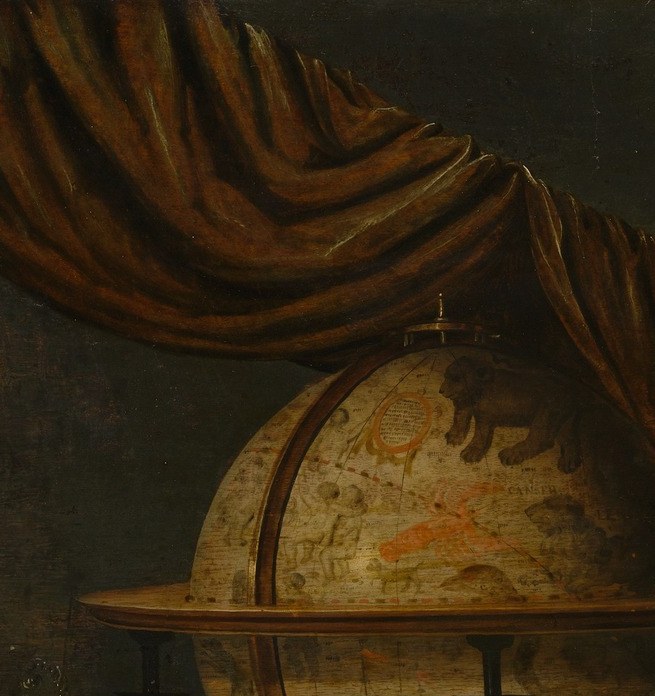
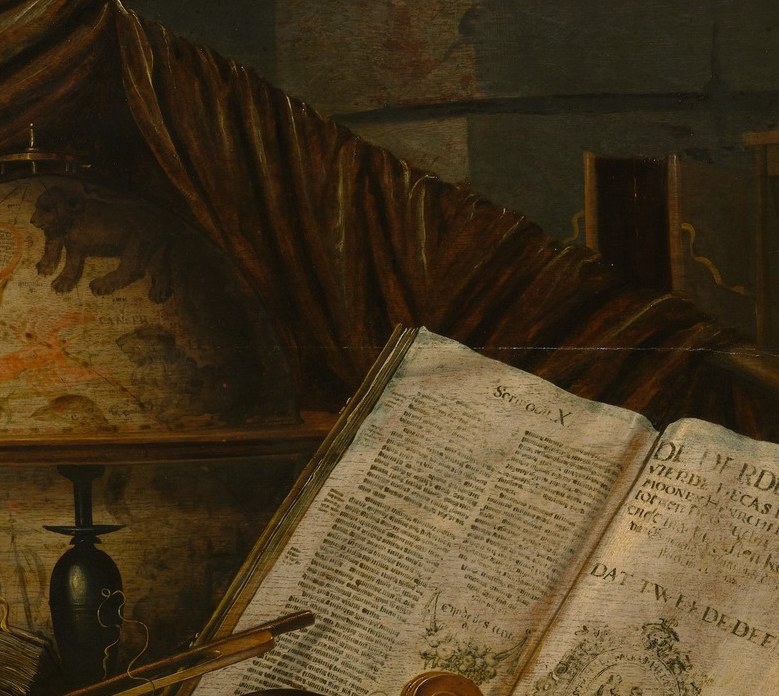
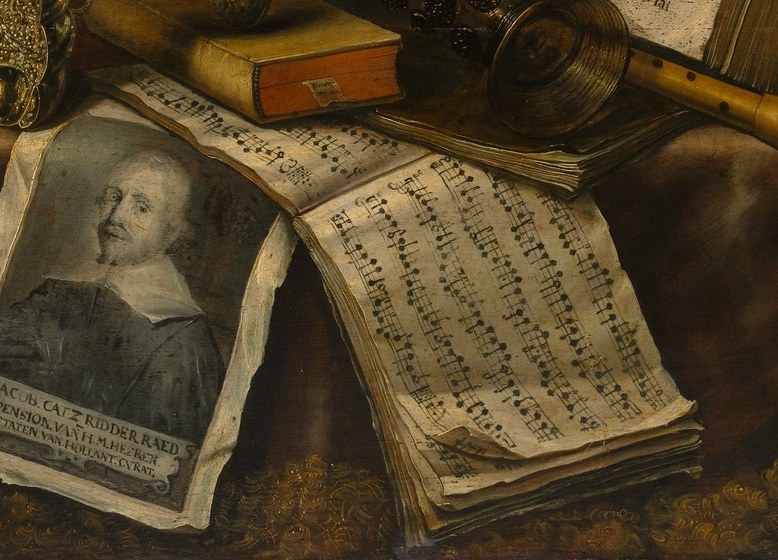
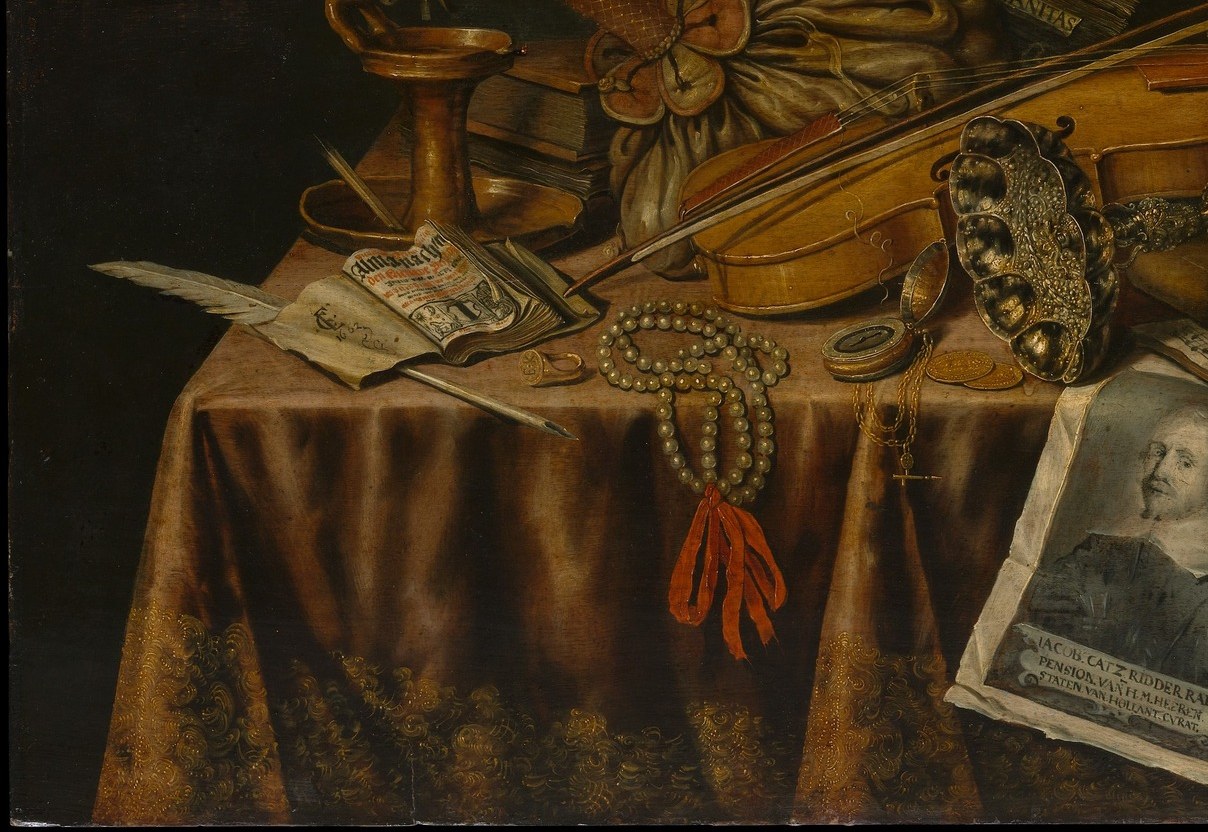
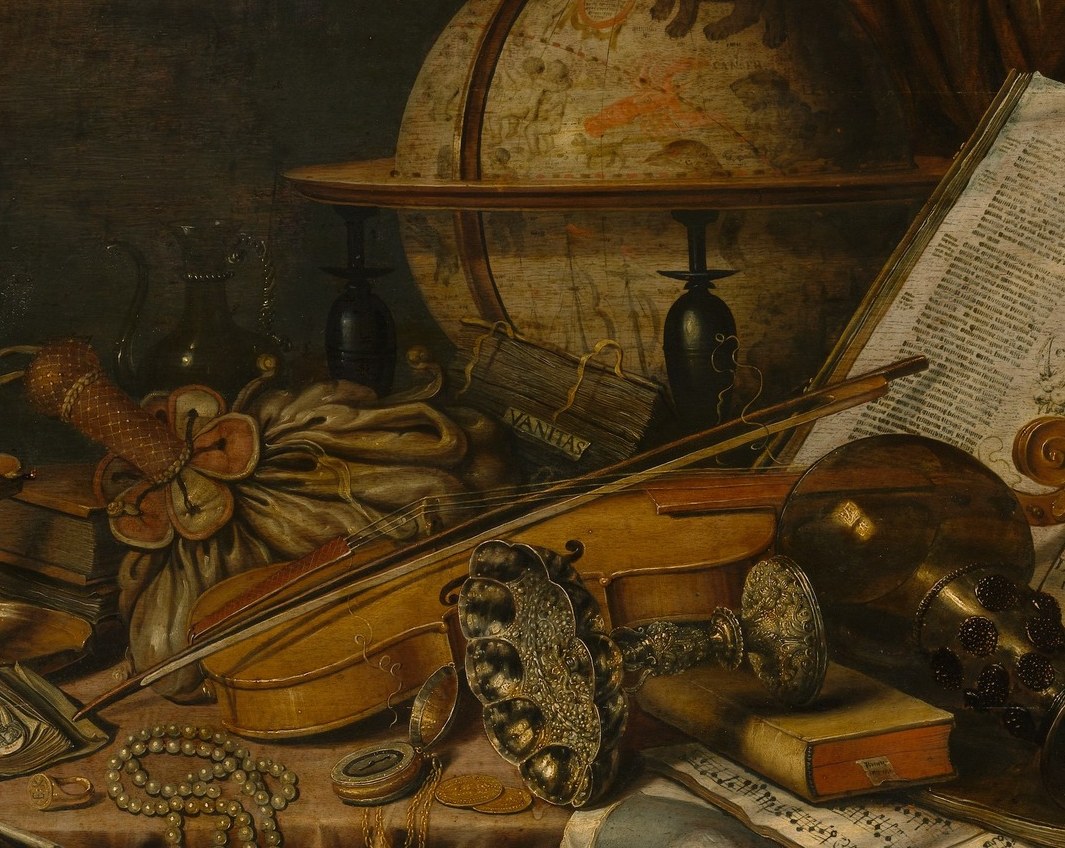
The painting shows you everything a 17th-century Dutch scholar might treasure: a terrestrial globe, an open book with legible print, sheet music, an engraved portrait, a violin laid across the table, and a string of lustrous pearls. All of it is arranged on a fine dark cloth, lit dramatically, presented as the height of a well-lived life. But every object here is already losing the only contest that matters.
Look for the skull. It sits small among the objects, partially obscured, easy to miss on a first pass. That is the point. Beside it, a pocket watch counts the hours. An extinguished candle sits at the far left margin. The quill pen lies still. Everything we build, everything we learn, every beautiful thing we own, all of it ends at the same small, half-hidden point.
Collier was a Dutch Golden Age painter who specialized in vanitas and trompe-l'œil. He died in 1708, having spent his career reminding people that they would too. What do you think he would make of the fact that we are still looking, four centuries later?
#arthistory #vanitas #dutchgoldenage
Details
Transcript
A scholar's table, rich with learning and beauty. Books, music, a globe of the whole known world. All of it, an argument that knowledge outlasts wealth. But find the skull. It is small. It is half-hidden. It wins every argument. Evert Collier painted this in 1662, and never looked away.