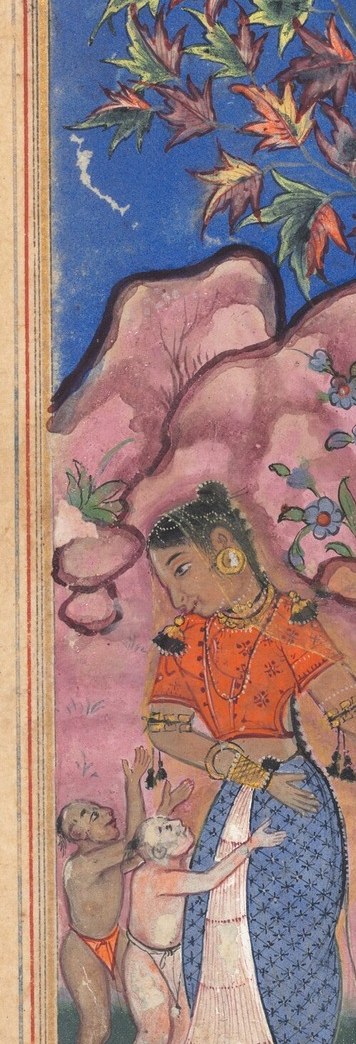
The woman conversing with her children, as the leopard returns, egged on by a fox who is tied to his leg, from a Tuti-nama (Tales of a Parrot): Thirtieth Night by http://www.wikidata.org/.well-known/genid/f92af86c83a2153ccae302b536ef0b7c
This is a folio from the Tuti-nama (Tales of a Parrot), one of the earliest surviving manuscripts of Mughal painting, now in the Cleveland Museum of Art. Produced around 1560 in the court of the young Emperor Akbar, it illustrates the Thirtieth Night: a clever woman faces down a leopard that has come to menace her and her children.
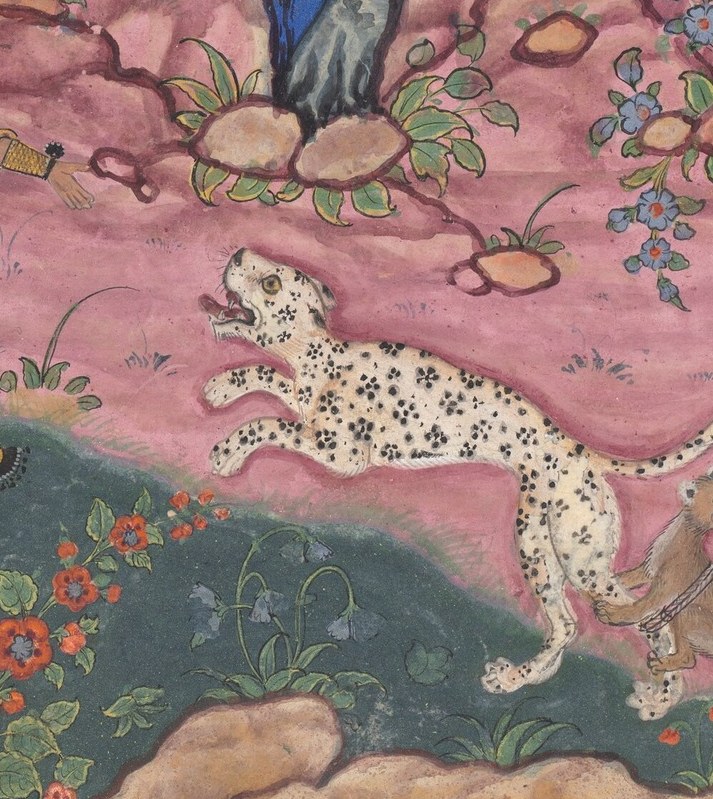
Look first at the woman's calm, upright posture against the approaching predator. Then find the fox, a small, almost hidden figure tethered directly to the leopard's hind leg. That detail is the narrative key. The fox is literally tied to the leopard, egging him on, which makes the woman's coming victory over both animals all the sharper.
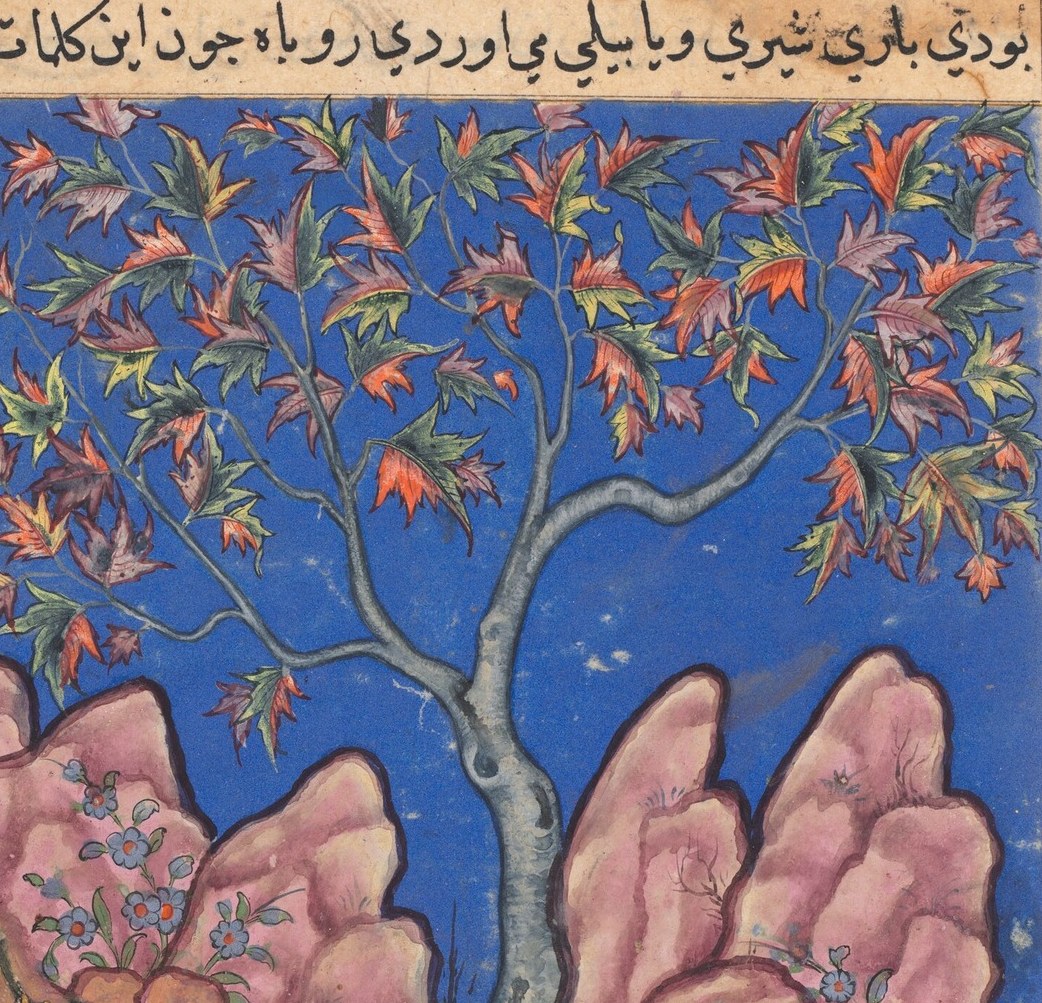
The manuscript fuses Persian, Indian, and Islamic visual traditions under Akbar's imperial patronage. The flat blue sky, the decorative pink rocks, and the plane tree canopy all descend from Persian prototypes, while the story itself was composed in Persian by Ziya al-Din Nakhshabi in the early fourteenth century. The book contains fifty-two moralizing tales told by a parrot.
The folio entered the Cleveland Museum in 1962 from the estate of diplomat Breckinridge Long, passing through Harry Burke Antiques and the Bernard Brown Agency before its acquisition. It remains a cornerstone for understanding how Mughal painting began. What other details do you spot in the branches?
#arthistory #mughalpainting #tutinama
Details

Transcript
They look like actors in a folktale. A woman and her children, a stalking leopard. The tale comes from the Tuti-nama, or Tales of a Parrot. Painted around 1560 for Emperor Akbar. She has already outwitted this leopard once. Now look at the leopard's back leg. A fox is tethered to it, urging the leopard forward. She will convince him she is a hyena. He will retreat again.