The Virgin Adoring the Host by Jean Auguste Dominique Ingres
View the artwork: The Virgin Adoring the Host →
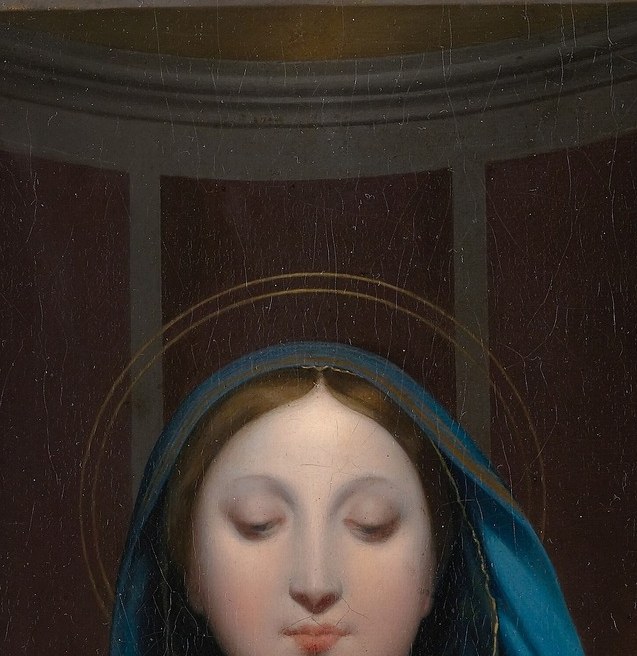
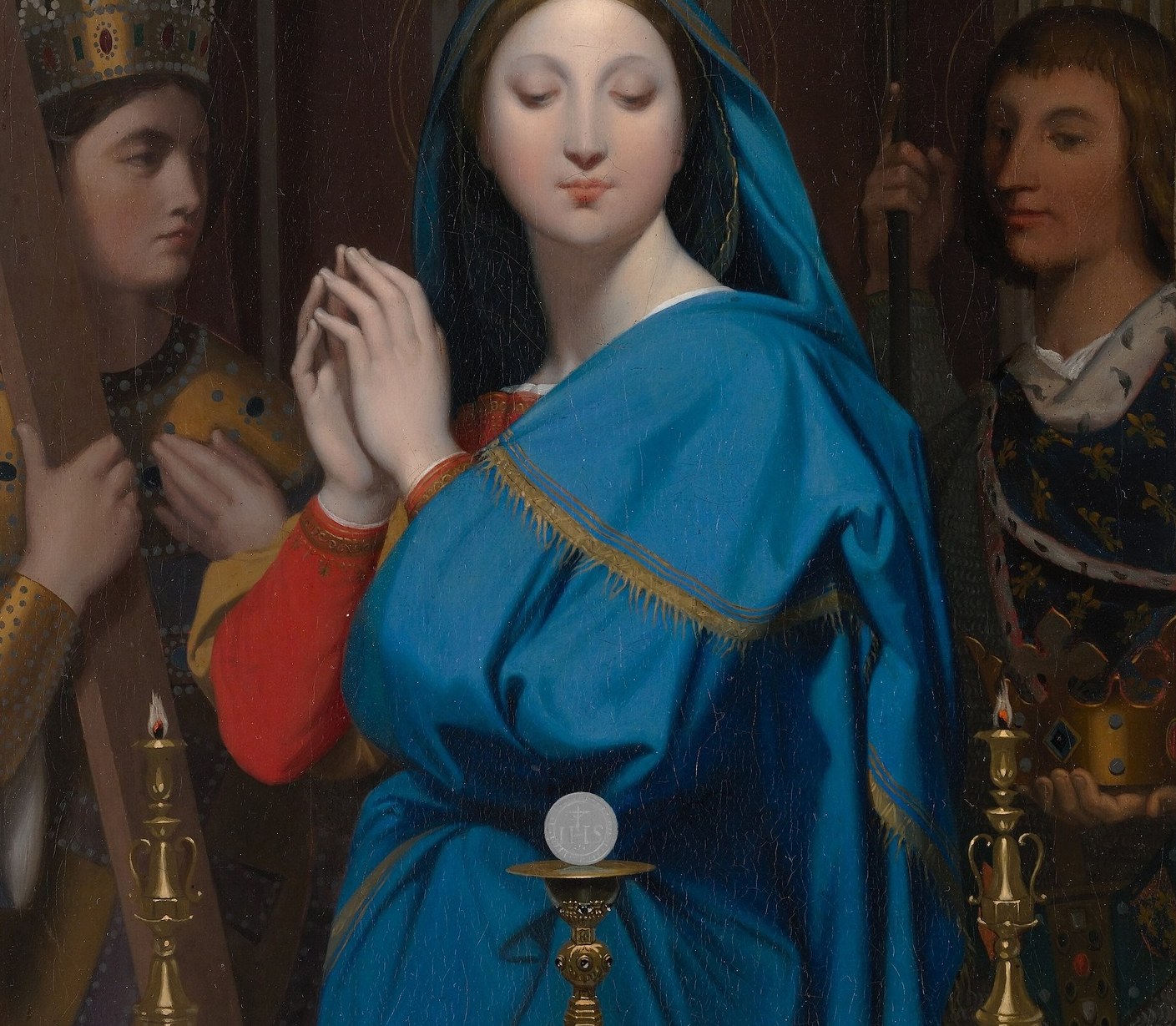
Jean-Auguste-Dominique Ingres painted The Virgin Adoring the Host in 1852, and it operates like a beautifully organized encyclopedia of Catholic Eucharistic theology. It hangs in the Musée d'Orsay, but it was made for a private chapel, a devotional tool as much as an artwork.
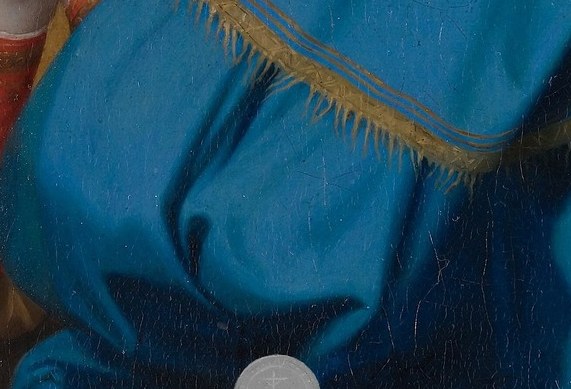
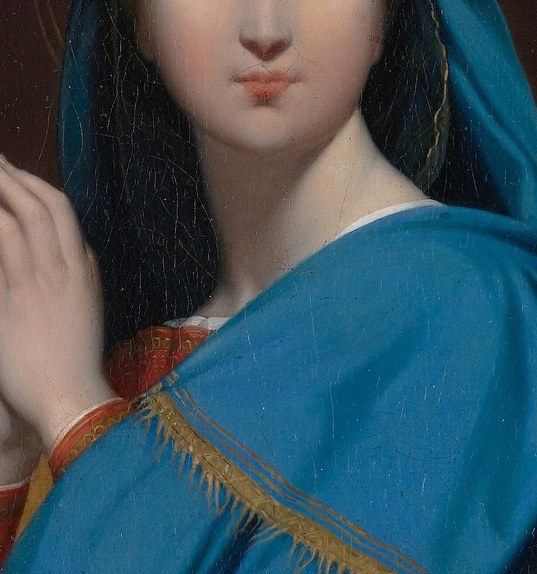
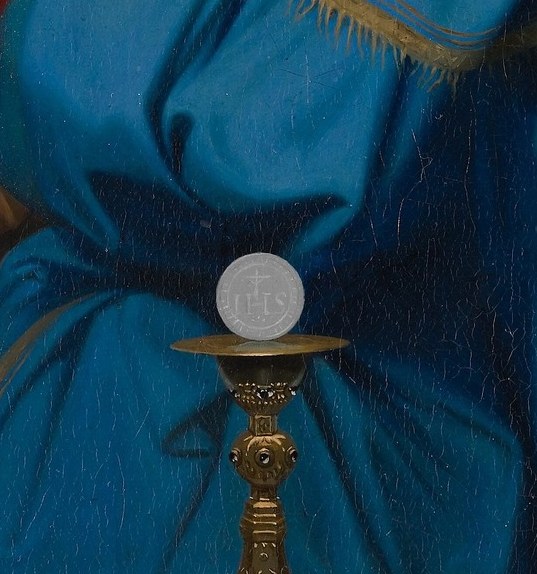
Start at the center. A white host sits on a gold paten, supported by a chalice. In Catholic teaching, the host is not a symbol, it is the actual body of Christ, and every figure in this painting directs their attention to it. The Virgin's blue mantle signals her identity and her purity; the book held by the figure on the right represents scripture, so you get both Word and Sacrament in a single frame. The brass candlesticks flank the altar like liturgical parentheses.
Ingres was in his seventies when he painted this, a staunch defender of Neoclassical order against the rise of Romanticism. He believed in line, not brushstroke. Every edge here is crisp, every fold deliberate. He built the composition as a vertical pyramid: hands to host to chalice to altar, a cascade of devotion engineered in oil paint.
Spend a moment with her face. Ingres closes her eyes not in sleep but in interior vision, the kind of seeing prayer requires. What looks like stillness is actually a fully articulated argument about where the divine resides.
#arthistory #ingres #neoclassical
Details
Transcript
A woman prays before a small white disk. This is the Eucharist, the consecrated host. The gold chalice beneath it catches the only warm light. In Catholic doctrine, the chalice holds the blood of Christ. Her blue mantle is not decorative, it is the Marian color. The book to the right means scripture: the Word made flesh. And the two brass candlesticks frame the host like parentheses. Ingres painted an entire catechism in one calm, silent image.