Bulls Fighting by Catlin, George
View the artwork: Bulls Fighting →
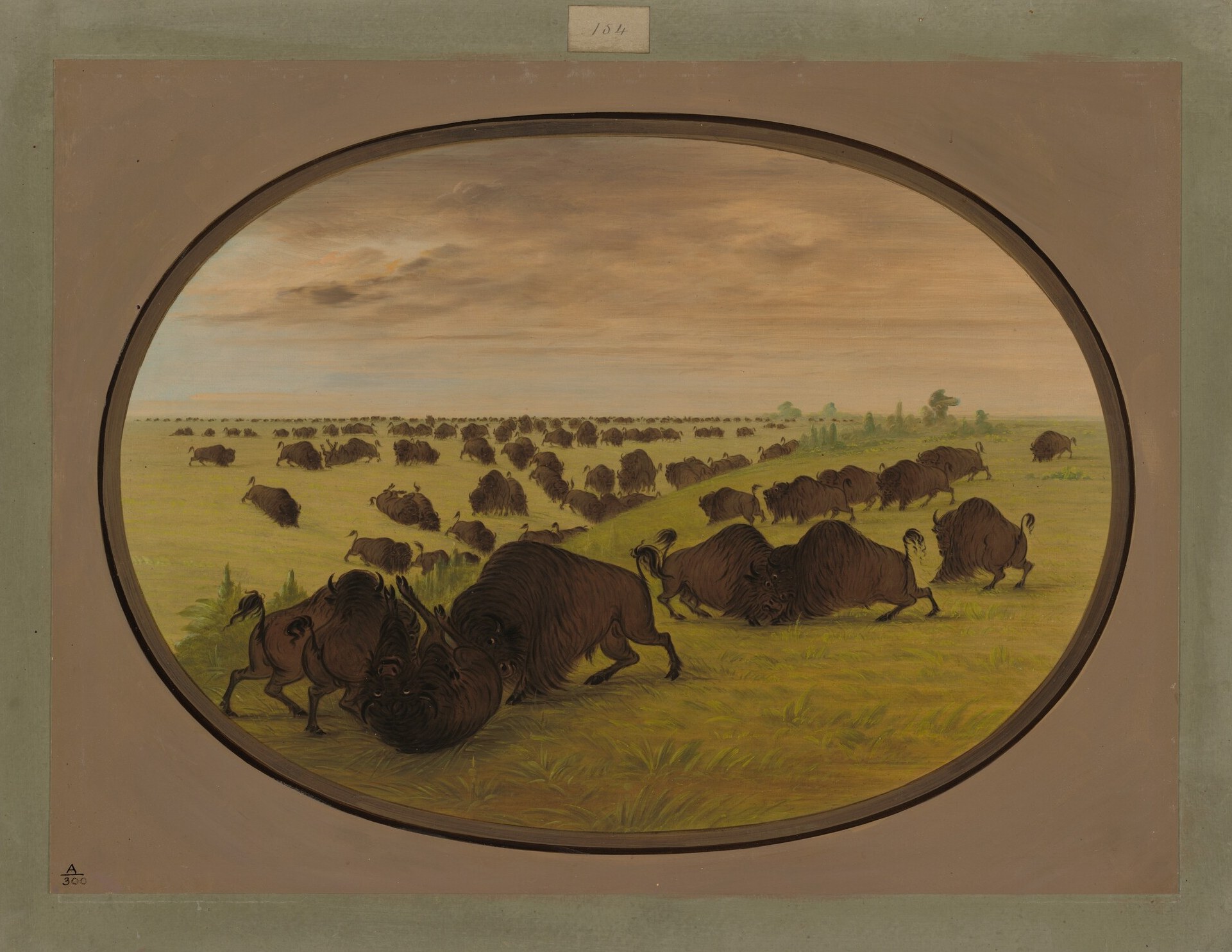
George Catlin's 'Bulls Fighting,' painted in 1861, is on the surface a dramatic wildlife confrontation, two bison locked in a pushing match on the Great Plains. But its true weight comes from timing: this is an eyewitness account of a world on the brink. The vast herds that fill the middle distance of this small oil-on-card were, within twenty years, all but exterminated.
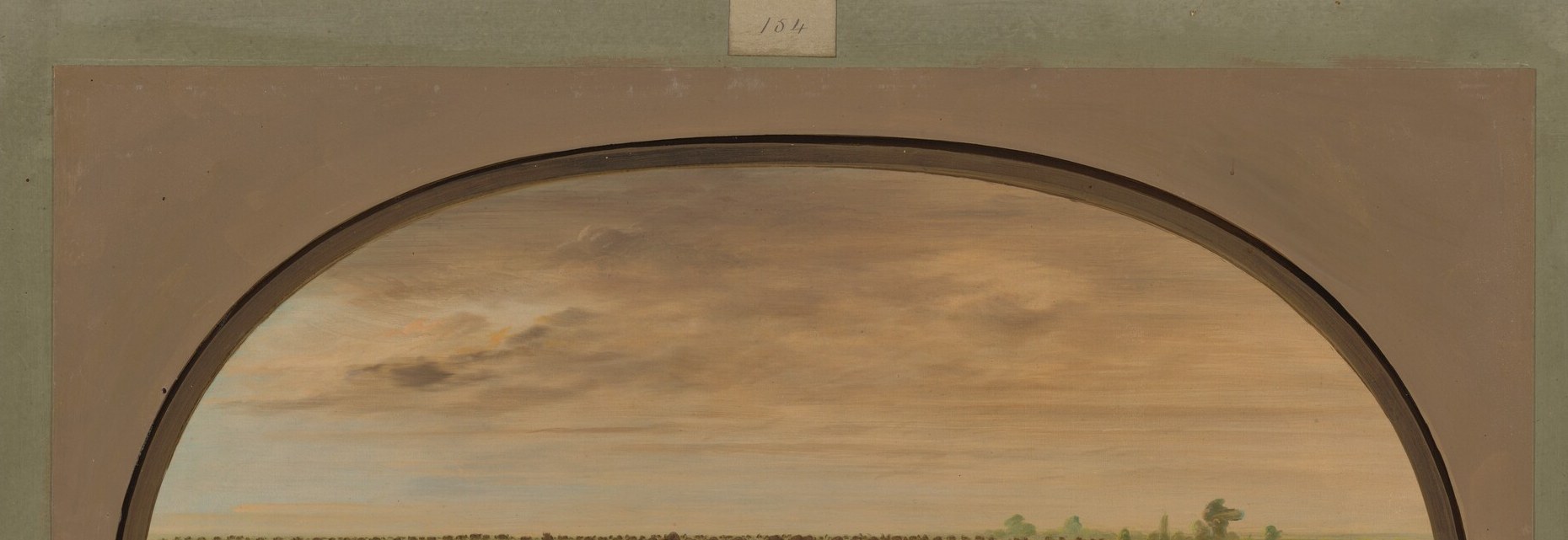
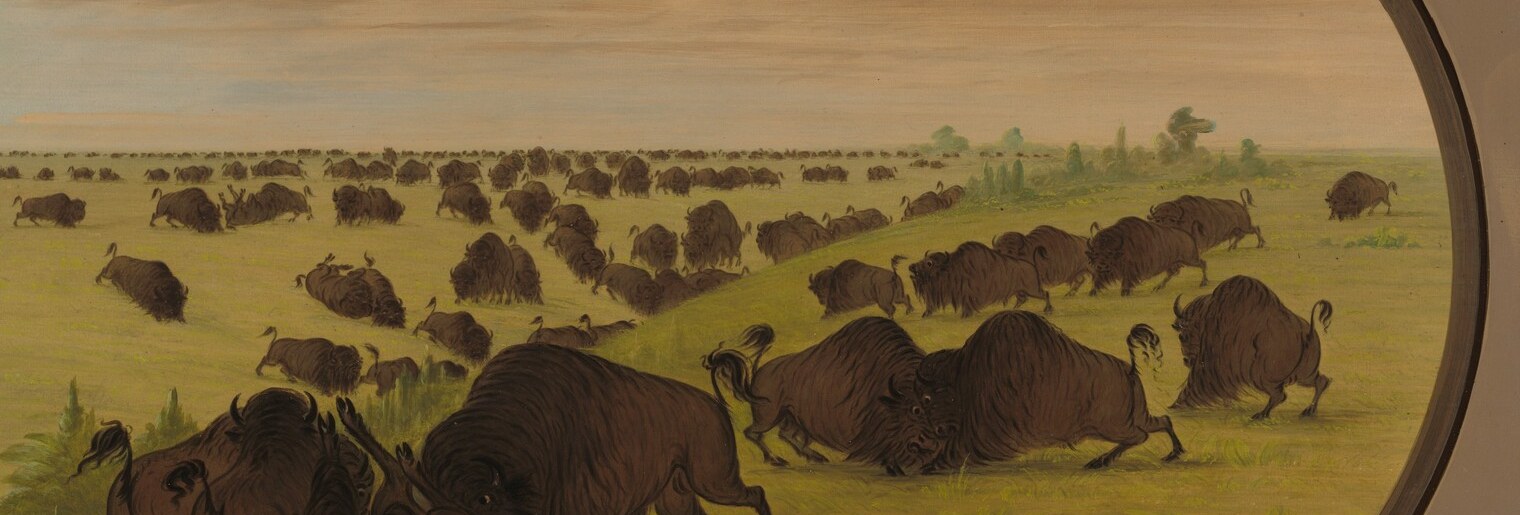
Look first at the horizon, a razor-flat line that identifies this as the American Plains. Above it, a warm orange-pink haze rises from the herd. Catlin rendered the dust cloud of thousands of moving animals as a smear of paint between earth and sky, turning an ecological fact into atmosphere. Then scan the far horizon for the smallest dark specks: near-invisible bison marks that extend the herd beyond sight. The two foreground bulls, straining in combat, anchor the scene, but the real subject is the living mass behind them.
Catlin was a lawyer-turned-painter who traveled the American frontier five times in the 1830s, documenting Native American life and the natural spectacles he witnessed. He saw these herds personally, moving landscapes of animals that covered the ground in every direction. By the time he painted this composition, he was in his mid-sixties, and the wilderness he had spent decades recording was already under catastrophic pressure from commercial hunting and westward expansion. The oval painted border signals this was not a casual field sketch: it was a composed spectacle, painted for his traveling exhibition, a deliberate document meant to show audiences what was disappearing.
Every dark mark in the middle distance was once a living animal Catlin observed. The painting functions now as a quiet but devastating record, a landscape that, within a single human lifetime, ceased to exist in anything like this form. When you look at the distant specks, you are looking at a census that was already falling.
#arthistory #georgecatlin #americanwest
Details

Transcript
The unbroken horizon. The Great Plains, without end. George Catlin made five trips west in the 1830s. He saw this. A surging mass of buffalo, hundreds deep. Marks that become animals only at a distance. The dust cloud of a running herd, rendered in warm paint. In the foreground, two bulls lock horns. A clash of brute force. Catlin painted this in 1861. Within two decades, the vast herds had collapsed. The animals at the farthest horizon are near-invisible specks. The last of a continent.