The Adoration of the Christ Child by http://www.wikidata.org/.well-known/genid/98a3b1c373344c90bd8cb7ec141278b4
View the artwork: The Adoration of the Christ Child →
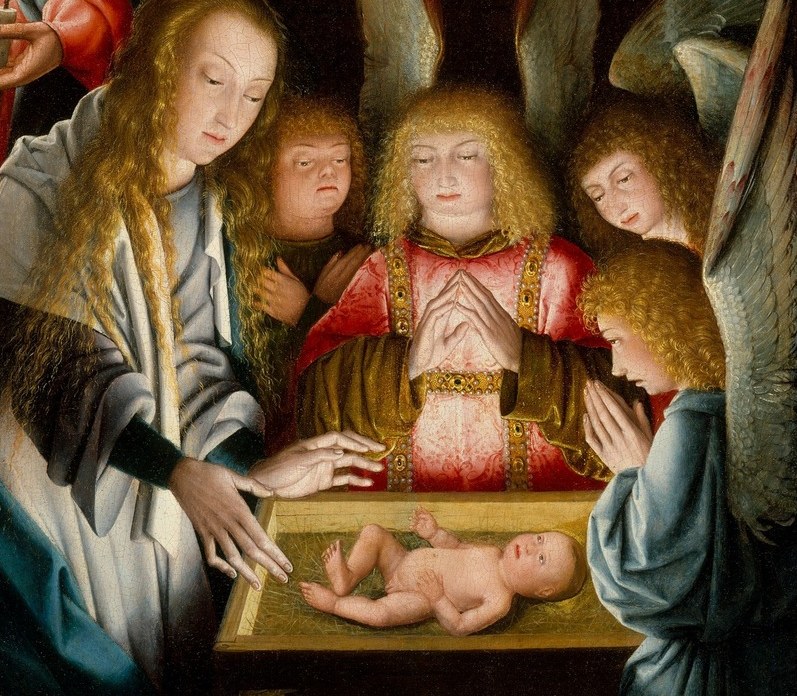
This is "The Adoration of the Christ Child," painted around 1515 by an unknown German master, likely working in the circle of Albrecht Dürer. Today it lives in a private collection.
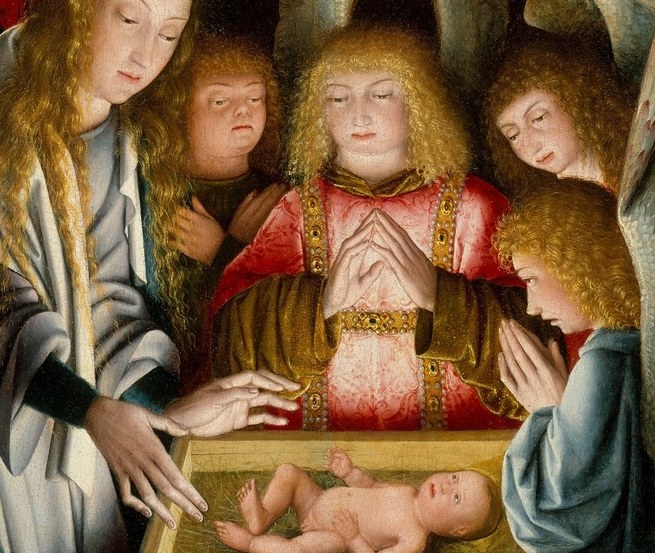
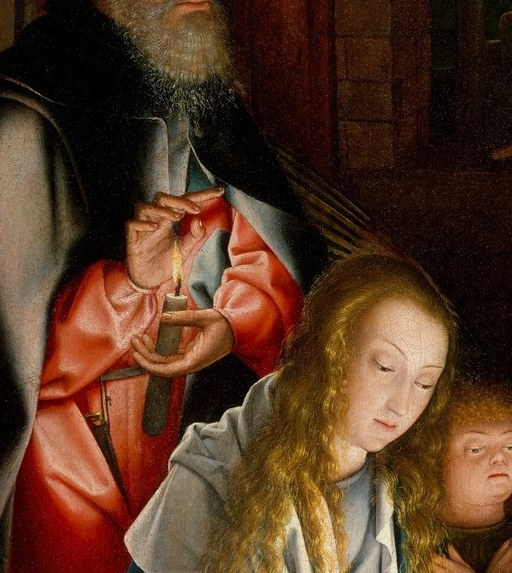
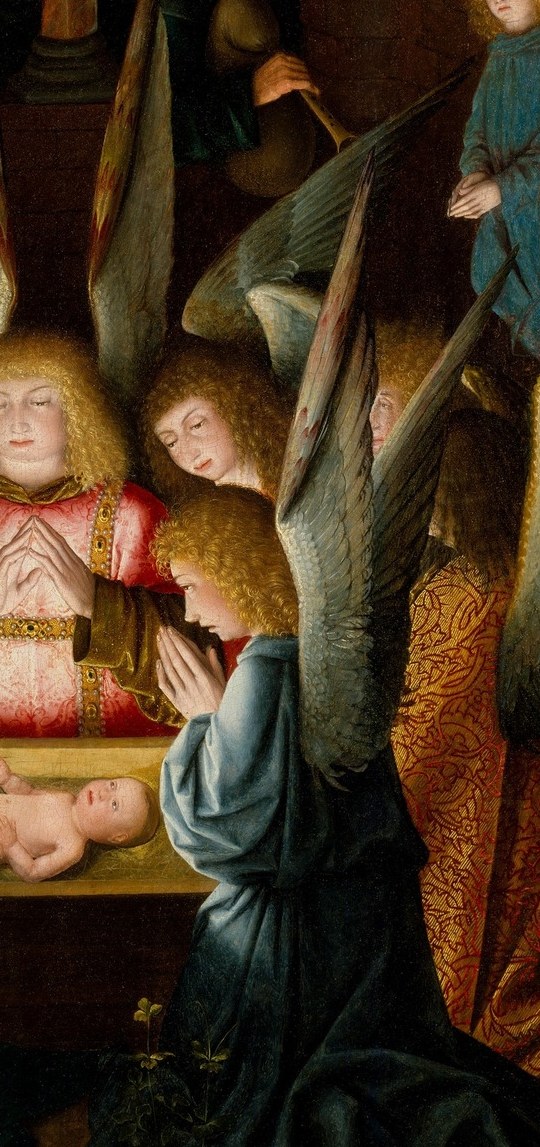
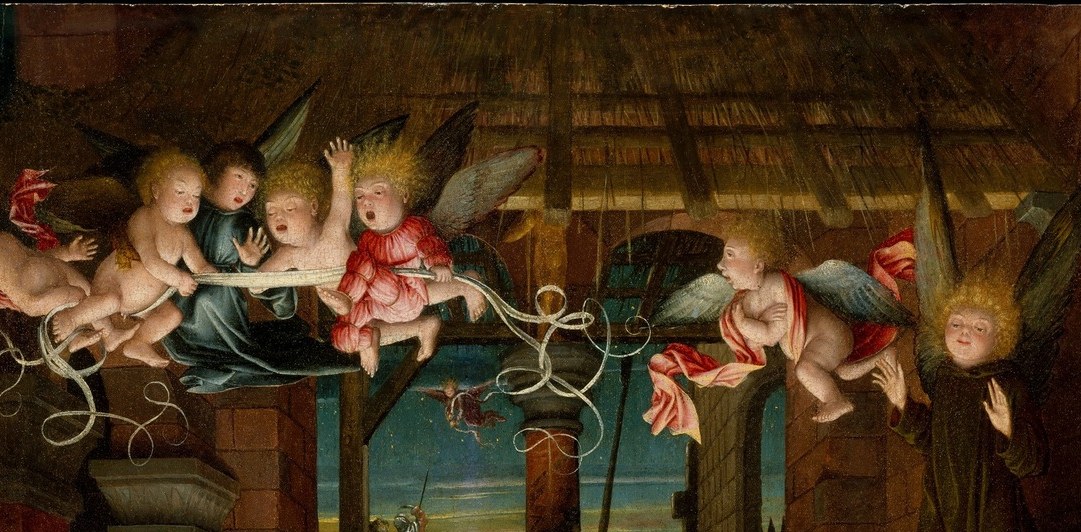
Start with the light. The infant Christ is the only illumination in the scene. His skin radiates a warm glow outward, a technique called luce propria that turned the child into a literal light source. Mary's face catches this glow softly from below. The angels above catch it. And the man in the red robe catches it most vividly of all.
That red-robed figure is why this painting lingers in the mind. He kneels at the right in saturated vermillion, visually commanding the scene almost as strongly as the holy family. His hands are clasped in adoration, his expression unreadable. Yet art historians have never conclusively identified him. He could be a shepherd, a Magus, or a portrait of the unknown donor who paid for this panel. The artist made the decision to give a complete stranger the most optically powerful color in the painting.
There is a strange generosity to that choice. Most Nativity scenes anchor the viewer's eye squarely on Mary or the Child. Here, a nameless worshipper in red shares the center of gravity. The painting holds a silent space for anyone who kneels before it, and the mystery of who first filled that space remains as vivid as the paint itself.
#arthistory #northernrenaissance #nativity
Details
Transcript
She looks down at her child with hushed tenderness. The infant himself is the only source of light in the room. Every face in the painting is lit by this child. This man in red is the painting's central mystery. No one knows who he is. A shepherd, a donor, a king. His vivid red robe commands more attention than anyone else here. The artist gave anonymity a starring role and kept the secret for five centuries.