Giant Magnolias on a Blue Velvet Cloth by Heade, Martin Johnson
View the artwork: Giant Magnolias on a Blue Velvet Cloth →
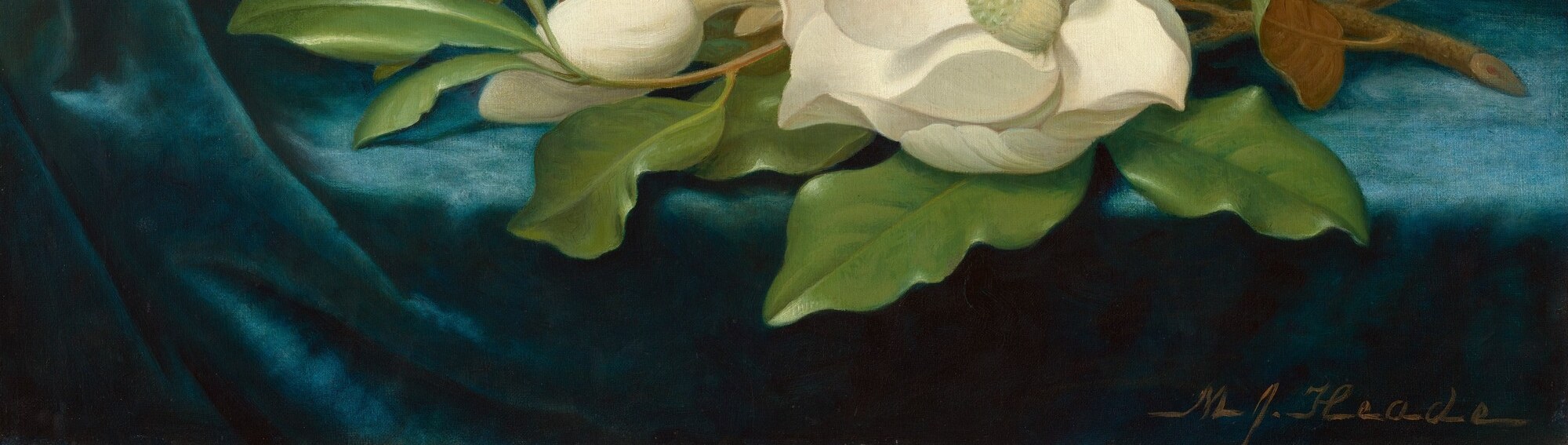
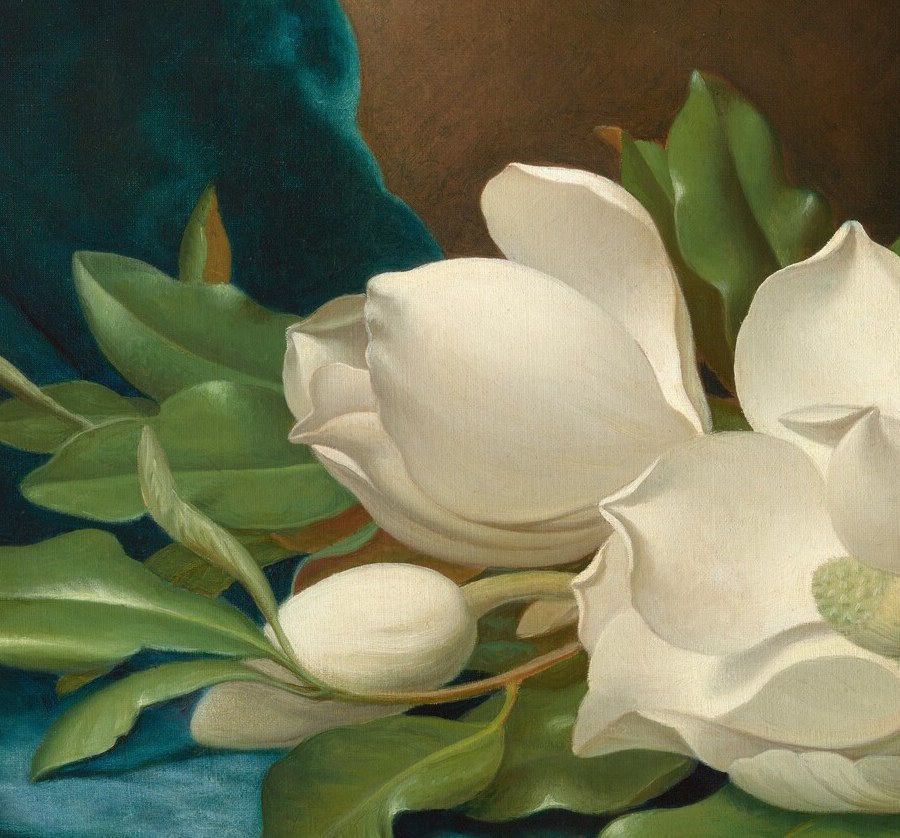
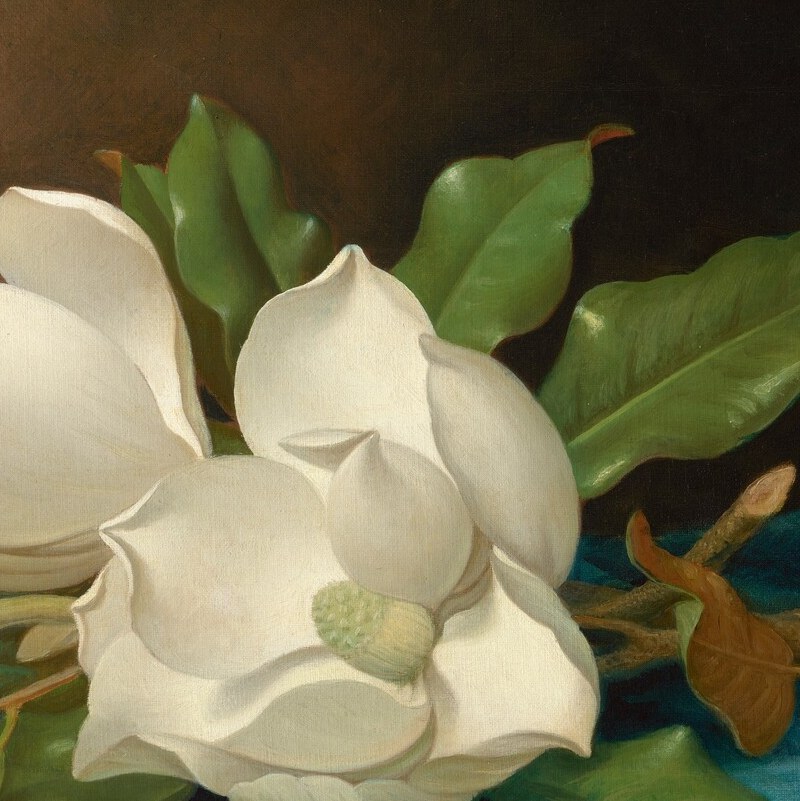
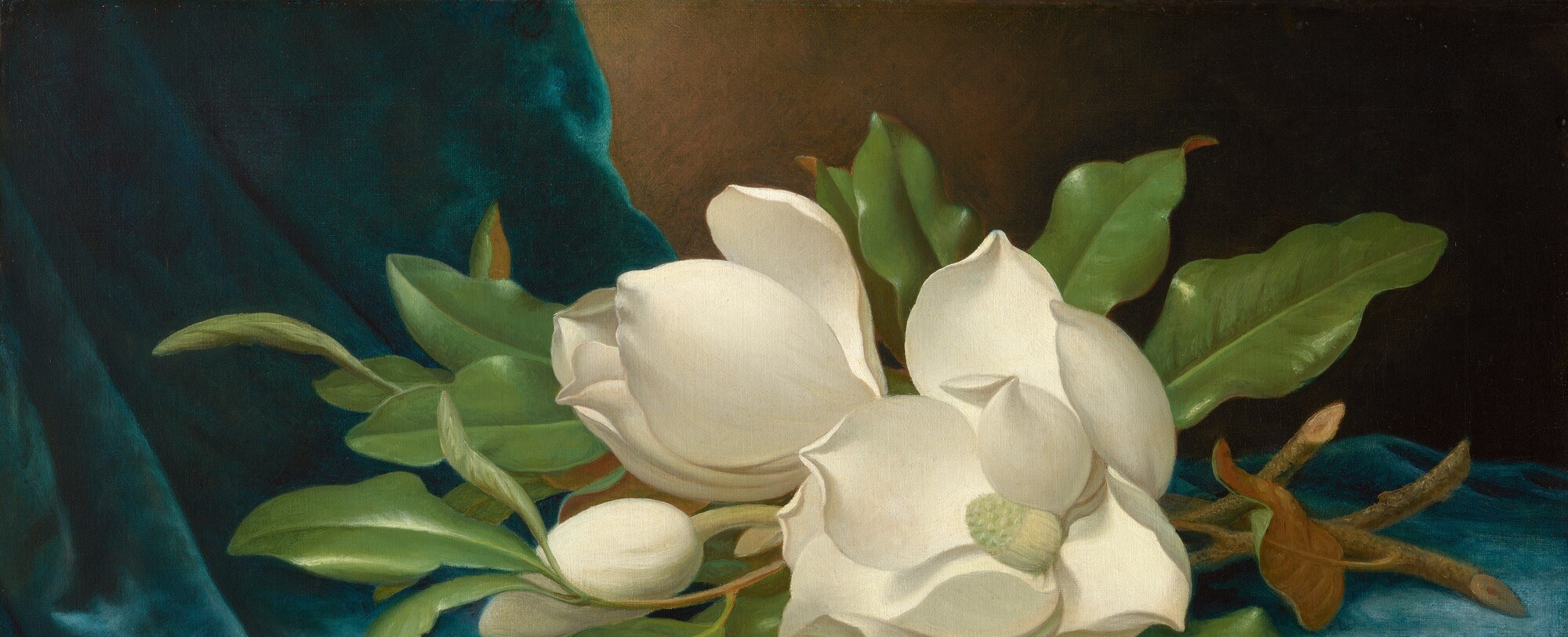
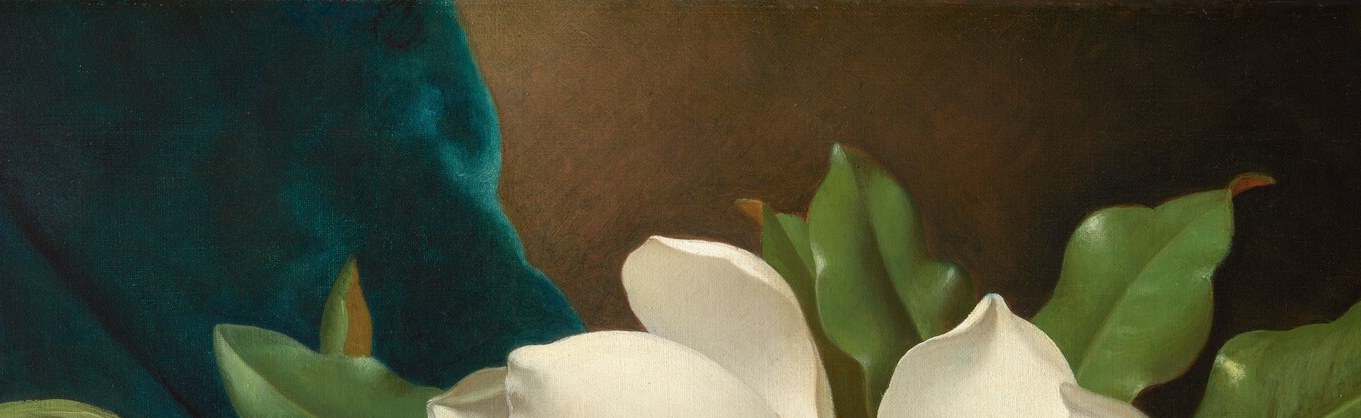
Martin Johnson Heade's Giant Magnolias on a Blue Velvet Cloth (c. 1890) looks at first like a straightforward still life of magnolia blossoms on fabric. But the painting performs a quiet optical illusion: the white petals appear to emit light, even though they are painted in opaque oil on canvas.
Look closely at the background. It's a near-black void, a deep teal-green darkness that surrounds the blooms completely. Heade understood that perceived brightness is relative, a white shape against absolute darkness reads as luminous because the eye has no brighter reference point. The deep blue velvet and dark glossy leaves serve the same purpose, pushing the petals forward into glow.
Heade adapted this technique from 17th-century Dutch masters who used dark grounds to make candlelight and pale flesh read as radiant. By the 1890s, when most American painters were chasing impressionist light, Heade had retreated to this older, more theatrical method. He applied it not to saints or interiors but to the magnolias of the American South, which he studied with almost scientific attention.
The painting entered the National Gallery of Art in 1982, securing Heade's place in American art history after decades of obscurity. He died in 1904, largely forgotten, having painted luminous flowers that few contemporaries appreciated.
What's the darkest painting that made you see light differently?
#arthistory #americanart #luminism
Details
Transcript
White petals on a dark cloth. Simple enough. But these blossoms don't just reflect light. They seem to glow. Heade painted this in 1890, far from the art world's main currents. The velvet is deep blue. The leaves are dark, almost black. Now look at the background void. It's a near-total darkness. That darkness is the light source. The petals only appear to glow against it. A trick borrowed from 17th-century Dutch painters who used black grounds to make candlelight sing. Heade applied it to American botany. Luminism, made from darkness.