Roundel with Annunciation to the Shepherds by http://www.wikidata.org/.well-known/genid/1b3cf4bd45d90ac378607a1b8d824731
View the artwork: Roundel with Annunciation to the Shepherds →
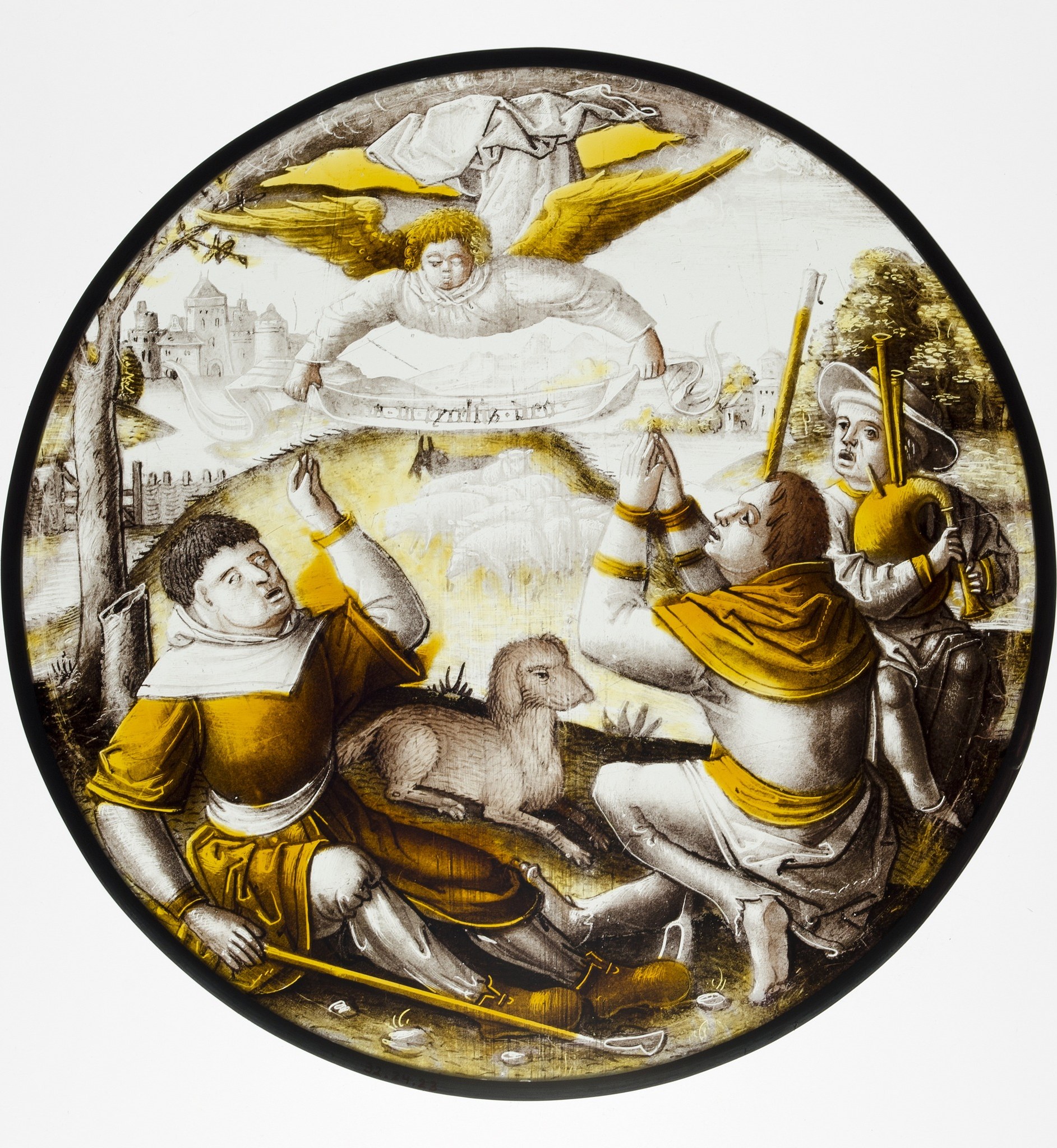
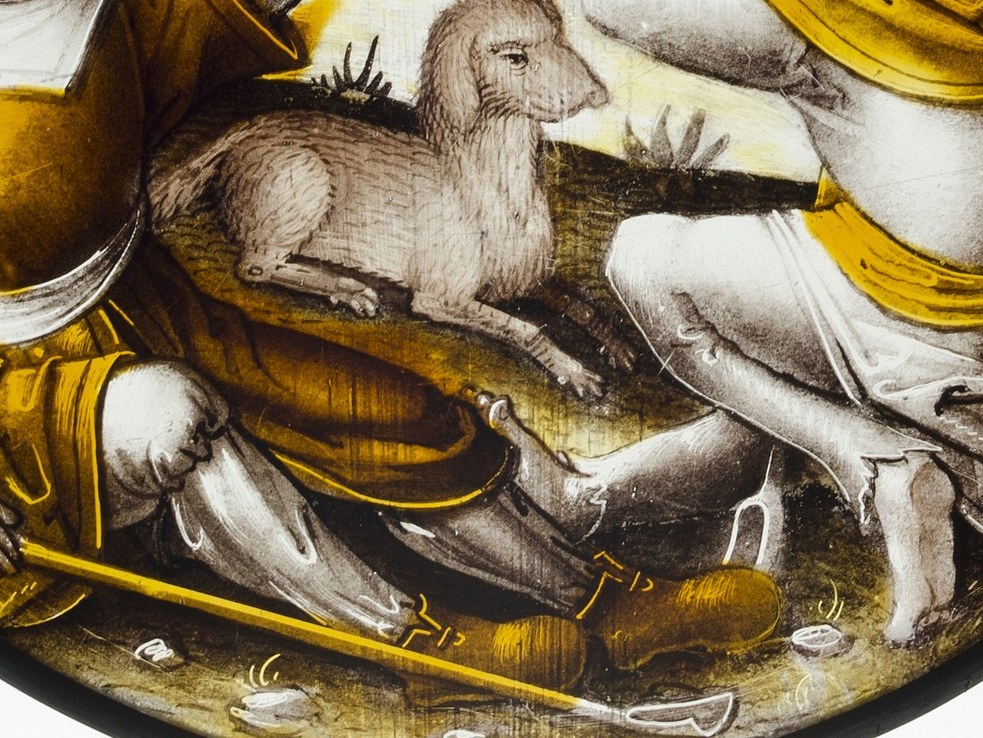
This is a stained-glass roundel made around 1505 by the Netherlandish artist Dirck Vellert. It hangs in the Cloisters in New York, and it performs a visual trick that takes a moment to sink in: a night scene, painted with glass.
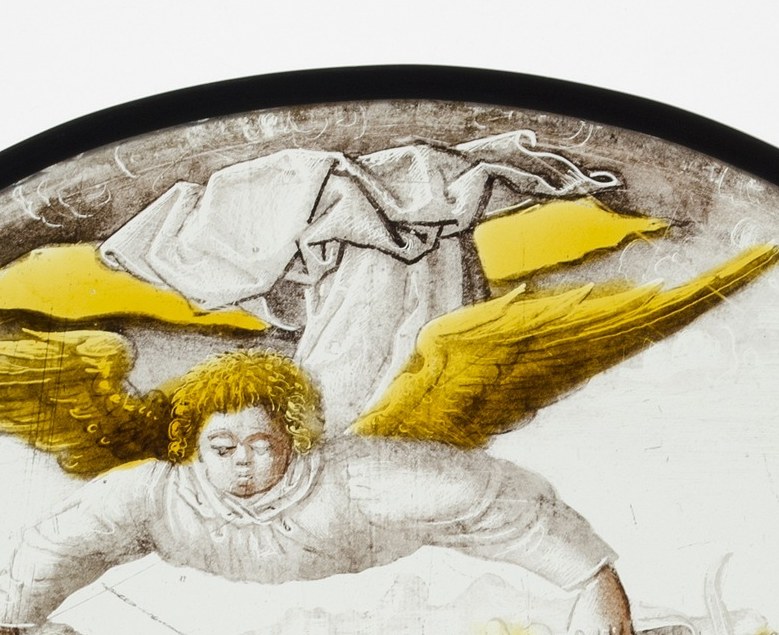
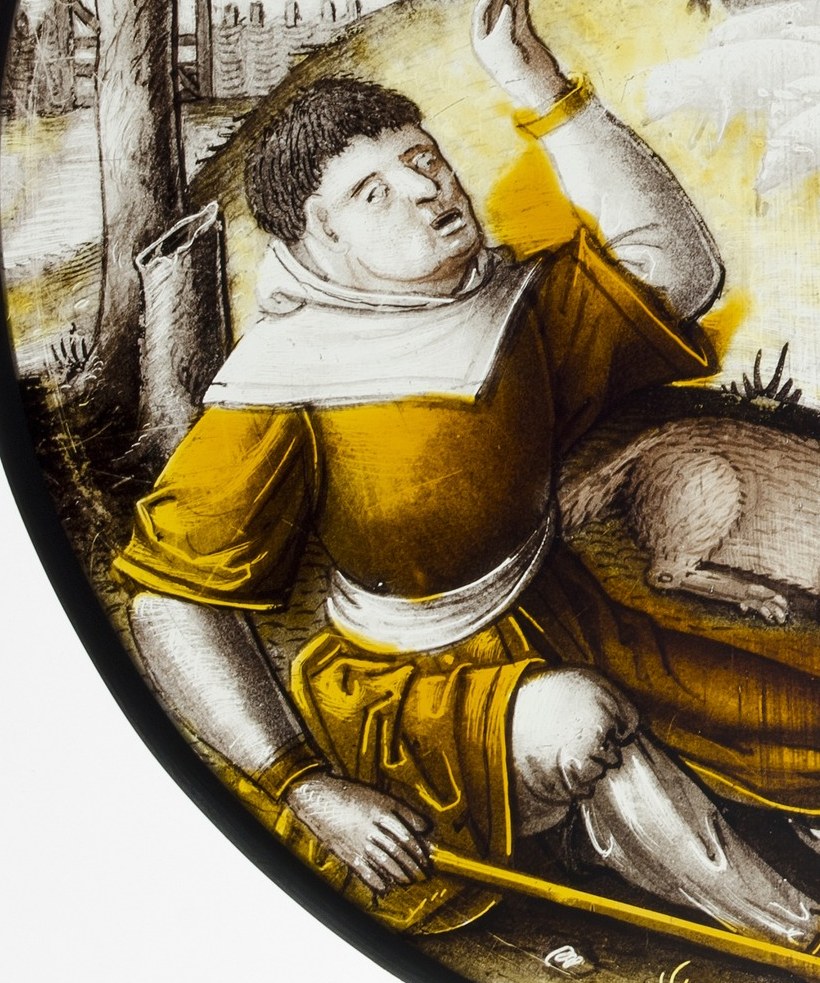
The angel's wings and the luminous glow around the descending figure are built with silver stain, a compound painted onto the glass and then kiln-fired, which turns clear glass a radiant yellow. Against the dark grisaille background, the yellow reads as pure light. The kneeling shepherd's upturned face on the lower left is cut from the same yellow glass, so his expression of awe is literally made of light.
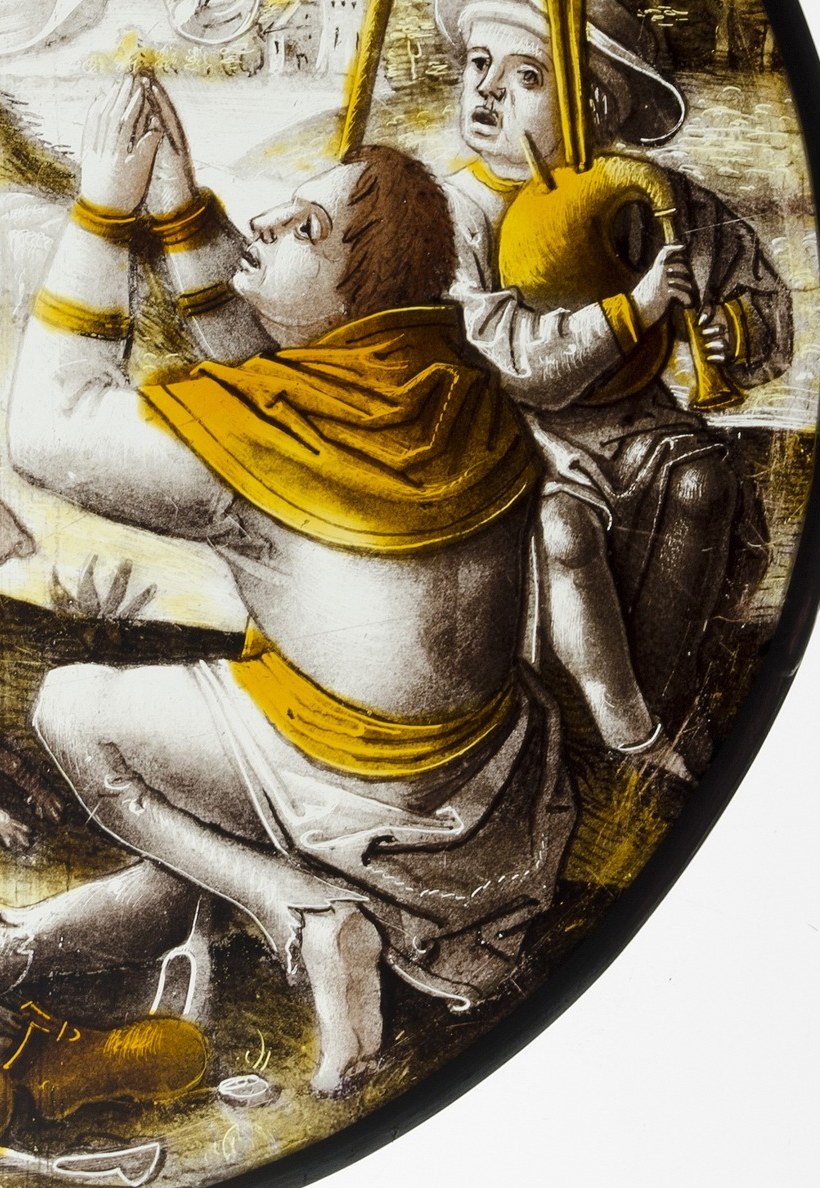
Vellert was a leading glass painter in Antwerp, working at a moment when roundels like this one were commissioned for domestic interiors, windows in private homes rather than churches. The circular format and the small scale meant the owner could contemplate the Annunciation to the Shepherds up close, as a personal devotional object. The faint town on the hilltop, the bare winter tree, and the sheep at center all build a complete nocturnal world within a disc barely wider than a plate.
Stand in front of it and the glass does what glass does: it changes as the daylight shifts. The angel's glow is never exactly the same twice. A 500-year-old moving image.
#arthistory #stainedglass #northernrenaissance
Details
Transcript
At first, all you see is darkness. Then a single figure splits the night open. This is not oil on canvas. It is stained glass. The wings glow because the artist painted silver onto the glass, then fired it. The light on the shepherds is not a window behind the glass. The glass itself is the light source. Look at the kneeling shepherd's face. Pure astonishment, cut from yellow glass. This was made around 1505 for someone's home, a private miracle, glowing on a sill.