A Young Woman and a Cavalier by Cornelis Bisschop

Cornelis Bisschop’s “A Young Woman and a Cavalier” (c. 1660) in the Metropolitan Museum of Art is an intimate glimpse into a private moment, but the artist’s own life was so scandalous that his name was nearly erased from history.

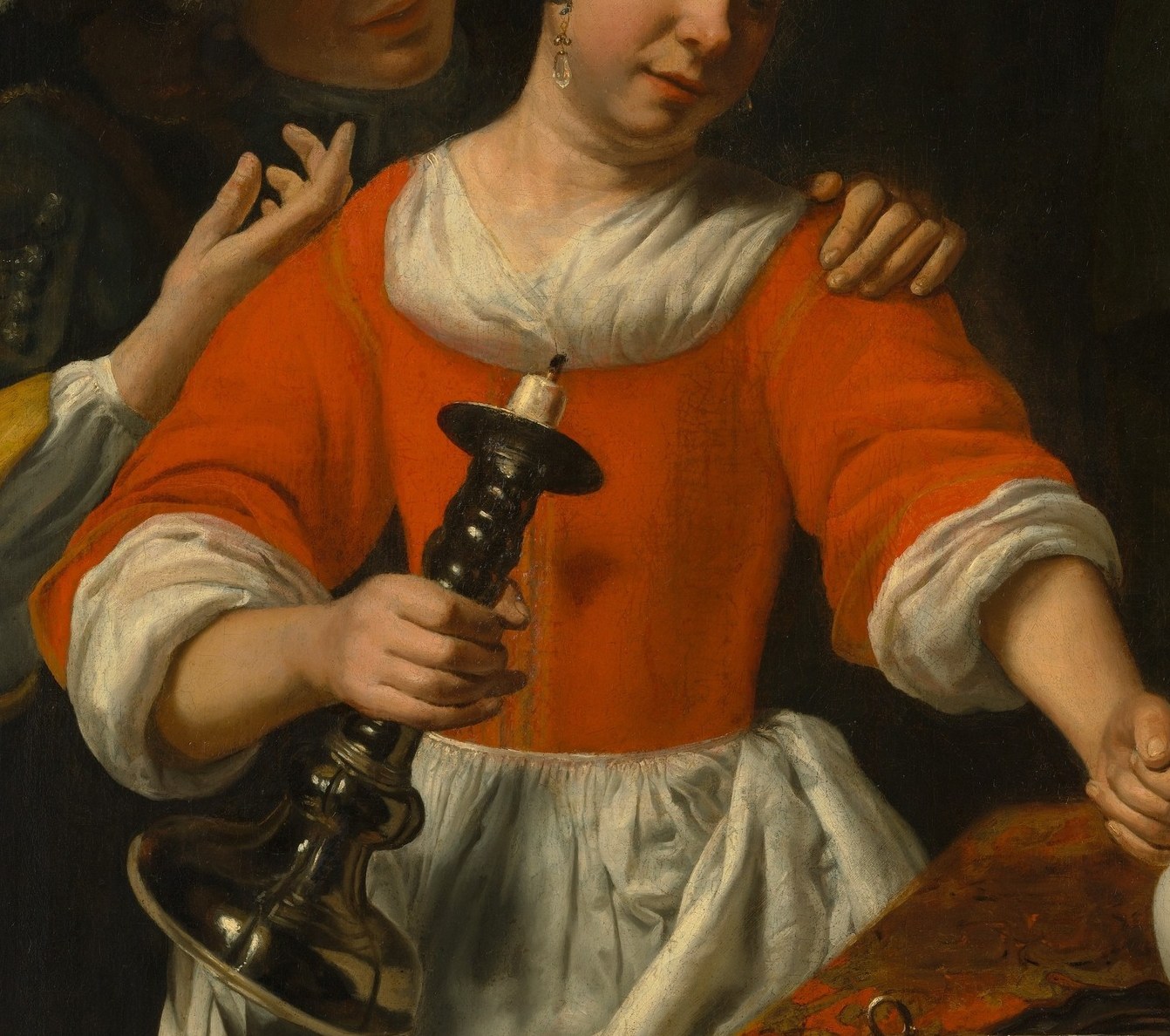
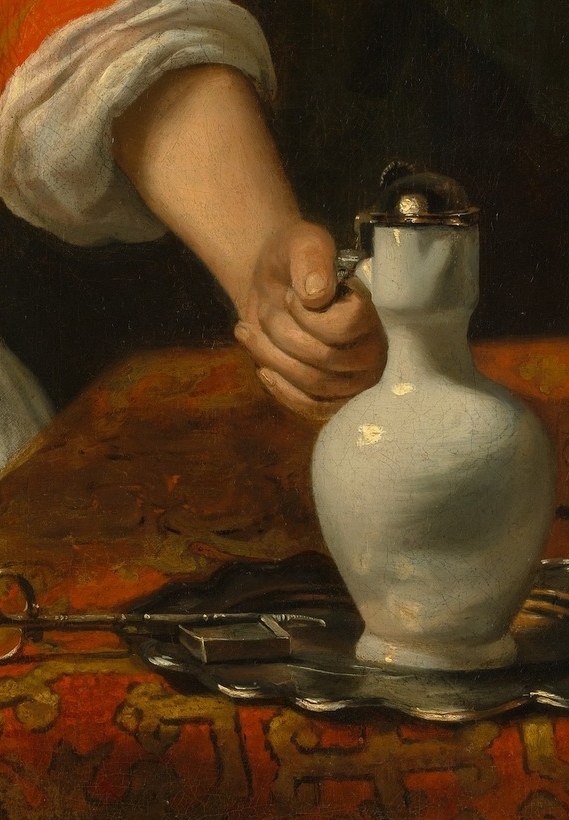
Watch her hands. She holds a candlestick while reaching for a white ewer, caught in the middle of a domestic task. The interruption comes from the man behind her, his hand rests firmly on her shoulder, yet his face remains shadowed beneath a plumed hat. The glowing red of her gown draws your eye, but the tension in her posture and that possessive gesture tell the real story.

Bisschop was a respected painter in Dordrecht until his life collapsed. Accused of deliberately setting fire to his own house for the insurance money, he fled the city in disgrace. He died in exile shortly after, still fighting the charges. The scandal was so severe that his work was sold off and his biography scrubbed clean by contemporaries.

A painting of a paused moment, by a painter whose own life was cut short. What do you think is about to happen next in this room?

#arthistory #dutchgoldenage #cornelisbisschop

Details
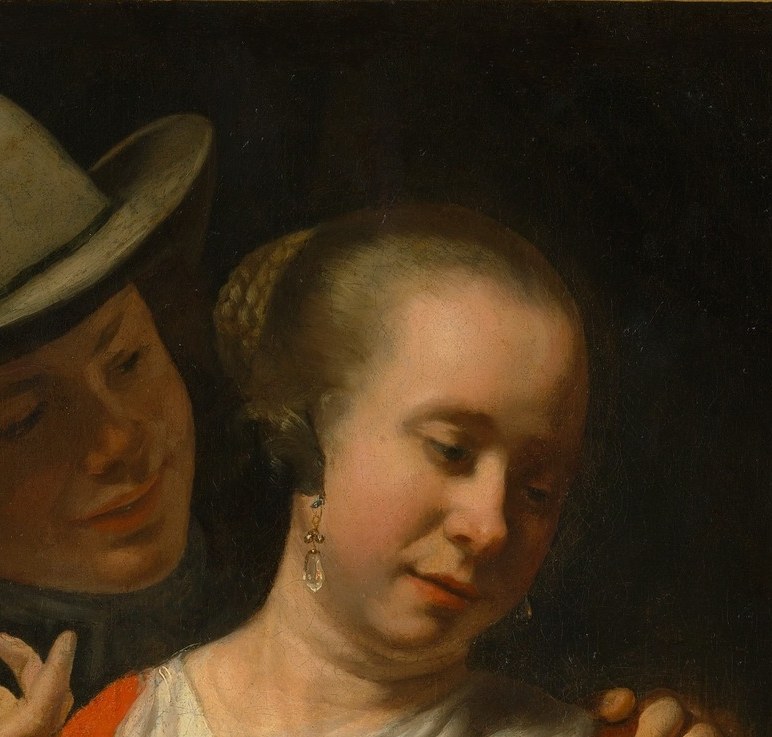
Her eyes are cast downward in quiet introspection, giving the scene its contemplative mood and making the viewer wonder what she is thinking about.
The saturated red dominates the palette; in Dutch Golden Age painting red signifies passion, worldly wealth, or vanitas , it commands the entire lower composition.
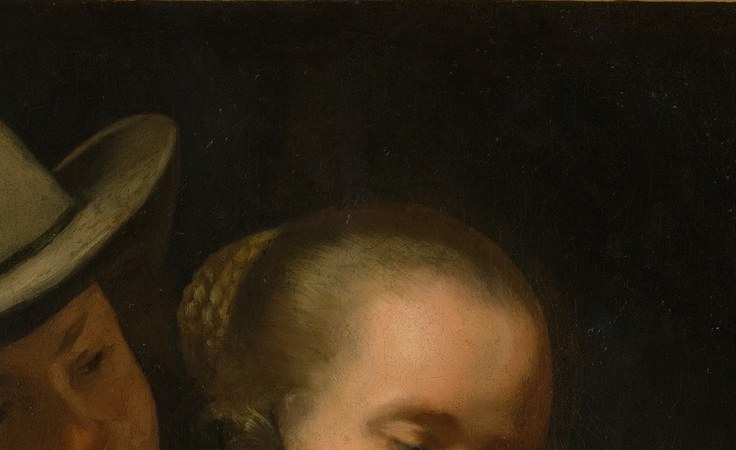
The oversized plumed hat signals aristocratic status and male authority; its light color draws the eye immediately into the upper composition.
A pristine white jug often symbolizes female purity or household virtue in Dutch genre painting , placed at the edge of the table, it may be in tension with the cavalier's approach.
Partially shadowed under a broad white-feathered hat, his expression is attentive and possessive , a contrast between his obscured face and assertive gesture.
Transcript

She pauses mid-task, a candlestick in hand. Her other hand reaches for a water jug. His hand on her shoulder stops her. Notice his face is hidden in shadow. The painter, Cornelis Bisschop, died at 44. Accused of arson, he fled into exile. His reputation burned. His works were scattered.