Hot Corn Seller by William P. Chappel
View the artwork: Hot Corn Seller →
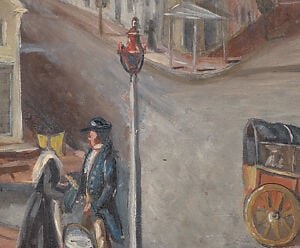
William P. Chappel's 'Hot Corn Seller' is a rare documentary painting of a New York City street in the 1870s. Most artists of the period painted portraits and landscapes. Chappel painted a working woman selling corn cobs on an unpaved road, and in doing so left us an unusually direct record of ordinary life in the growing city.
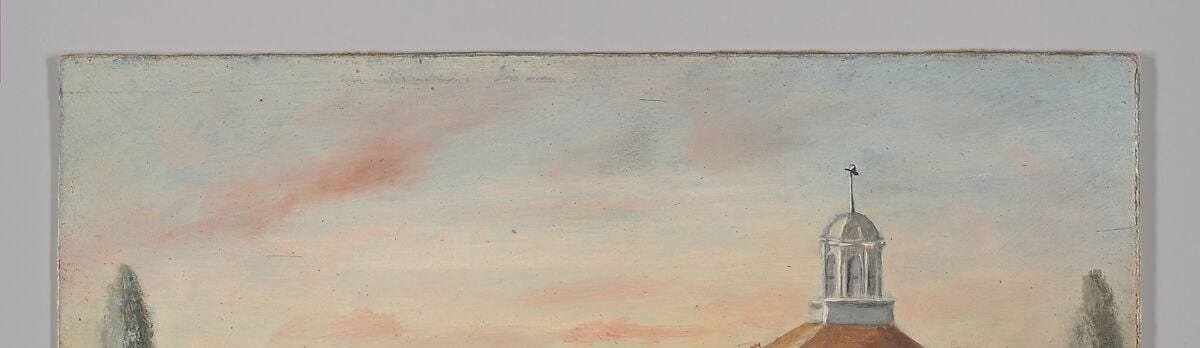
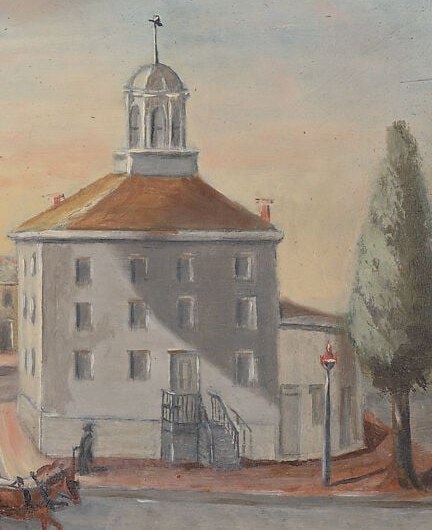
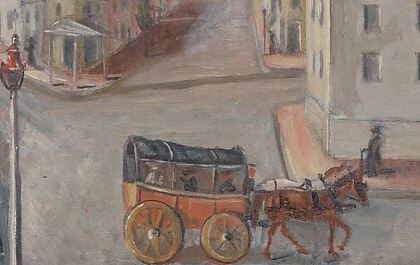
The painting rewards a slow scan. The corn seller stands in the foreground with her basket, an everyday trade item any contemporary viewer would recognize. Behind her, men in top hats converse without acknowledging her, a quiet class contrast. The street itself is pale dirt, a reminder that asphalt paving was still decades away for most of Manhattan. A yellow wagon pulled by a dark horse sits mid-frame, the vehicle of street commerce, and the domed civic building on the right is almost certainly a public market where such goods would have been bought and sold.
Chappel painted this on slate paper with oil, a support that gives the work its distinctive soft, chalky texture. The warm peach sky and golden light on the domed building turn a gritty street scene into something quietly beautiful. The artist lived from 1801 to 1880 and saw New York transform across his lifetime, yet he chose to record not the grand monuments but a vendor and her corn.
The painting is a small, precise window into a vanished city, one where dinner arrived by wagon and the streets were still made of earth.
#arthistory #americanart #19thcentury
Details
Transcript
She sold hot corn on a New York street. These men in top hats ignore her completely. The road is unpaved dirt. Asphalt had not yet arrived. Behind her: a horse-drawn wagon hauling goods to market. The domed building is likely a public market hall. Taken together: a city fed by street labor and horse power.