Mademoiselle V. . . in the Costume of an Espada by Édouard Manet
View the artwork: Mademoiselle V. . . in the Costume of an Espada →
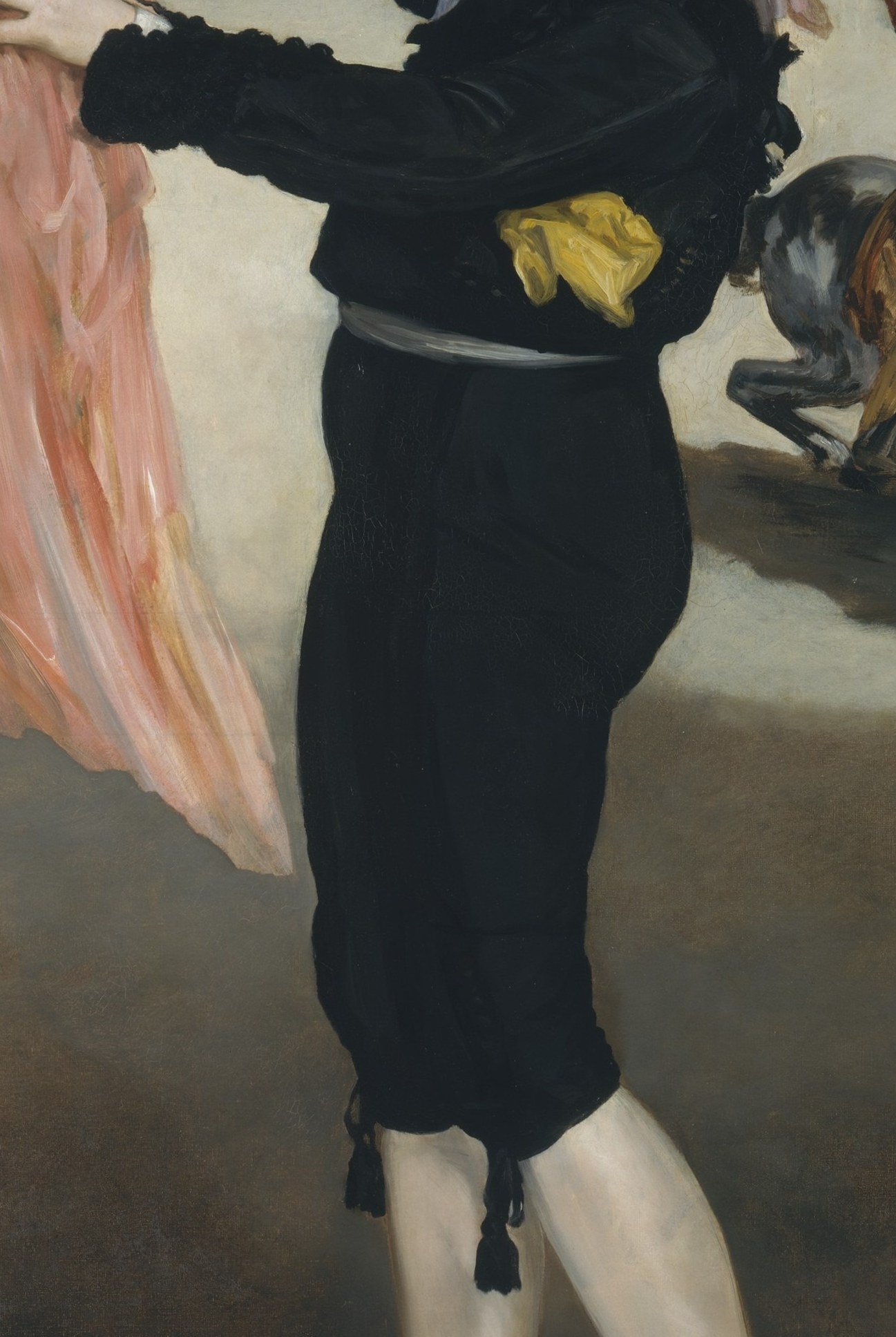
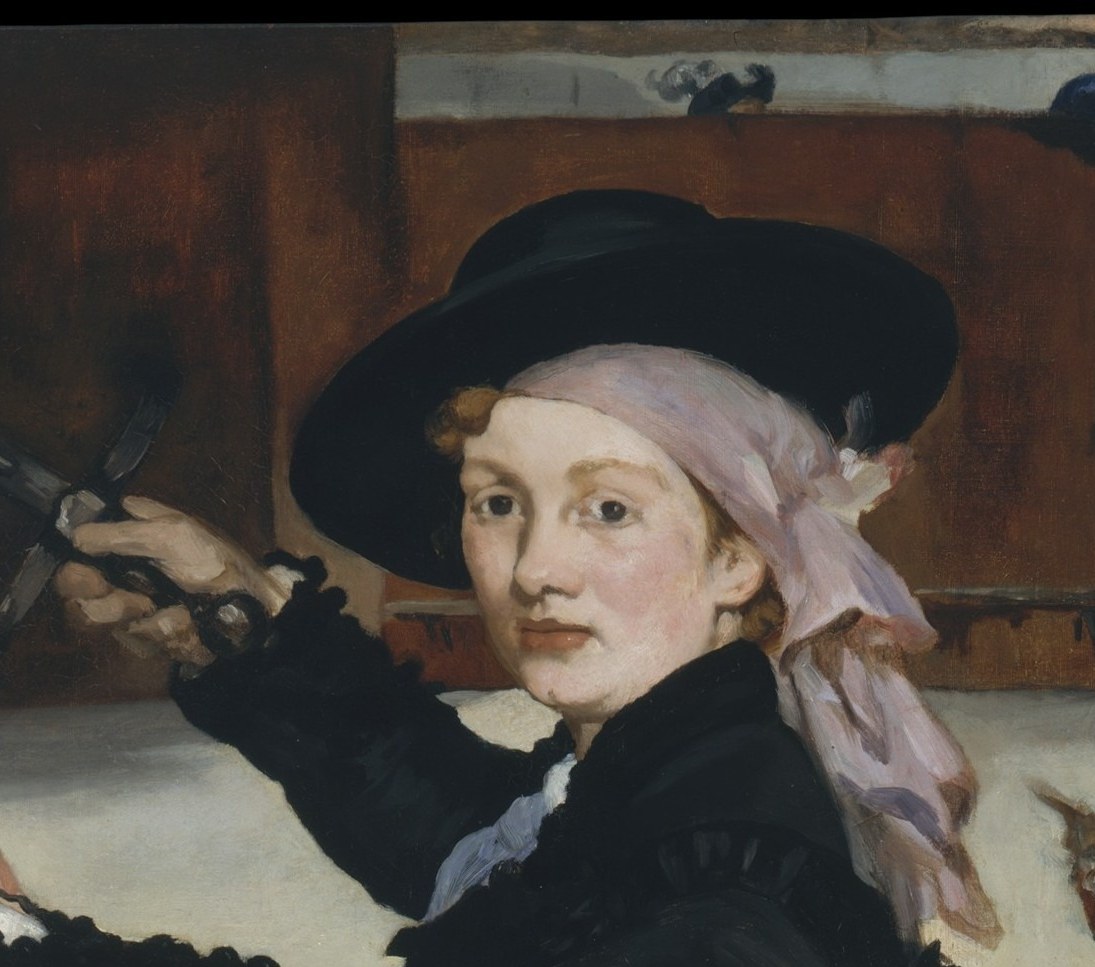
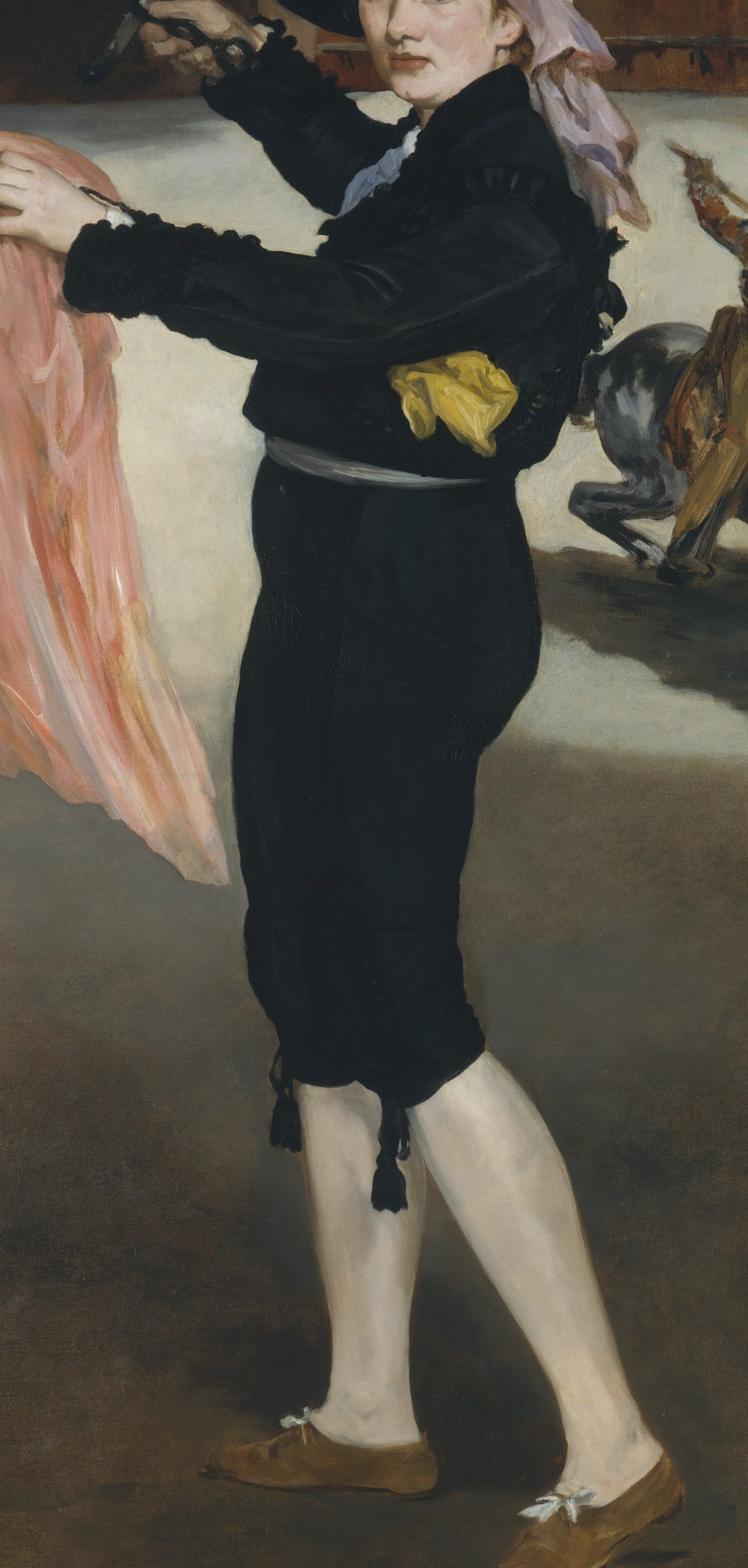
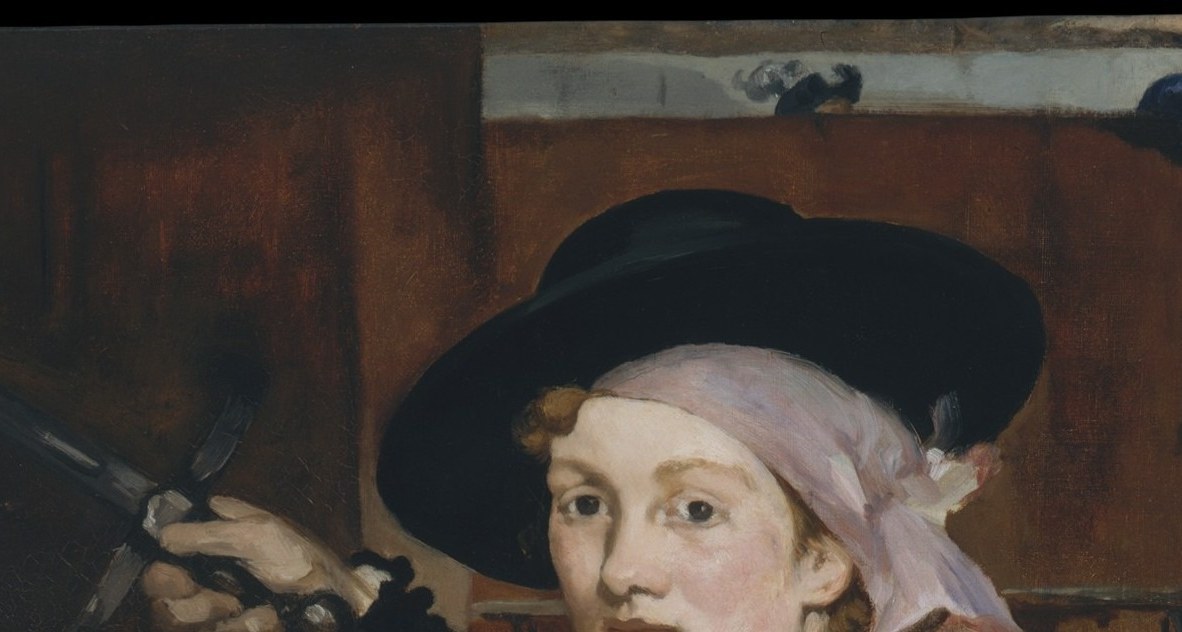
The Paris Salon rejected this portrait in 1863. Mademoiselle V. in the Costume of an Espada, by Édouard Manet (1862), shows Victorine Meurent dressed as a male bullfighter. It was exhibited at the Salon des Refusés instead and now lives at the Metropolitan Museum of Art.
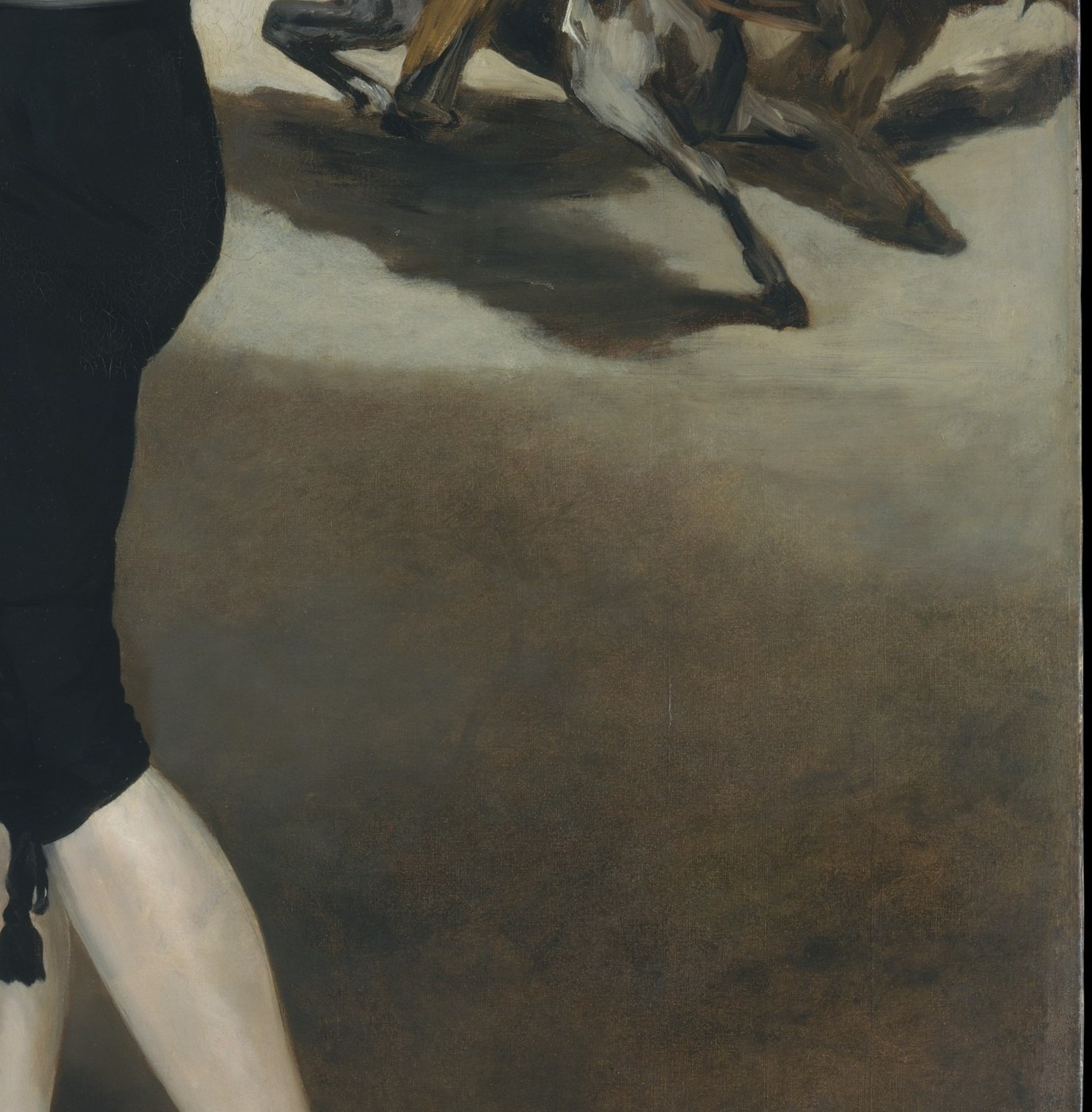
Meurent holds eye contact without apology. The pink silk cape is pure virtuosity, translucent and weightless, the painting's most alive passage. In the background, a tiny bullfighting arena is lifted directly from Goya's Tauromaquia prints.
It hung alongside Le Déjeuner sur l'herbe at the 1863 Salon des Refusés, forming a triptych of provocation. The nude in Déjeuner got the headlines, but this painting's gender play was just as deliberate.
A woman in a man's costume, staring you down, painted before Impressionism had a name.
#arthistory #edouardmanet #salondesrefuses
Details
Transcript
In 1863, the Paris Salon refused this painting. She meets your eye, dressed as a male matador. She grips the sword with surprising authority. The pink silk cape is the painting's most vibrant passage. The miniature arena pays direct homage to Goya's Tauromaquia. It hung beside Déjeuner sur l'herbe at the Salon des Refusés.