Portrait of Johan Hulshout (1623–1687) by Pieter Cornelisz. van Slingelandt
View the artwork: Portrait of Johan Hulshout (1623–1687) →
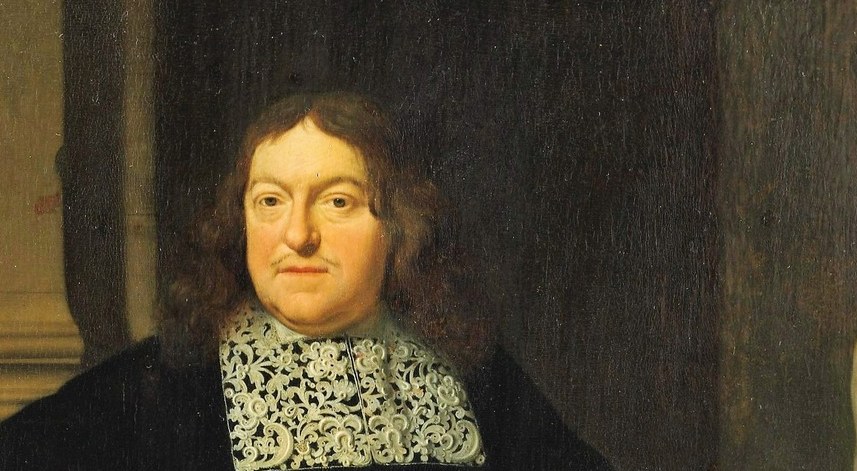
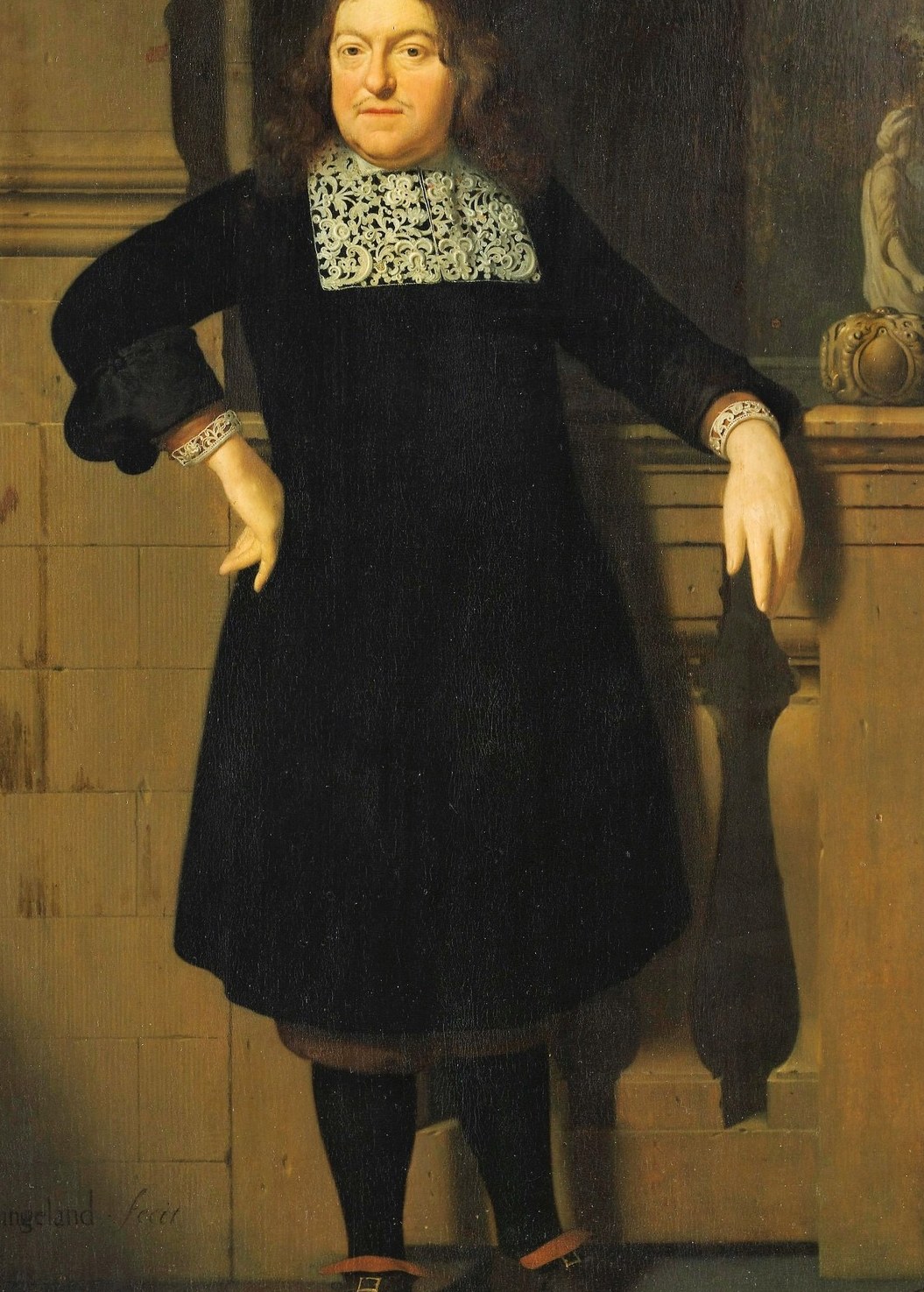
This is Pieter van Slingelandt's 'Portrait of Johan Hulshout', painted around 1670. It hangs in the Metropolitan Museum of Art in New York. Its pendant, a portrait of Hulshout's wife Anna Splinter, is in the National Gallery of Ireland in Dublin. The two paintings stayed together for nearly two centuries, passing through generations of the family. Then the art market stepped in.
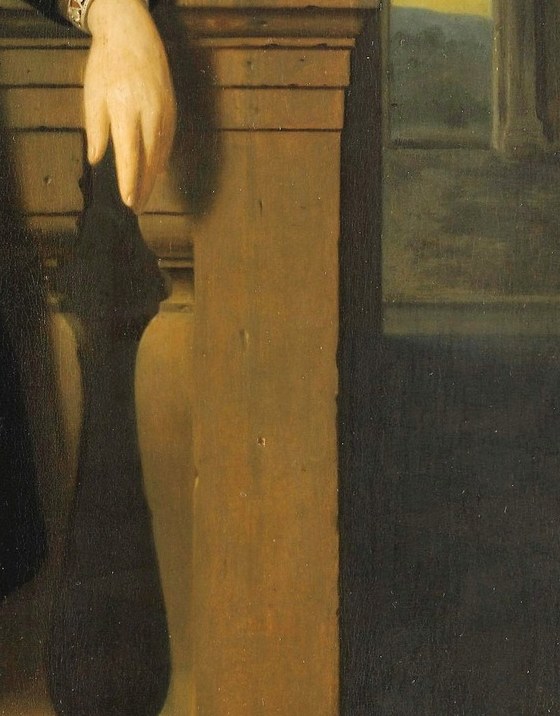
Look at the lace collar. That intricate needlepoint is the signature move of the Leiden fijnschilders, the 'fine painters' who turned detail into a Dutch specialty. Van Slingelandt trained under Gerrit Dou, and you can see it in the porcelain smoothness of the skin and the hyper-precise way the hand rests on that stone ledge. The dark coat isn't just Calvinist fashion, it's a foil. It makes the face and the lace glow.
After law school in Leiden, Hulshout became the secretary of the Rhineland water authority, the body that kept the canals and dikes from failing. The open landscape behind him is a nod to that; he literally governed the countryside you see receding over his shoulder. He held the post until his death in 1687.
The portrait descended through the family until 1860, when the estate of Daniel Hooft went up for auction in Amsterdam. A dealer picked up both panels, and that was the end of their domestic pairing. She went to a collection in Brussels, then Dublin. He went to New York. Over a hundred and seventy years later, neither has crossed the Atlantic to visit the other.
#arthistory #dutchgoldenage #fijnschilder
Details
Transcript
A Dutch official in 1670. Composed, civic, and severe. He governed the Rhineland's canals and dikes. For nearly two hundred years, his descendants kept this portrait safe. It was never alone. It hung beside his wife, Anna. In 1860, the estate sold them both to a dealer. The pair was split. She went to Dublin. He crossed the Atlantic to New York. A marriage of thirty-seven years, dissolved by the art market.