On the Jetty by Boudin, Eugène
View the artwork: On the Jetty →
On the Jetty, painted by Eugène Boudin around 1869/1870, captures the quiet hum of a new modern world. It is a tiny oil on wood panel, barely larger than a postcard, and it sits today at the National Gallery of Art in Washington, D.C.
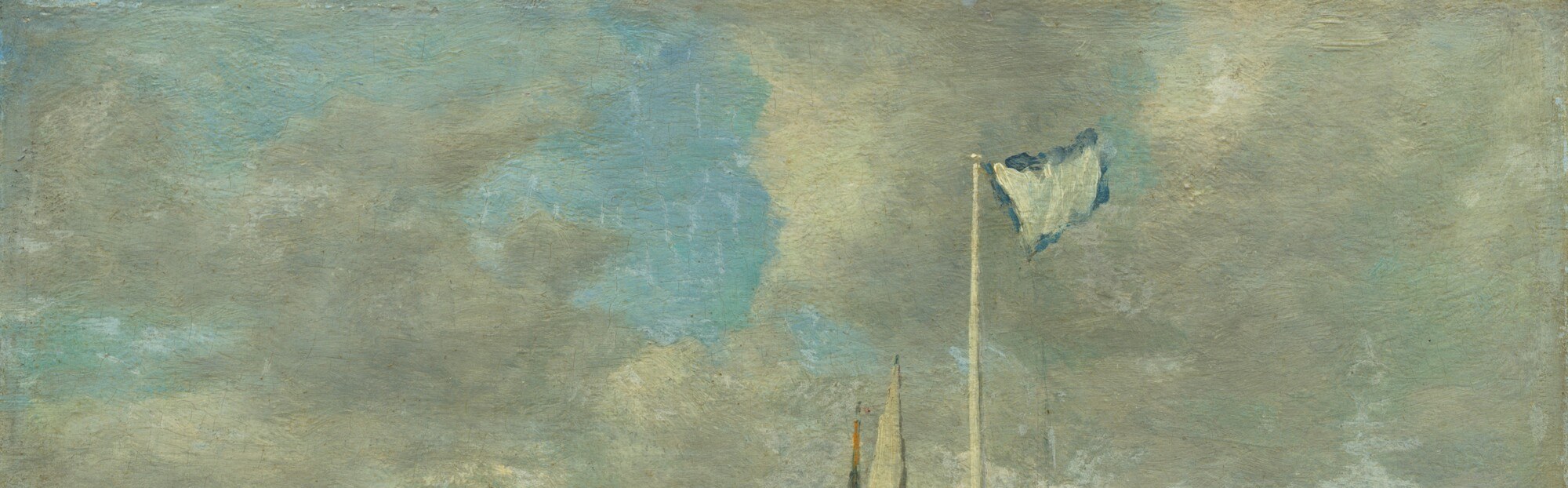
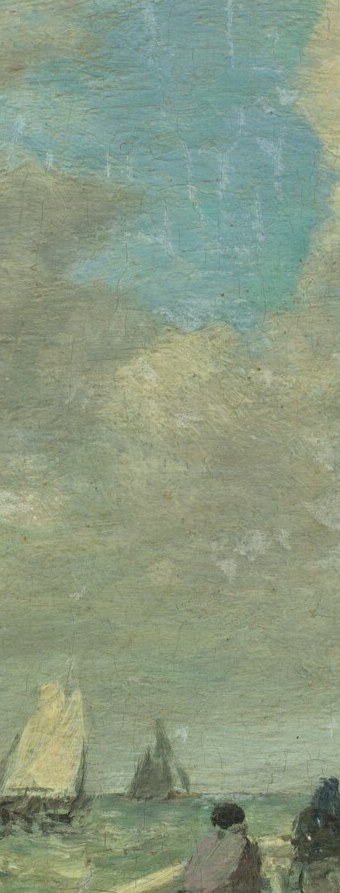
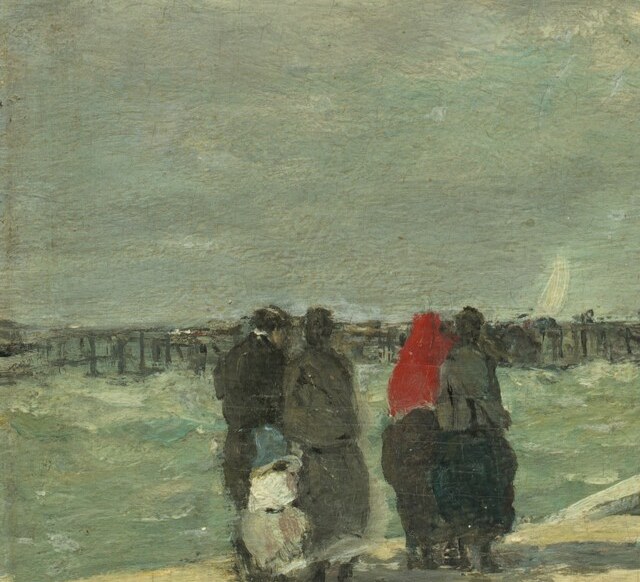
Look first at the sky. Boudin was called the King of the Skies, and you can see why: churning grey and white cumulus clouds fill two-thirds of the panel, painted fast in the open air. Below them, clusters of women in crinolines and men in dark coats promenade on a wooden jetty. No face is legible. Boudin did not care who these people were; he cared that they were there, a new leisure class inventing the beach vacation as a social ritual.
The painting's history is darker than its gentle subject suggests. It belonged to a Jewish collector in Paris, then was confiscated by the Nazi task force charged with plundering art. In November 1942, Hermann Göring personally selected this little panel from the Jeu de Paume for his own collection. Allied forces recovered it at Berchtesgaden in 1945 and returned it to the family. It is a peaceful image that survived a violent century.
#arthistory #impressionism #boudin
Details


Transcript
This is the French seaside, around 1869. The new railway just brought Paris to the beach. Fashionable crowds gathered on the jetty to see and be seen. But notice one figure, standing alone at the water's edge. The painter signed it here in the corner. Decades later, Göring chose this exact panel for himself. Allied soldiers found it in a salt mine and brought it home.