Virgin and Child with Saints and Donors by Giovanni Battista Cima da Conegliano
View the artwork: Virgin and Child with Saints and Donors →
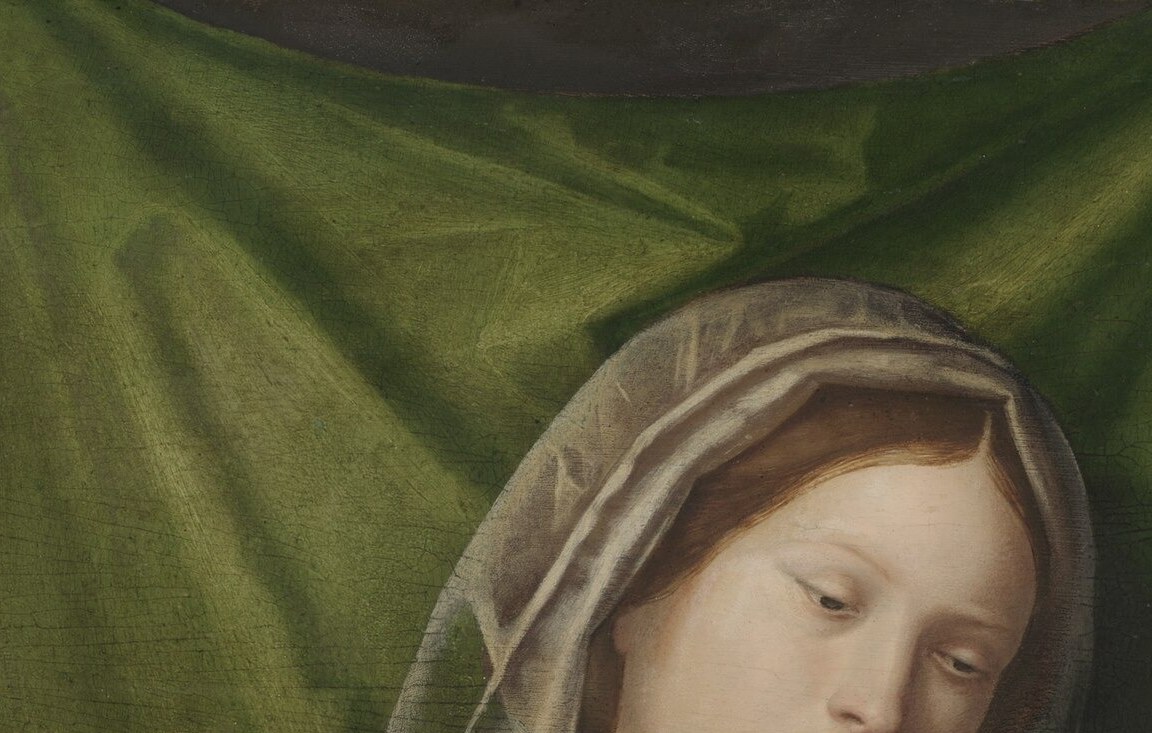
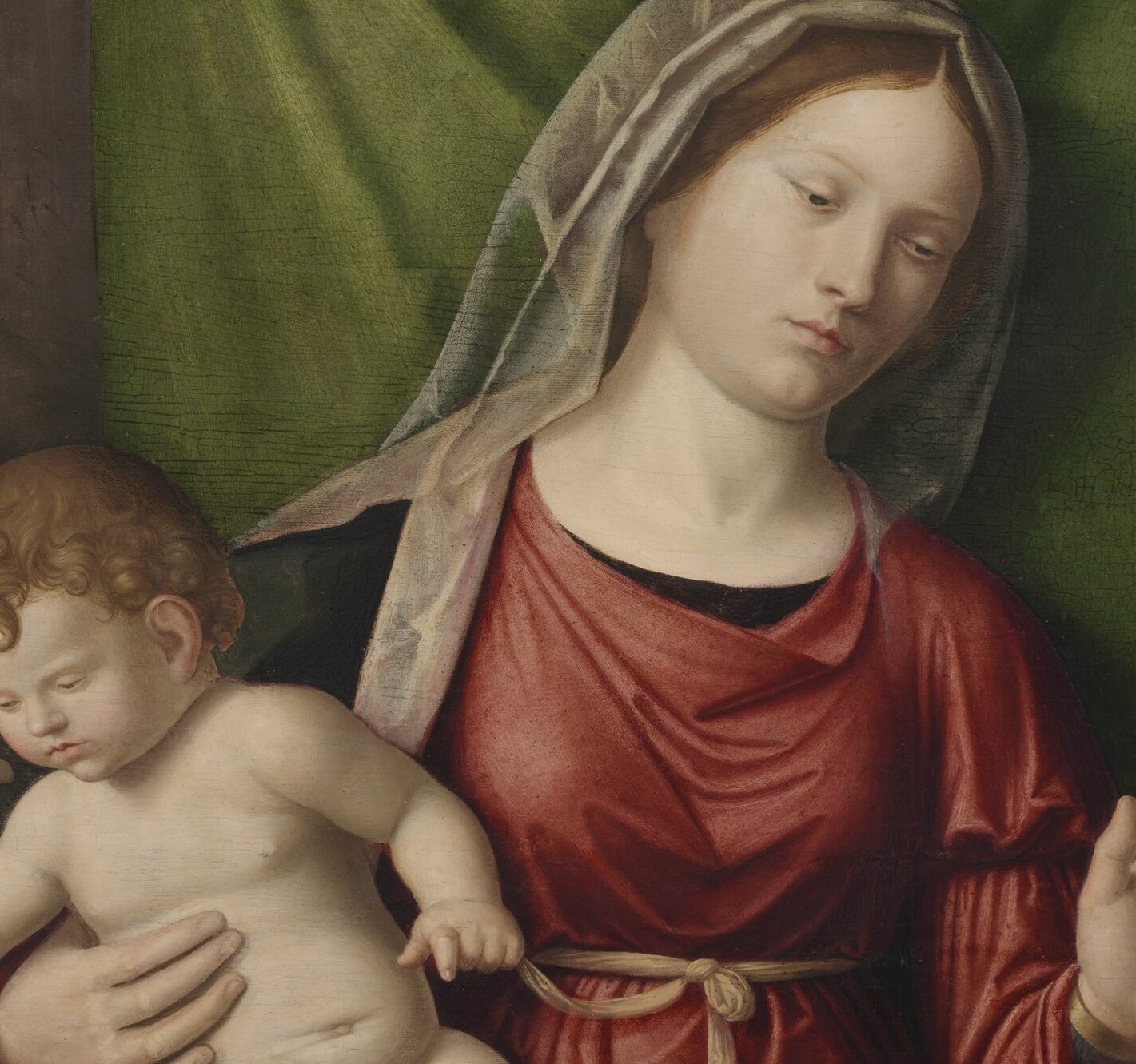
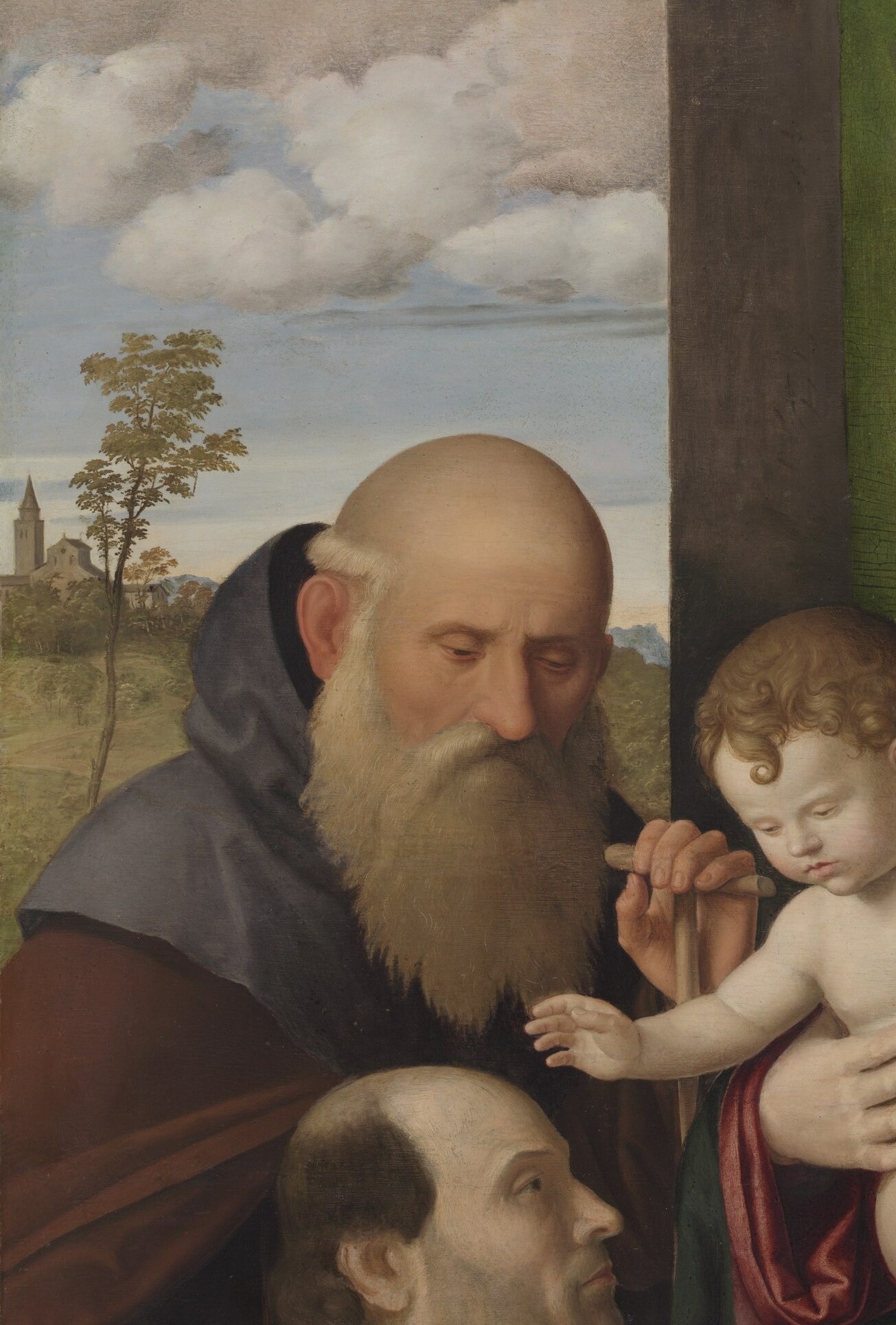
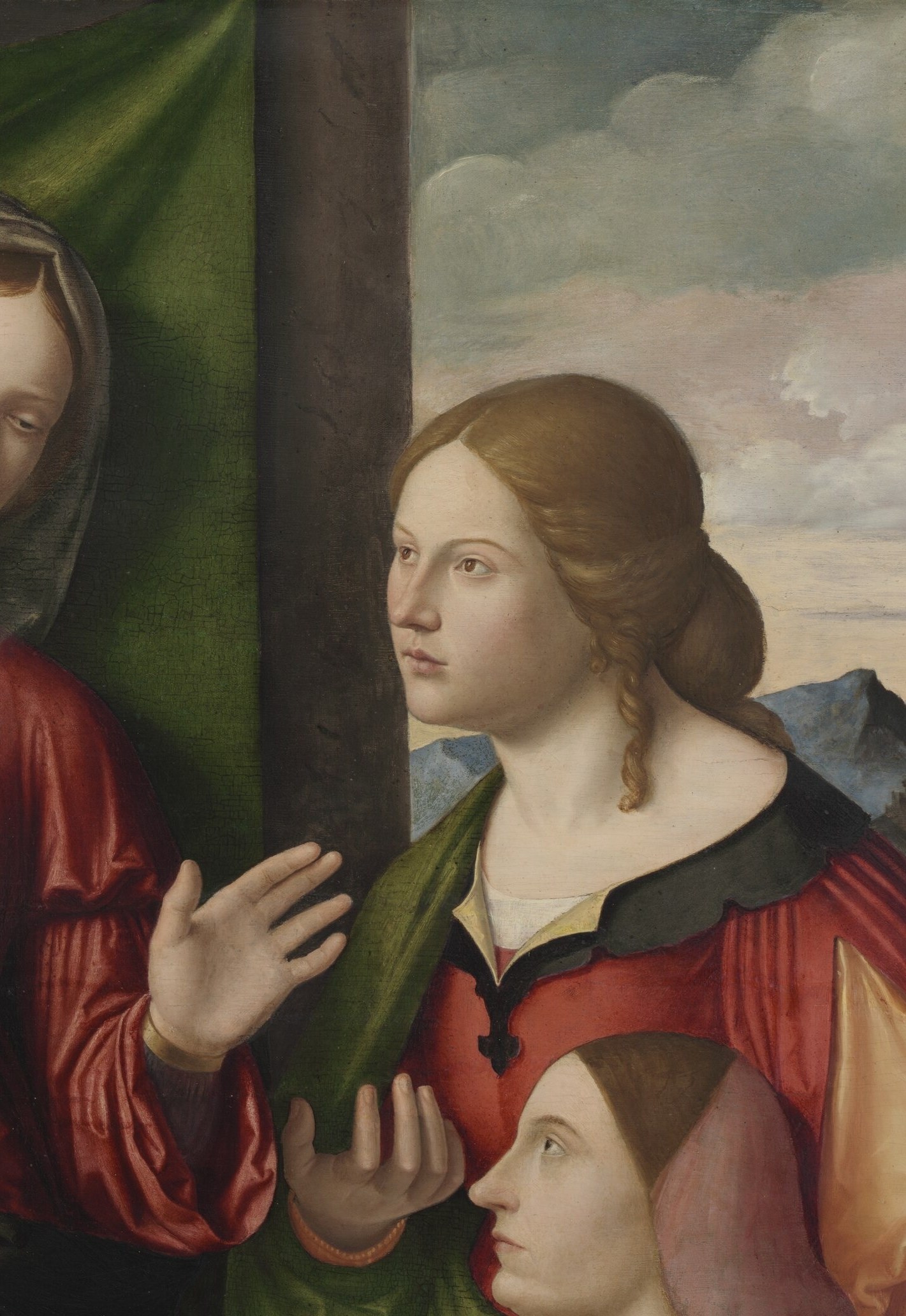
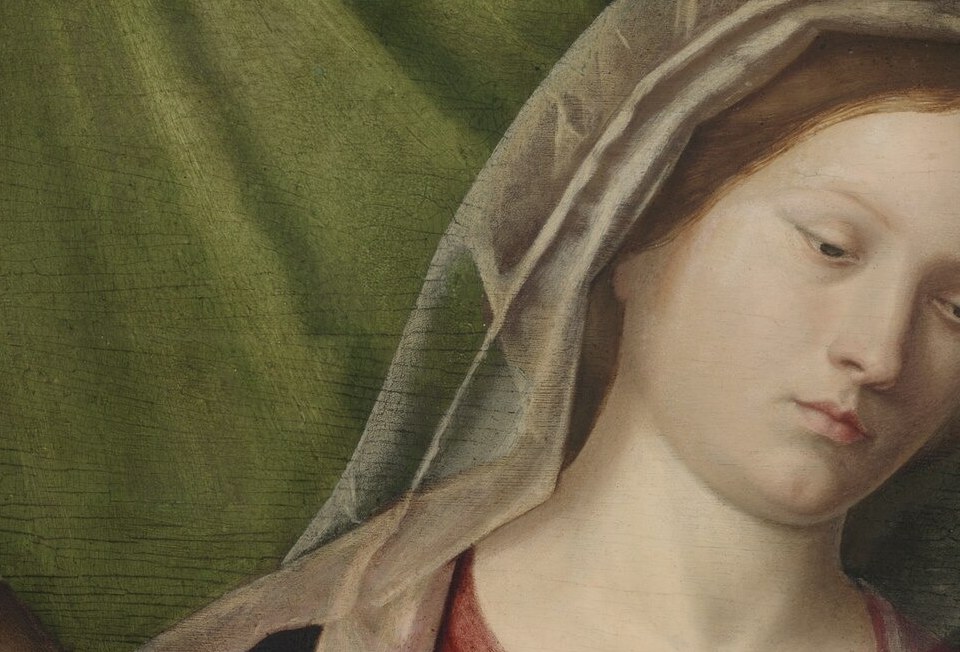
This is Cima da Conegliano's Virgin and Child with Saints and Donors, painted in 1515, and its presence in Cleveland, Ohio, is an improbable ending to a long European story. Cima was a leading figure of the Venetian Renaissance, known for his luminous landscapes and tranquil Madonnas, yet his name faded from the marquee over the centuries. This panel was commissioned by a wealthy Venetian family whose identities are now lost; the kneeling couple in the foreground are almost certainly the patrons themselves, immortalized in an act of permanent devotion.
Look first at the hands. The female saint on the right gestures toward the Virgin as if presenting the donors, her open palm is a rhetorical bridge between the earthly couple and the holy figures. The Virgin's own hands cradle the child with a specific tenderness you can see when the camera closes in. And the infant Christ is not passive: his face and posture suggest an active blessing, directed outward. Every gesture in this composition is a transaction.
Cima painted this work in oil on panel at the height of his career, but the painting's provenance has gaps, it moved through European collections, slipped from public view, and eventually emerged on the American art market in the twentieth century. It now hangs in the Cleveland Museum of Art, a quiet masterpiece by an artist who was once a household name in Venice and deserves to be remembered.
What does it mean for a prayer to be made permanent in paint, for a kneeling couple to still be kneeling five centuries later?
#arthistory #renaissance #venetianpainting
Details
Transcript
In 1515, a Venetian family knelt before this very canvas. Their names are lost. Their prayer is not. She gestures toward the Virgin like a silent introduction. The infant returns a blessing, the whole panel is an exchange. Cima da Conegliano was famous in Venice. Then the market forgot him. This altarpiece crossed Europe, disappeared from view, and resurfaced in Cleveland.