Portrait of a Woman by http://www.wikidata.org/.well-known/genid/af0c6e8aec408b0f8a69d5d747a0ffa2

A tiny dog at her feet is the detail most viewers overlook in Portrait of a Woman, a c. 1600 oil now in the Metropolitan Museum of Art.

Look for the pearl necklace that catches the light, the gloved hand resting on her lap, and the rich red curtain framing the scene. The small dog at her feet, rendered with careful brushwork, adds a subtle narrative of loyalty.

The painting was created around 1600 in oil, typical of Dutch portraiture that emphasized status through texture and jewellery. It entered the Met’s collection in the early 20th century and has remained a quiet showcase of wealth and technique.

Notice how a single overlooked figure can shift the whole story. What other hidden details might you discover next?

#arthistory #DutchPortrait

Details
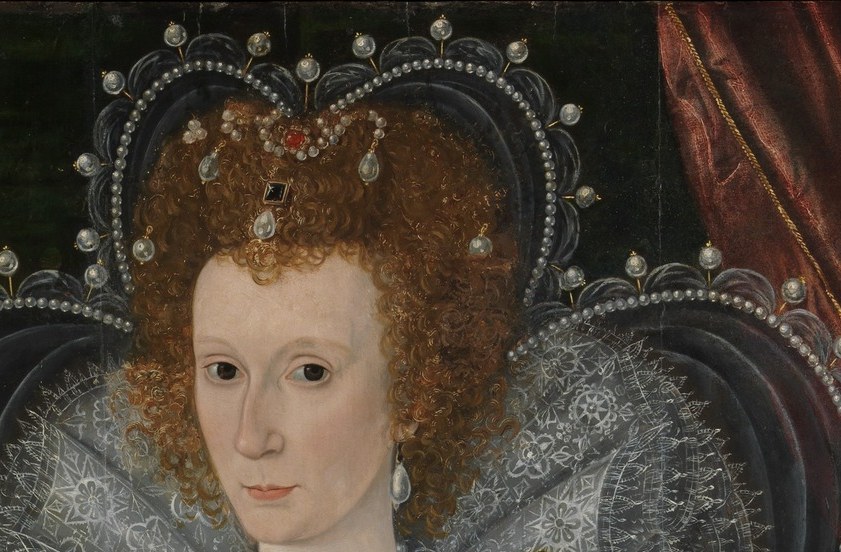
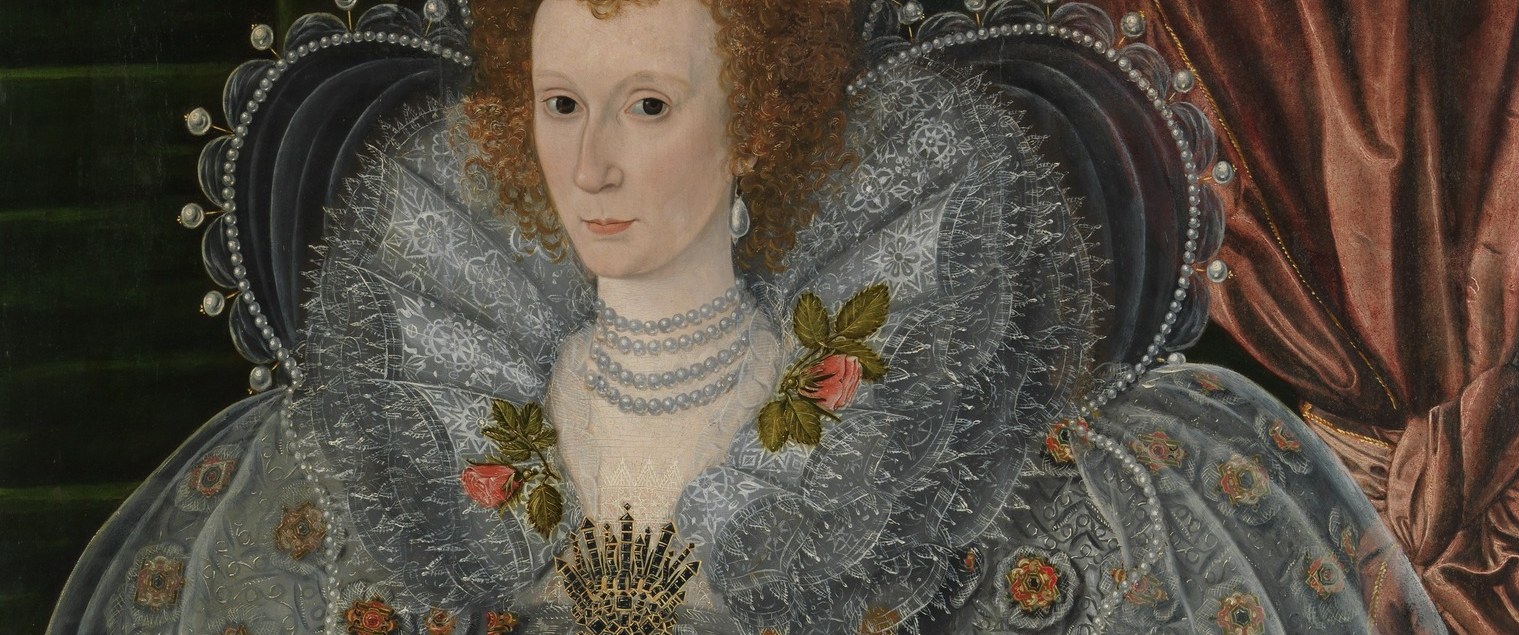
Reserved Elizabethan expression , the slight downward angle of the eyes suggests aristocratic distance rather than engagement, a deliberate rhetorical choice of the period.
Virtuoso rendering of layered transparent lace , each tier catches light differently, and the sheer engineering of starched and wired ruffs this wide was itself a display of wealth and social rank.
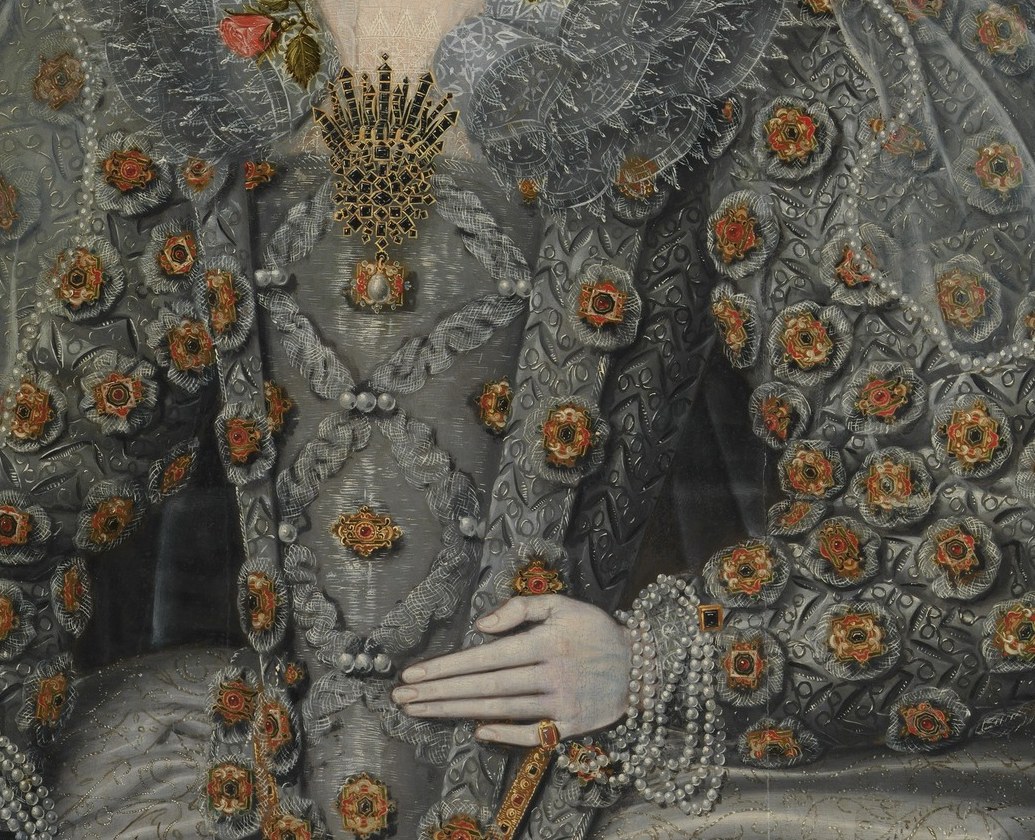
Dozens of enameled or jeweled roundels arranged in a grid across the bodice and skirt , a documented fashion of ca. 1600 English court dress that places this sitter precisely in time and social tier.
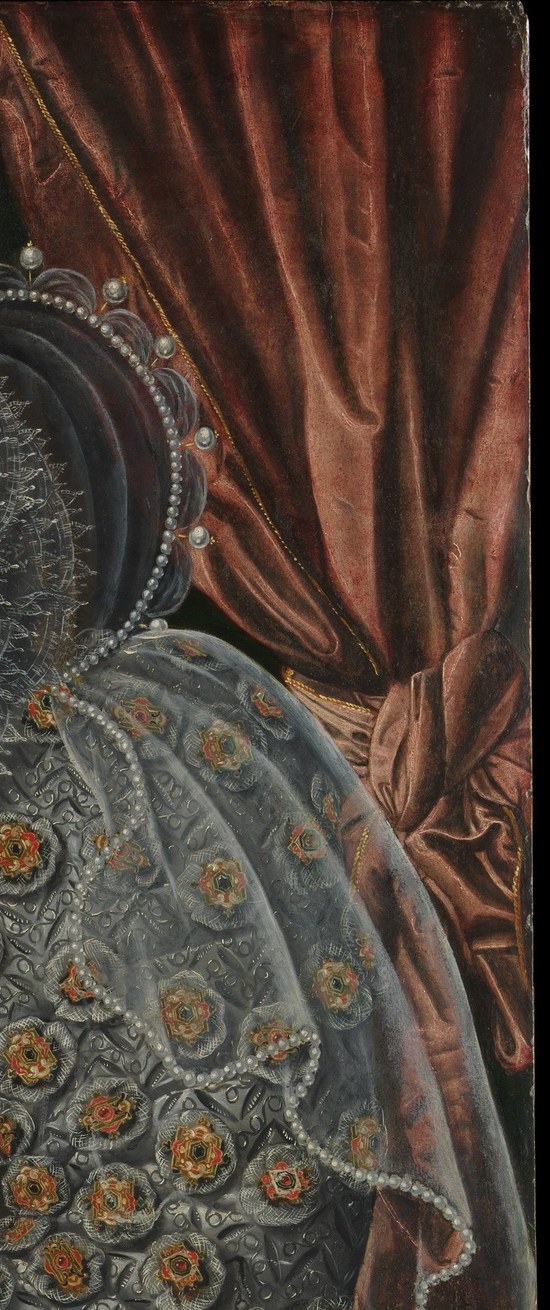
The saturated red sets off the silver-grey of the gown through complementary contrast , a deliberate studio prop that also signals interior wealth and theatrical gravitas.
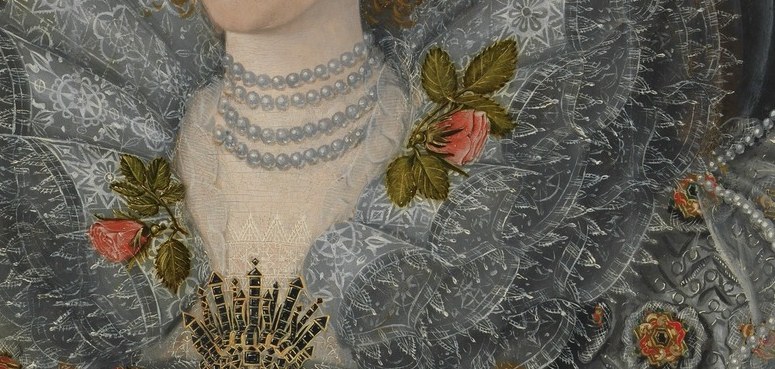
Pearls carried symbolic weight (purity, dynastic legitimacy) in Elizabethan iconography; the layering here and the pendant below suggest a specific jewel inventory, possibly identifiable.
Transcript

A lady of riches sits before red. Painted in 1600, her pearls gleam brightly. Her left hand rests lightly on her lap. A small dog curls at her feet. The portrait now hangs in The Met Museum.