Saint Cecilia by Abraham van Diepenbeeck
View the artwork: Saint Cecilia →
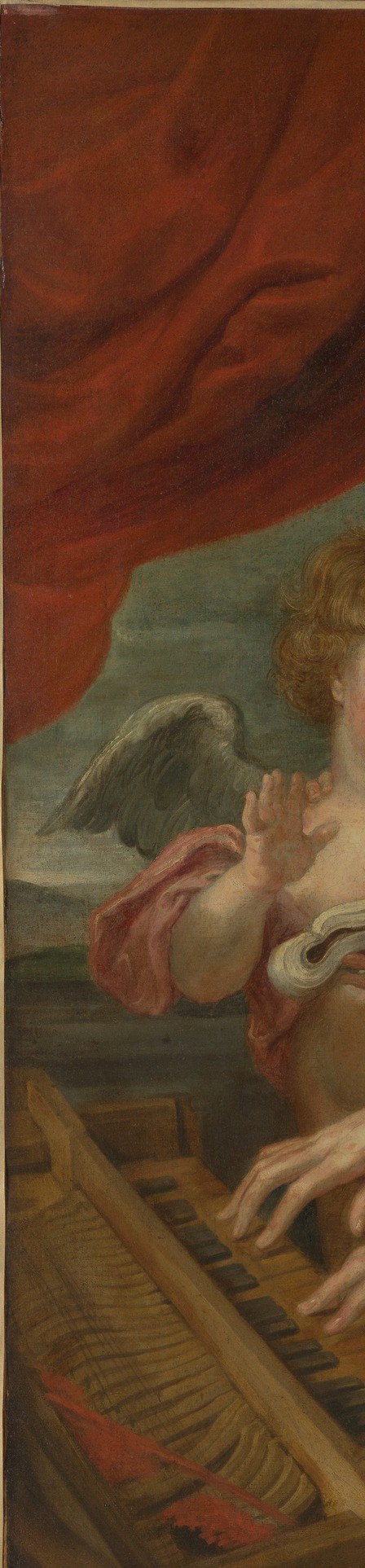
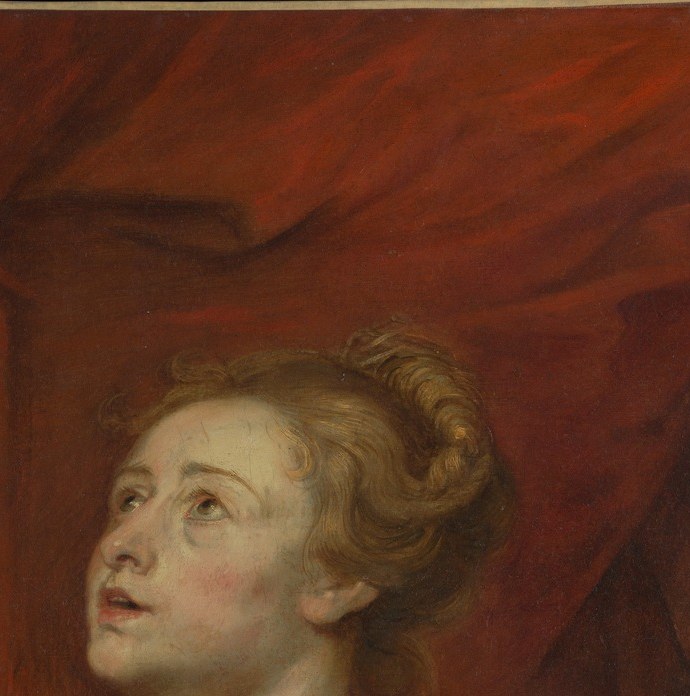
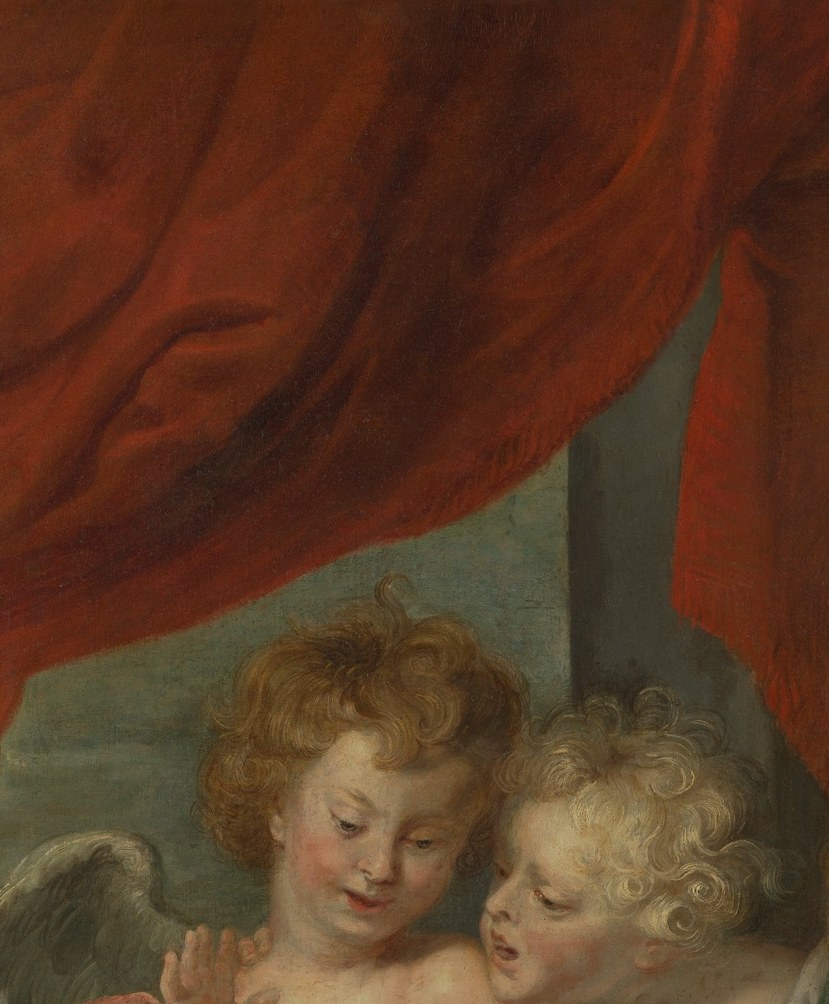
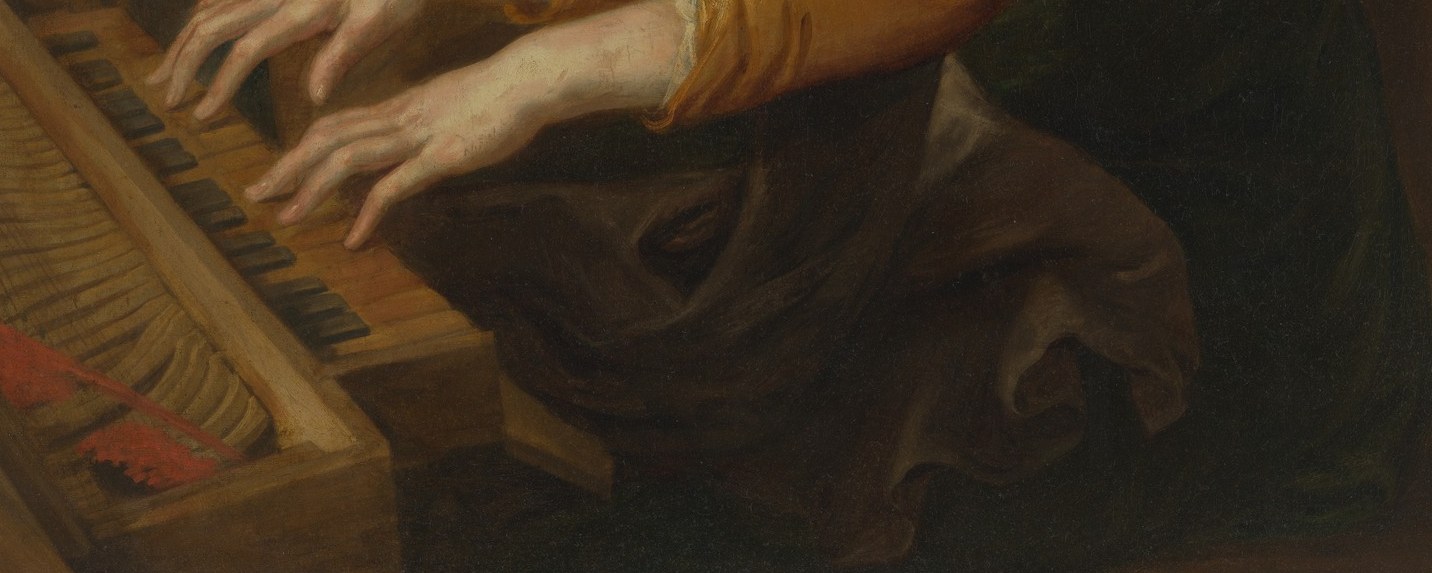
This is Saint Cecilia, painted by the Flemish artist Abraham van Diepenbeeck around 1700. Now in a private collection, it depicts the patron saint of music in a moment of rapture at the keyboard. But the painting's quiet story took a strange turn in print.
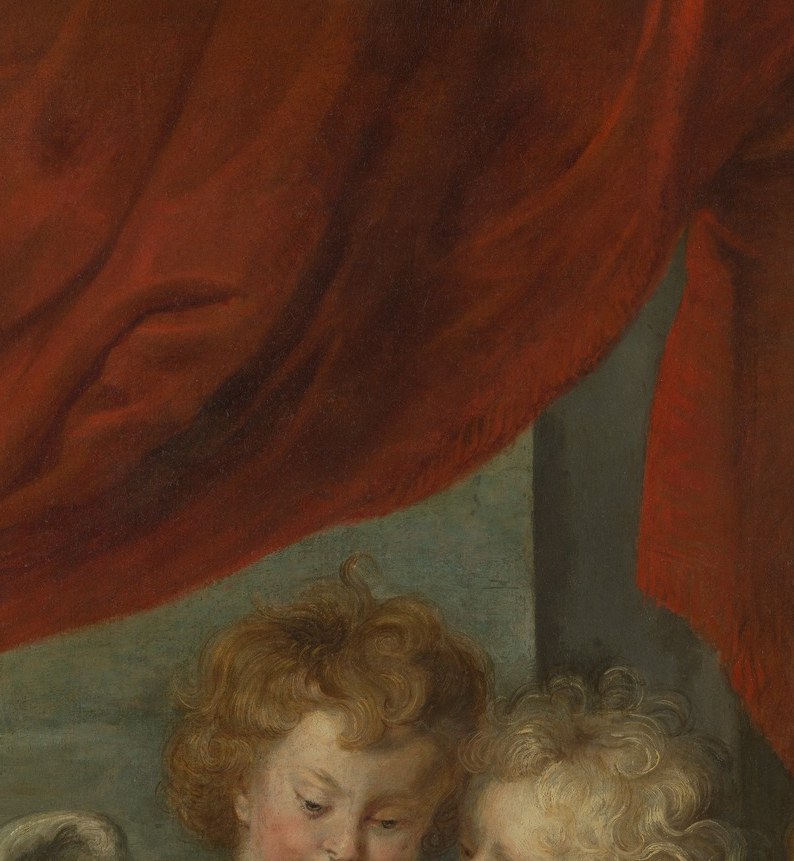
Look at the book held by the lower putto. In a strictly Catholic reading of Cecilia, that object would be a sacred score: a notated hymn, a book of hours, a clear sign of divine authorship. But van Diepenbeeck worked in Antwerp and sold designs to printers who wanted lucrative Protestant markets up north, where Catholic saints were suspect and buyers preferred classical allegories.
So the detail is deliberately ambiguous. The leaves in the putto's hand could just as easily read as secular sheet music: a canzonetta, a madrigal, something terrestrial. That ambiguity let the printed version of this image circulate at Dutch book fairs without censorship, passed off as a generic musical allegory rather than a devotional Catholic icon.
Van Diepenbeeck was Rubens's close collaborator and a man of deep faith. His ability to code a saint as a secular figure was not just clever marketing; it was a survival tactic in a century when the wrong image in the wrong place could destroy a reputation.
#arthistory #flemishpainting #baroque
Details
Transcript
They look like a saint, two angels, and a hymn. But look closer at what the lower angel holds. It is not a prayer book or a hymnal. Van Diepenbeeck was a devoted Catholic. His patrons needed art the Protestant north would pay for. So he gave this sacred moment a forbidden pagan subtext. The printed image was quietly circulated at Dutch book fairs.