The Adoration of the Shepherds with Saint Catherine of Alexandria by Cigoli
View the artwork: The Adoration of the Shepherds with Saint Catherine of Alexandria →
Cigoli painted this Adoration of the Shepherds in 1599, at the very end of the Florentine Renaissance. It hangs now in a church in Italy, a quiet survivor of a loud century. The artist was a late Mannerist stepping into the early Baroque, and you can feel the shift happening in the dark: the cave is nearly black, and every figure competes for the same single beam of light.
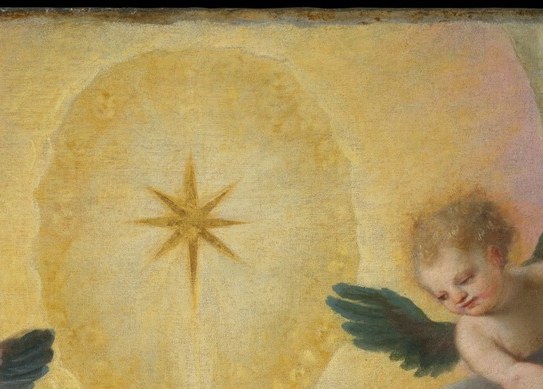
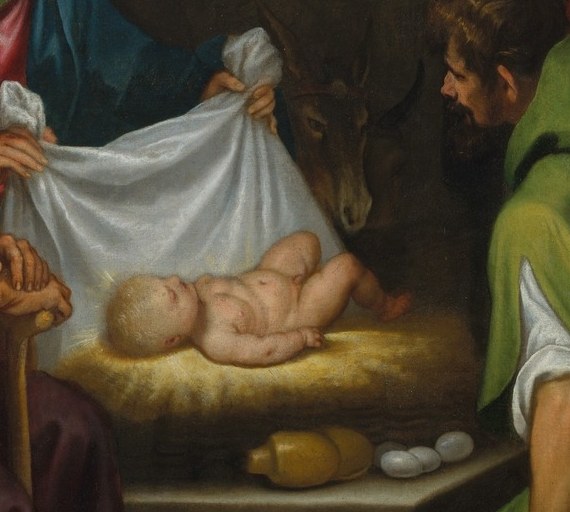
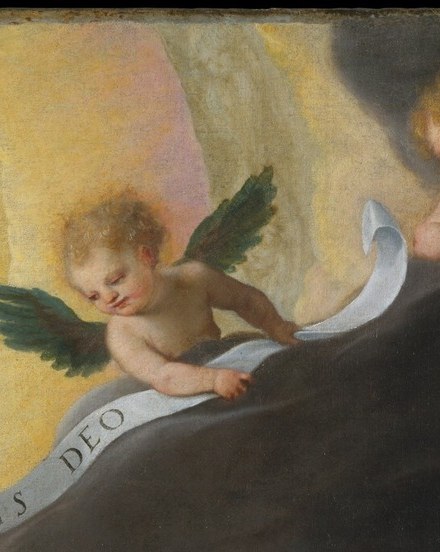
Watch what the star does. It is not just a narrative marker. Cigoli makes it the literal light source for the entire composition. The golden column descends vertically from the star to the infant, hitting the white cloth with such force that the cloth itself seems to glow. The figures closest to the child catch the light fully; the shepherd on the left is half-swallowed by shadow. The painting makes a theological argument in pigment: revelation is visible only from certain angles, and only if you draw close.
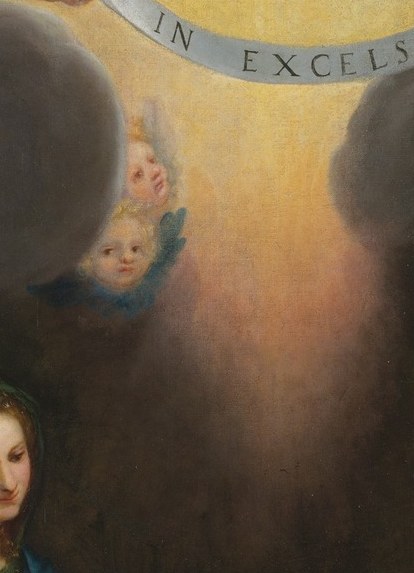
Then there is the blue. The Virgin's mantle is ultramarine, ground from lapis lazuli mined in Afghanistan and shipped to Venice at extraordinary cost. In 1599, using that much ultramarine was not an aesthetic choice. It was a financial one, a way of saying Mary is queen. The red of the man's garment beside her locks into the same Marian color code. And yet, against all that regal expense, her face is what holds. Her eyes are down, and they are not serene. Cigoli gave her the weight of knowing.
And the crowned woman in the back? She was not at the Nativity. That is Saint Catherine of Alexandria, identifiable by her crown, and she is almost certainly a portrait of the donor who commissioned the work. In the 16th century, you could buy your way into the scene. She stands in shadow at the right margin, witness to a birth she paid to attend.
#arthistory #baroque #nativity
Details
Transcript
December, 1599. A painter in Florence finishes a Nativity. He makes the Star of Bethlehem the painting's only light. Everything visible is touched by that one star. Her robe is ultramarine, ground lapis lazuli from Afghanistan. It cost more than gold. A queen's pigment. But look at her face. She knows how this story ends. In the shadows, a crowned woman was not at the manger. Her name was Catherine. She paid for this painting.