Saint Catherine by Lotto, Lorenzo
View the artwork: Saint Catherine →
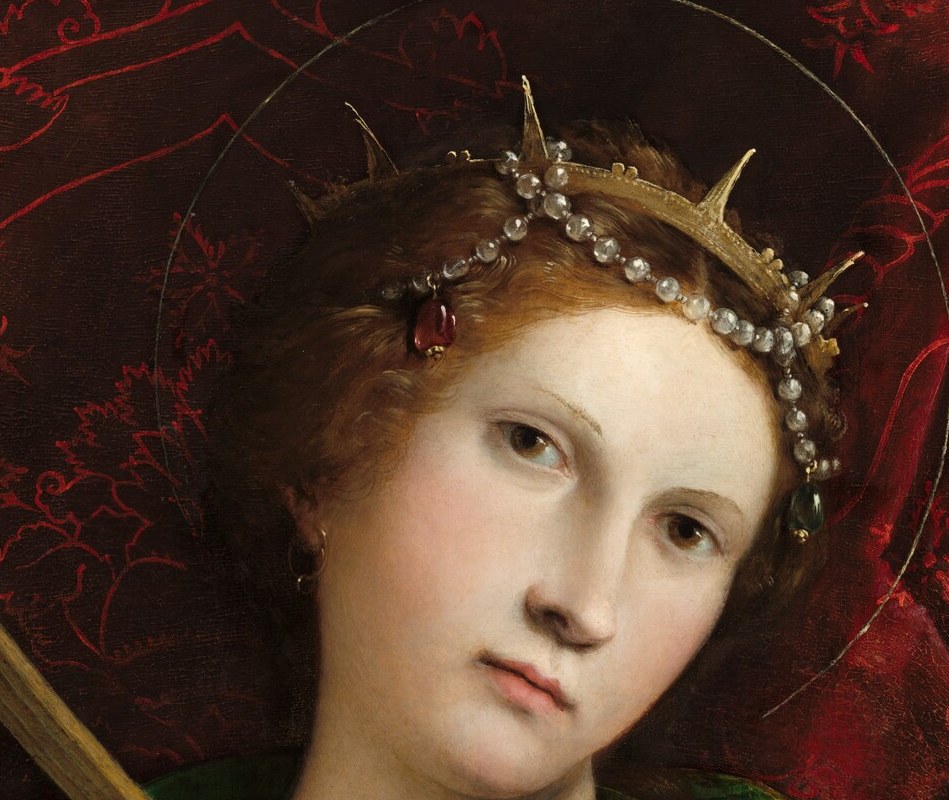
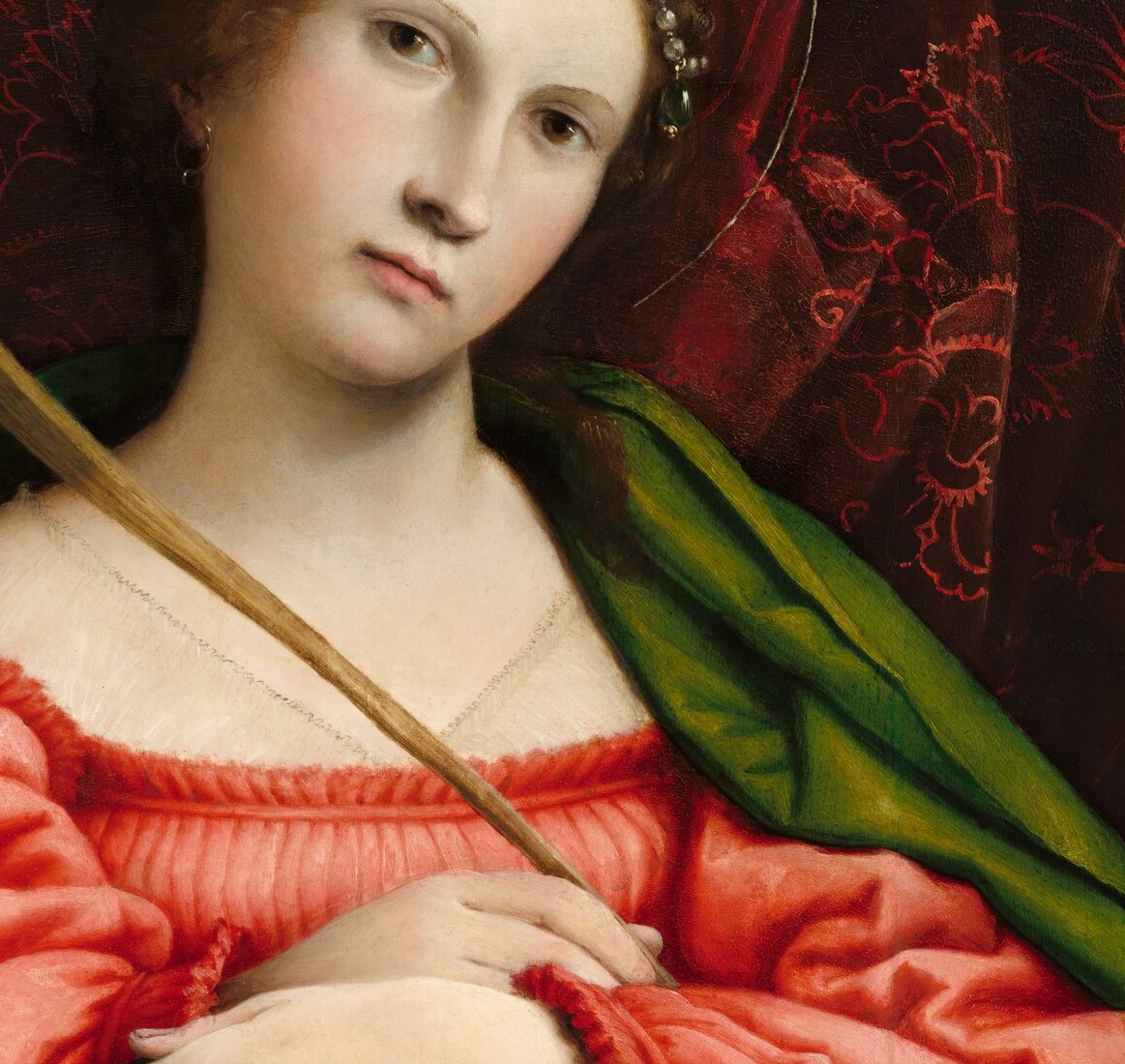
This is Lorenzo Lotto's "Saint Catherine" from 1522, now in the National Gallery of Art in Washington, D.C. It looks like a straightforward devotional painting until you learn what x-rays found hidden beneath the red velvet curtain on the left.
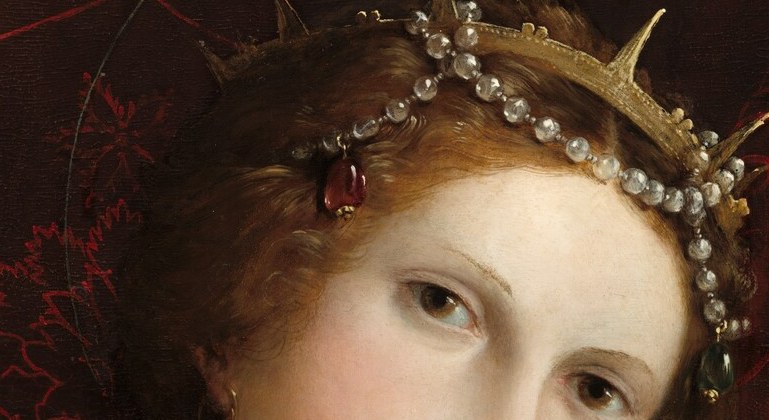
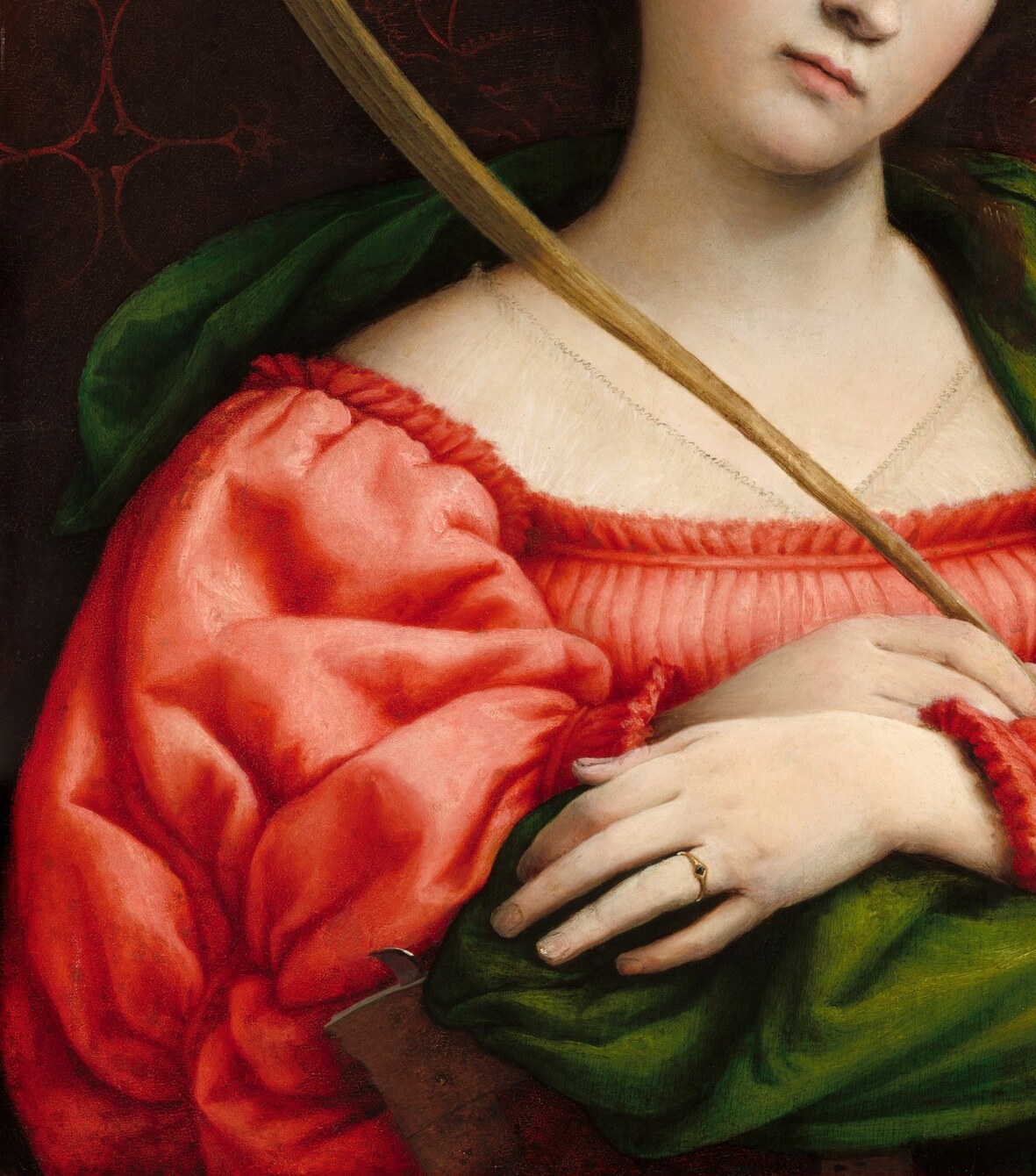
Look first at Catherine's face. It turns toward you with an unflinching directness that feels borrowed from a personal portrait rather than a saint's icon. Her green velvet cloak, the gold ring on her finger, and the spiked wheel partially visible beside her are the traditional attributes of Saint Catherine of Alexandria.
Lotto created this panel during his productive decade in Bergamo. Technical examination revealed a significant change of mind: he originally painted a window opening onto a landscape where the curtain now hangs. He painted it over himself, suggesting the work was initially a private devotional image and was later adapted for public display, perhaps in a church. Its provenance is remarkably clear: first recorded in Bergamo in 1804, it passed through the collection of Prince Eugène de Beauharnais, Viceroy of Italy, before the Samuel H. Kress Foundation acquired it and gave it to the National Gallery in 1939.
A painting can hide its own first draft. What other revisions sit beneath the surface of works we think we know?
#arthistory #renaissance #lorenzolotto
Details

Transcript
In 1522, Lorenzo Lotto painted a saint who stares back like a real person. Her face is more portrait than icon. Scholars still remark on its directness. This red curtain was not his first idea. X-rays caught him in the act. Under the curtain: a window onto a landscape. He painted it out himself. A private devotional piece became something for public display. His signature lies hidden on the wheel of her attempted execution. The ring on her finger binds her to a story of spiritual purity.