From Shifting Shade by James M. Hart
View the artwork: From Shifting Shade →
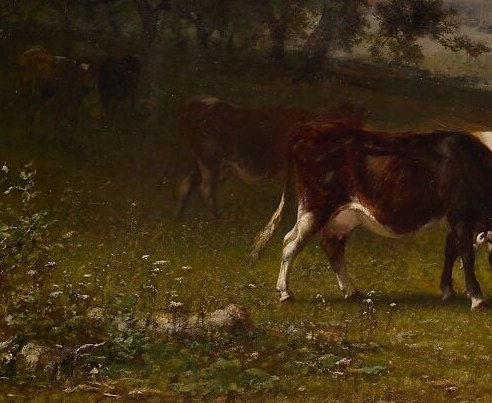
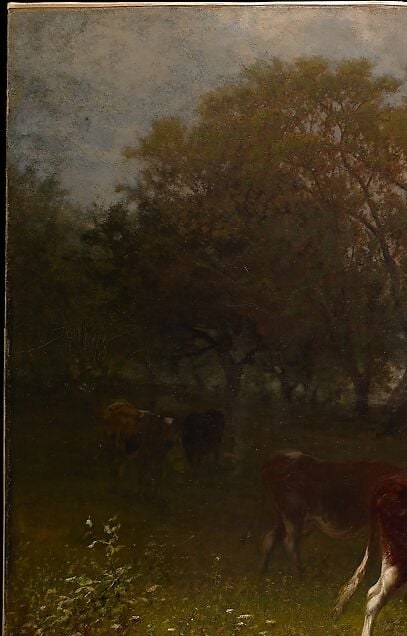
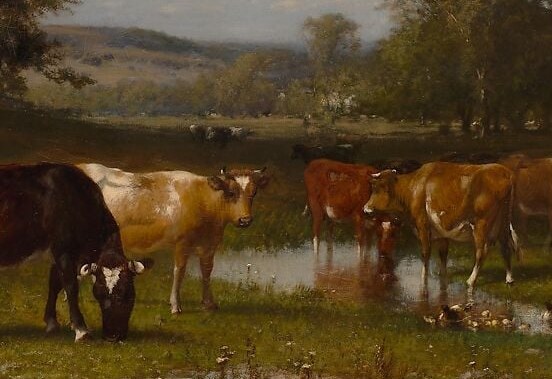
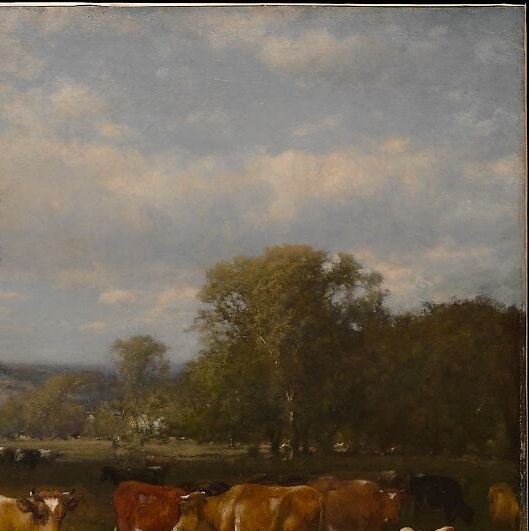
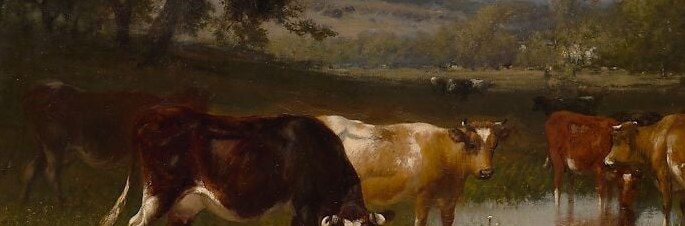
This is 'From Shifting Shade', an 1887 painting by James M. Hart now in The Metropolitan Museum of Art. In the Gilded Age, this exact kind of scene, serene cattle in a glowing woodland pond, was a symbol of tranquil wealth, and Hart was its master. But his formula would become the very thing that destroyed his reputation.
The painting's technical centerpiece is the dappled light on the meadow floor. Hart models the broken, shifting sunlight filtering through the oak canopy, a direct translation of the work's title. Look at the muddy bank: the trampled edges and soft palette of ochres and browns record the lived-in quality of an actual watering place, a detail few painters bothered to render this faithfully.
Hart was a star of the Hudson River School, trained in Düsseldorf and beloved for his panoramic pastoral escapes. But his career soured dramatically. While his close friend Albert Bierstadt chased the giant, operatic views of the American West, Hart refused to adapt. Critics turned on him, calling his endless stream of cow-dotted ponds a repetitive 'grind'. The public who once found solace in his nostalgia moved on, and he died in 1901 a deeply bitter man.
The painting entered the Met in 1990 as a bequest from DeLancey Thorn Grant. It is a time capsule of a moment just before the world decided this kind of beauty was no longer enough.
#arthistory #hudsonriverschool #americanart
Details
Transcript
He painted tranquil landscapes. Then his career imploded. Look at how the light breaks through the canopy. The title is 'From Shifting Shade'. A name that proved prophetic. Cattle in a pond. A formula that made him rich. But the art world's taste was shifting faster than his light. A younger friend named Albert Bierstadt rose to national fame. Critics called Hart's paintings 'grind': repetitive and stale. The man who signed this in 1887 died bitter, eclipsed by his friend's sun.