Untitled by Mahavihara Master
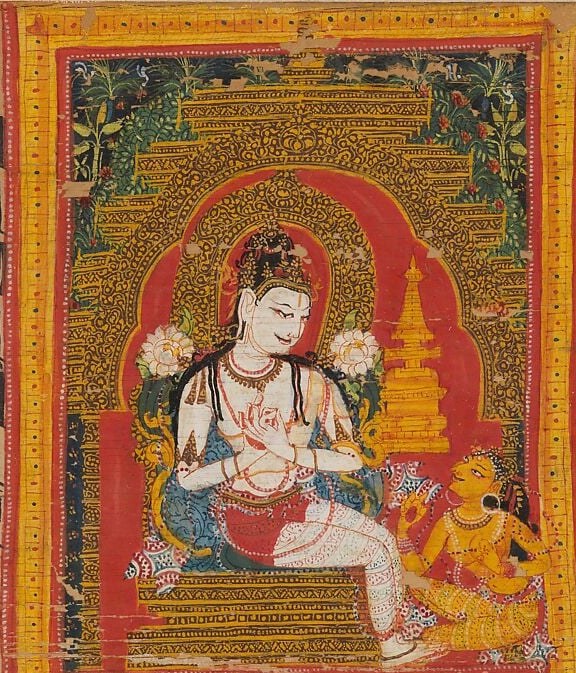
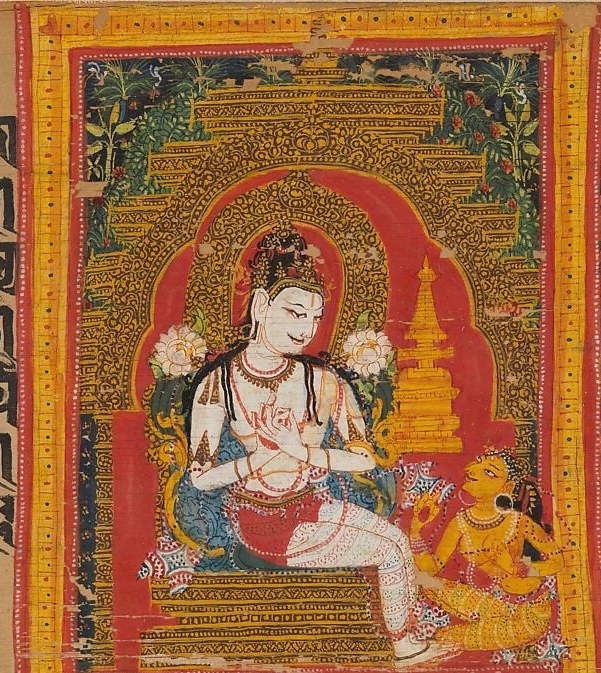
This is a bodhisattva, painted on a strip of palm leaf in eastern India around 1100 AD. It comes from a deluxe manuscript of the Ashtasahasrika Prajnaparamita, the Perfection of Wisdom in 8,000 Verses, commissioned by a queen whose name survives in the colophon. The artist was almost certainly a Buddhist monk working in the scriptorium of a great monastery, or mahavihara, in Bengal. Today the folios are divided between the Metropolitan Museum of Art in New York and the Tibet Museum in Lhasa.
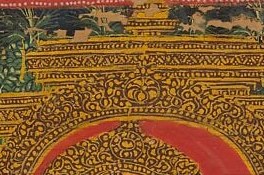
Look first at the forehead. The small third eye, the urna, is the single iconographic detail that distinguishes a bodhisattva from a royal human. Once you see it, the whole image shifts: the jeweled crown, the pink lotus throne rising from dark ground, the multiple arms each holding a distinct attribute. Together they name this figure as Avalokiteshvara, the bodhisattva of compassion.
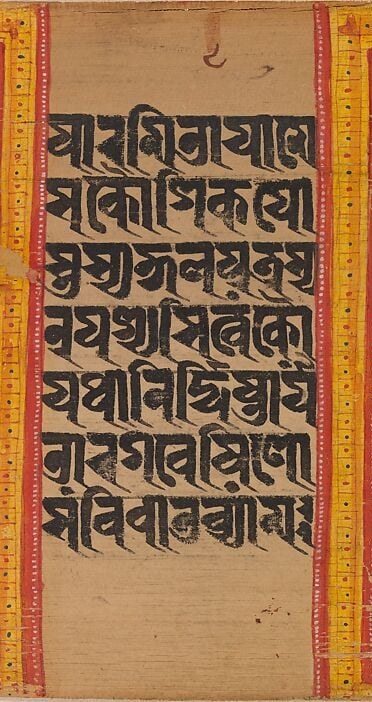
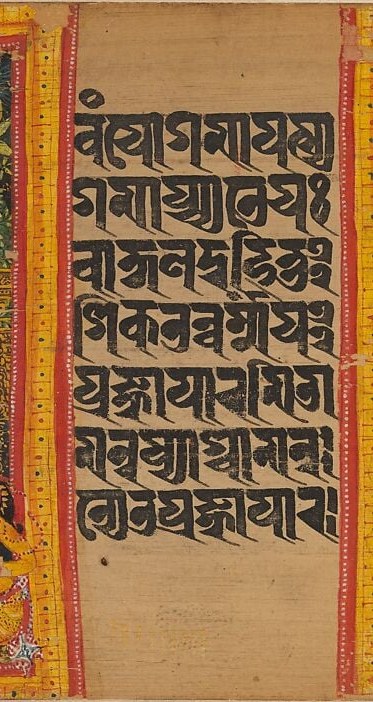
The script that frames the painting is not decorative. It contains the very sutra the image was made to accompany, and it was meant to be read aloud. Image and text together form one complete devotional device. The saturated red mandorla against the near-black ground makes the pale figure appear self-luminous, a deliberate optical trick compressed into a format smaller than a hand.
The palm leaf itself is a marvel. Stripped, dried, and treated, it has carried this painting through nine centuries. Works like this were designed to be rolled up and carried by traders along ancient routes, disseminating Buddhist practice and artistic style across regions. The large-scale murals those traders would have seen in Pala-era monasteries are all lost now. What remains are leaves like this one, small enough to survive.
#arthistory #buddhistart #paladynasty
Details
Transcript
At first glance, a crowned king on a lotus. But look at his forehead. That third eye marks omniscience. This is a bodhisattva. His many hands hold attributes that name him. The text framing him is a sutra. It was written to be read aloud. The painting and the words together are one complete devotional device. It survived nine centuries on a palm leaf, small enough to roll up and carry.