Untitled by Stipple Master

This is an untitled work by an Indian artist known only as the Stipple Master, painted around 1705. A lone nobleman reclines with a hookah while, impossibly, an elephant and fish float beside him through the empty air. The scene reads like a quiet vision, perhaps the doorway between a drug-induced dream and royal self-regard.

Look closely at the elephant suspended above the rug. It is not supported by clouds or divine light, it simply hangs there, weightless. Below it, fish drift in the same impossible space. The gravity-defying animals turn a portrait of leisure into something much stranger: a private, inward moment made visible.

The Stipple Master worked in India around 1690 to 1715 and built every form not with drawn lines but with countless tiny dots of ink. If you could hold this piece, you would also catch the shimmer of silver and gold leaf laid beneath the paint, a material luxury meant to animate the surface as candlelight or daylight moved across it. Very little is known about the painter’s life, which leaves the painting itself to carry the mystery.

The hookah smoke curls upward. The elephant floats where smoke might go. What do you think the painter wanted us to understand?

#arthistory #indianminiature #stipplemaster

Details
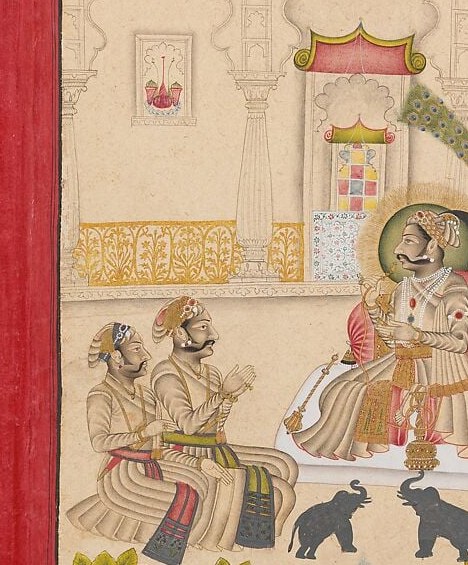
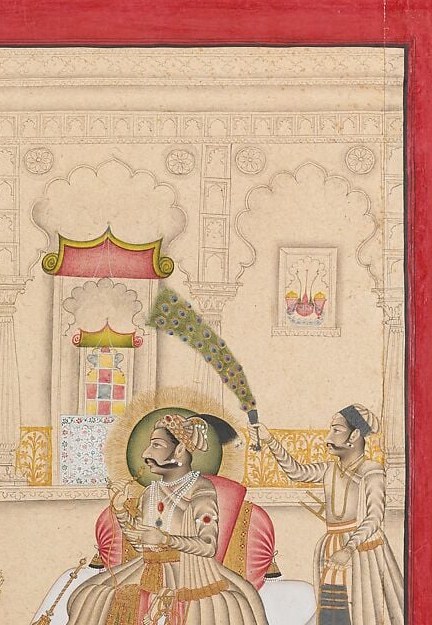
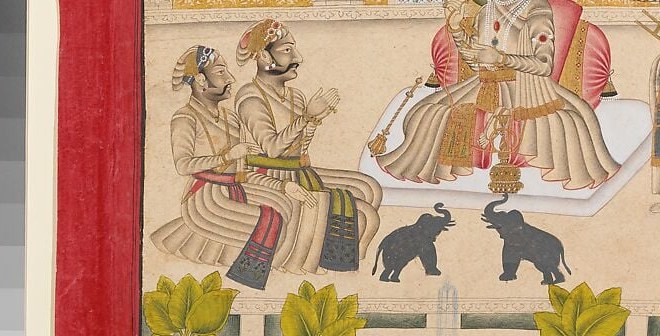
The painting's primary subject , his posture of relaxed leisure and layered garments communicate rank and indulgence; the whole composition radiates outward from his figure.
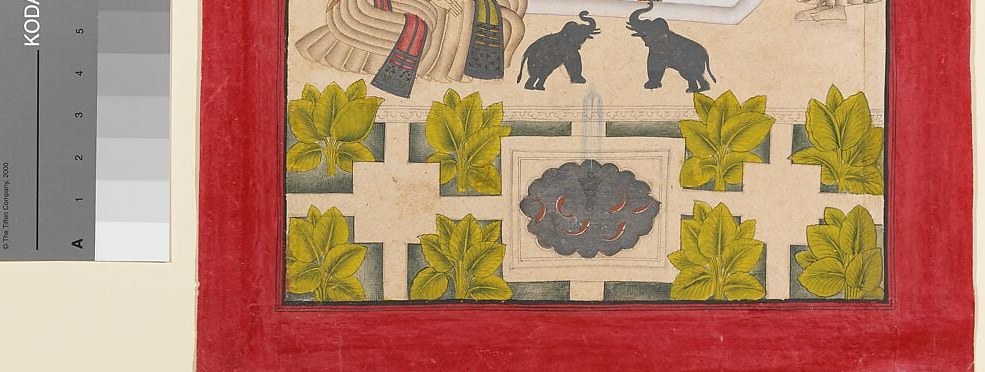
The lush plantings create a garden enclosure; Mughal and Deccani painters often depicted specific botanical species here , a closeup may reveal identifiable flora.
The royal parasol is a codified insignia of sovereignty in South Asian court art; its scale and placement certify the nobleman's status without a word of inscription.
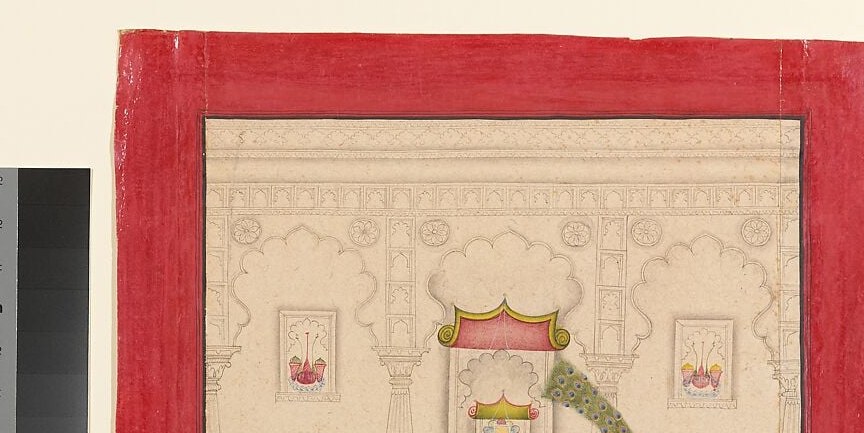
The architectural backdrop anchors the scene in a royal garden terrace; gold detailing on the canopy would shimmer with the silver-and-gold medium, placing this firmly in elite Mughal or Deccani pictorial space.
The rug's repeating geometry grounds the fantastical scene in domestic luxury; the stipple technique would render each motif as a field of micro-dots, making the textile almost tactile at close range.
Transcript

He looks like a man simply enjoying a smoke. A ceremonial parasol marks his high rank. But something impossible is happening around him. A full-grown elephant drifts through the air. So do fish. They are swimming in nothing. The artist built this whole scene from tiny dots. No lines. Just thousands of shimmering points of ink.