Madonna and Child by Paolo di Giovanni Fei
View the artwork: Madonna and Child →
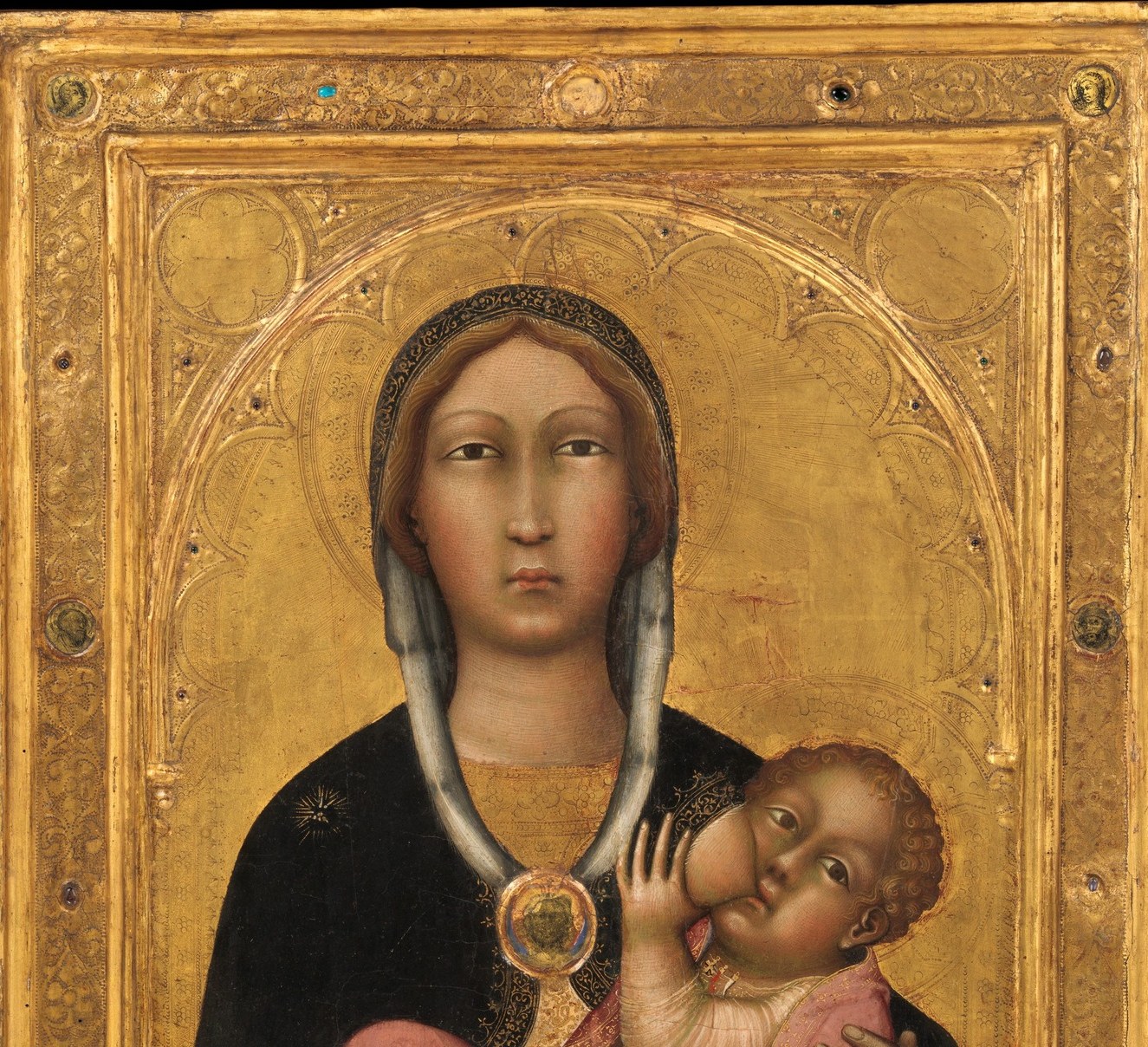
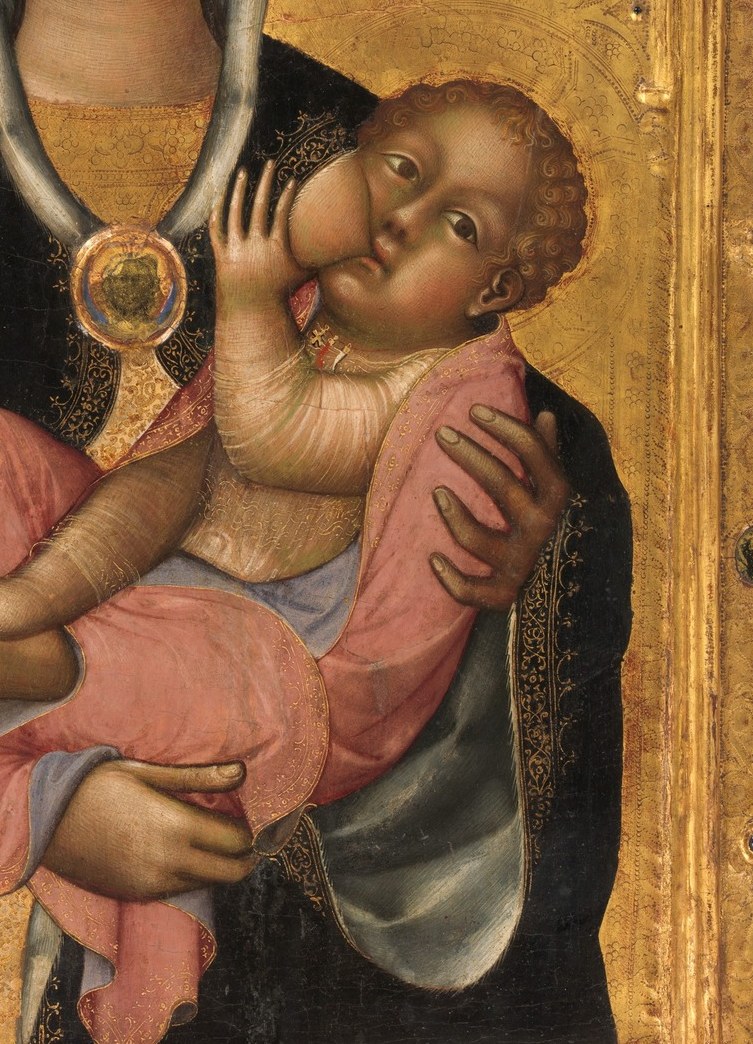
This is Paolo di Giovanni Fei's "Madonna and Child," painted in Siena around 1370. It survived a knife.
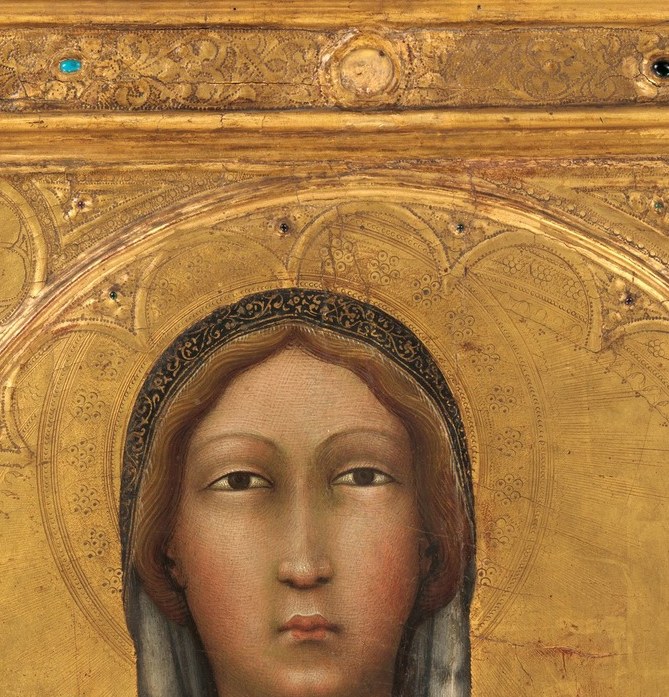
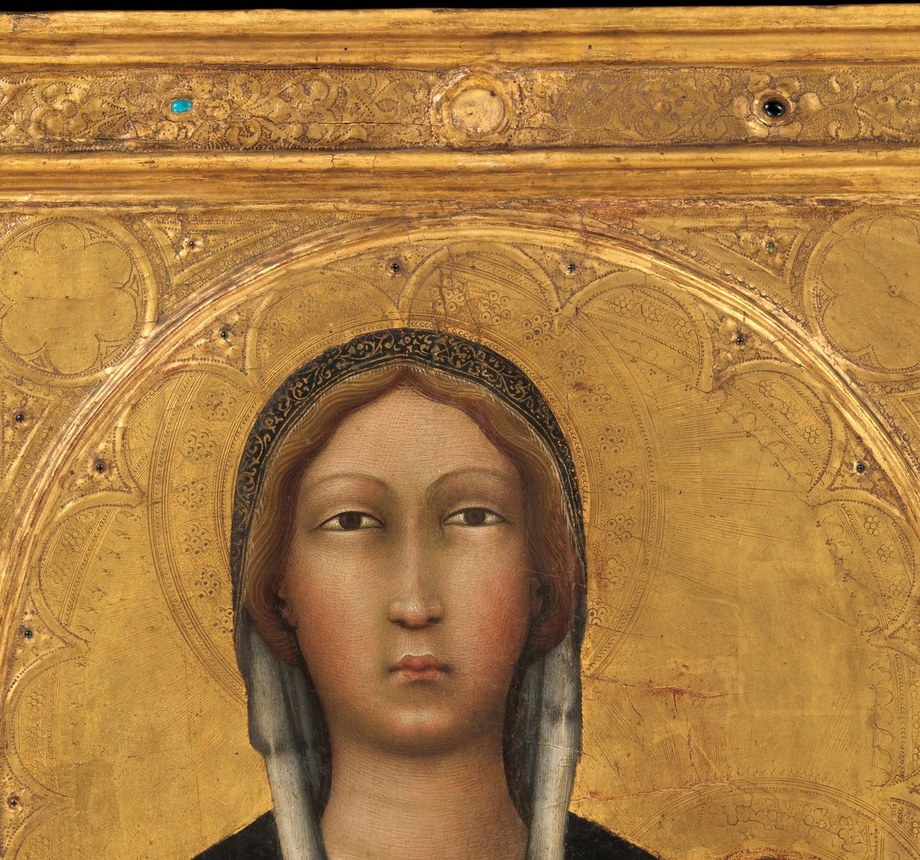
In 1971, thieves broke into a church in the Sienese countryside and cut this tempera-on-panel painting from its frame. They were likely after the gold leaf, which you can still see in the intricate punched background, a labor-intensive technique that gave sacred images their luminous, otherworldly glow. The thieves abandoned the painting in a field. It was recovered, painstakingly restored, and eventually acquired by the National Gallery of Ireland.
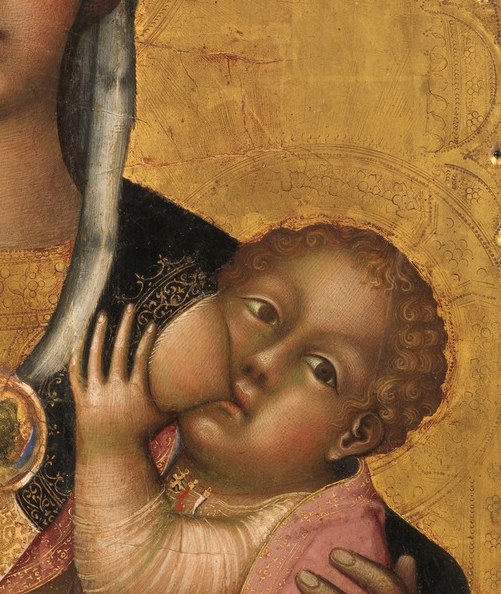
Look at the child. Most 14th-century Christ Children stare blankly into the middle distance. This one looks outward, alert and curious, his arm reaching toward a small red object clasped in his fist. It is likely a pomegranate, a Passion symbol that prefigures the Crucifixion. The ambiguity of the gesture, is he clinging to his mother or grasping his fate?, holds the entire theological tension of the image in one small hand.
Paolo di Giovanni Fei was a master of the Sienese school, influenced by the Lorenzetti brothers and Simone Martini. His work is known for its bright, clear palette and ornamental richness. This panel, with its deep ultramarine veil and rose-pink inner robe, shows why. It is fragile, six and a half centuries old, and it was nearly lost to a blade. That it hangs before you now is a small miracle.
#arthistory #sienesepainting #artcrime
Details
Transcript
In 1971, thieves entered a church in Siena. They cut this painting from its frame with a knife. She holds him with both hands. A cradle of protection. But the child is already reaching. For what? A small red object. A pomegranate. A symbol of death. The thieves wanted the gold. They left the panel in a field. It was recovered, restored, and now lives behind glass.