A Woman Playing a Harp by Joseph-Marie Bouton
View the artwork: A Woman Playing a Harp →
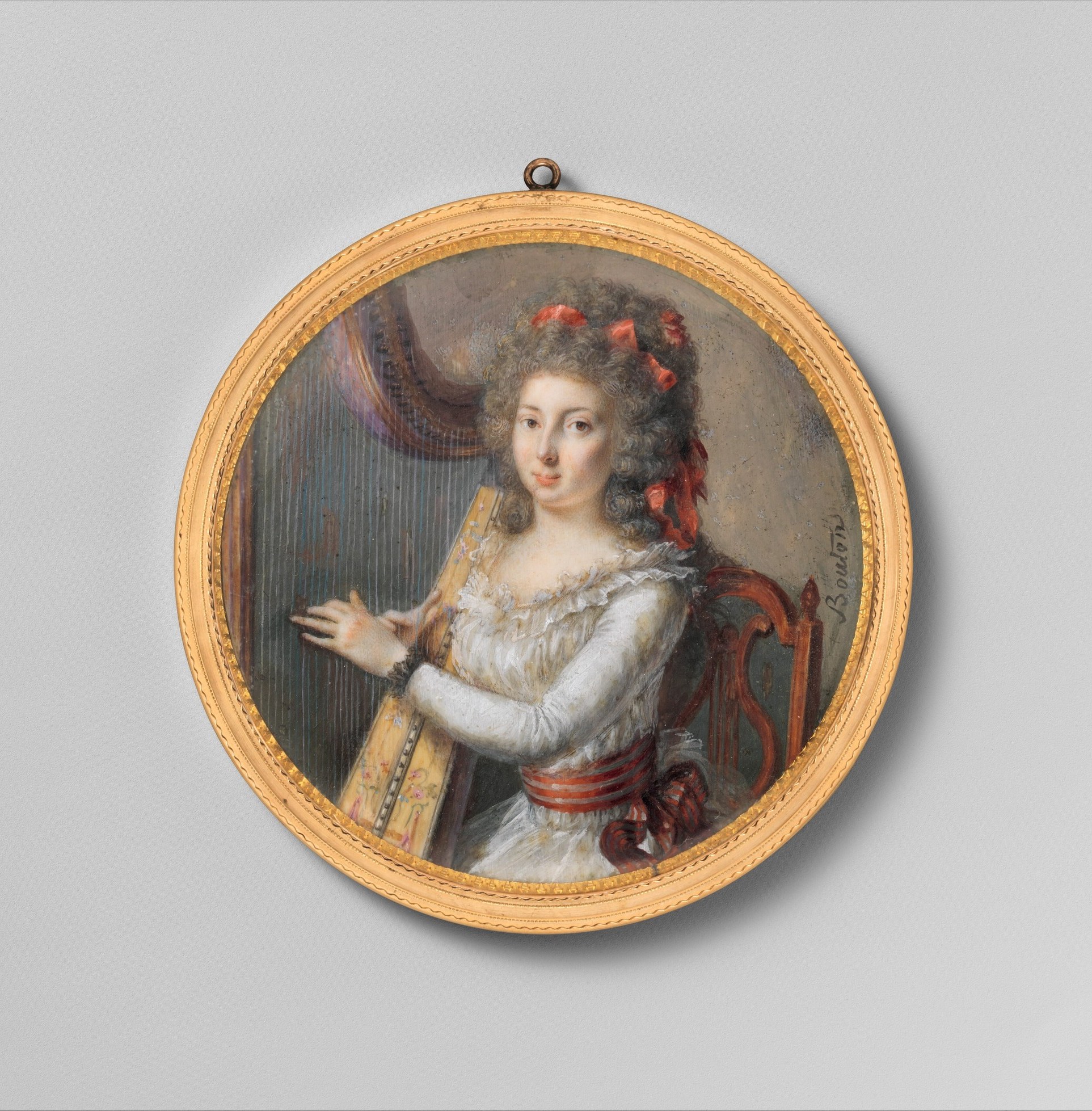
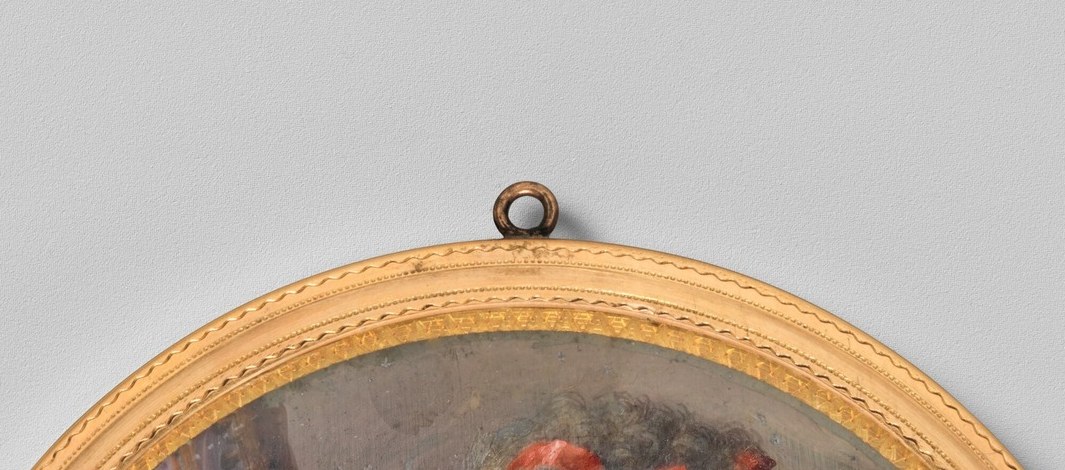
This is "A Woman Playing a Harp," a portrait miniature by Joseph-Marie Bouton from around 1790, now at the Metropolitan Museum of Art. The whole painting is just 90 millimeters across, painted in watercolor on a thin ivory disc. It was never meant for a wall. Someone held this in their hand, likely inches from their face, and looked at it slowly.
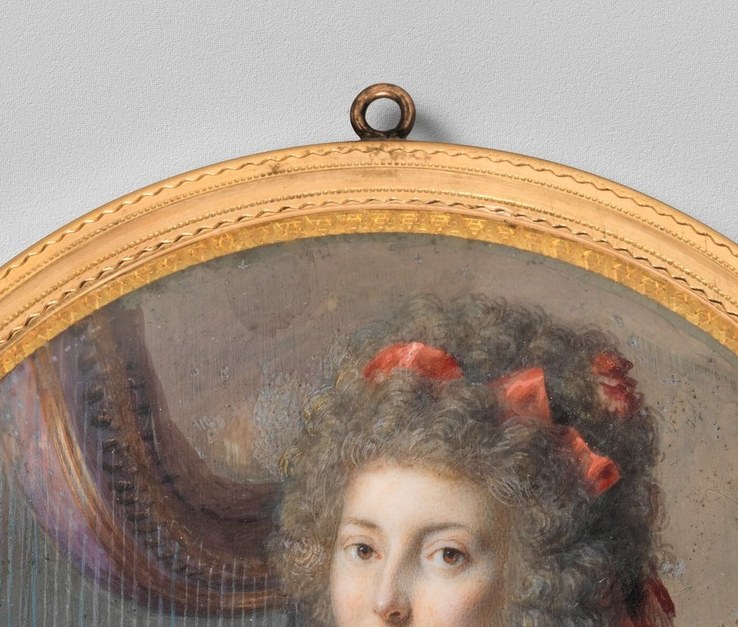
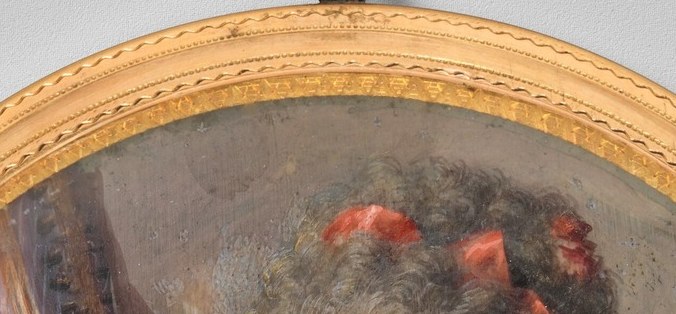
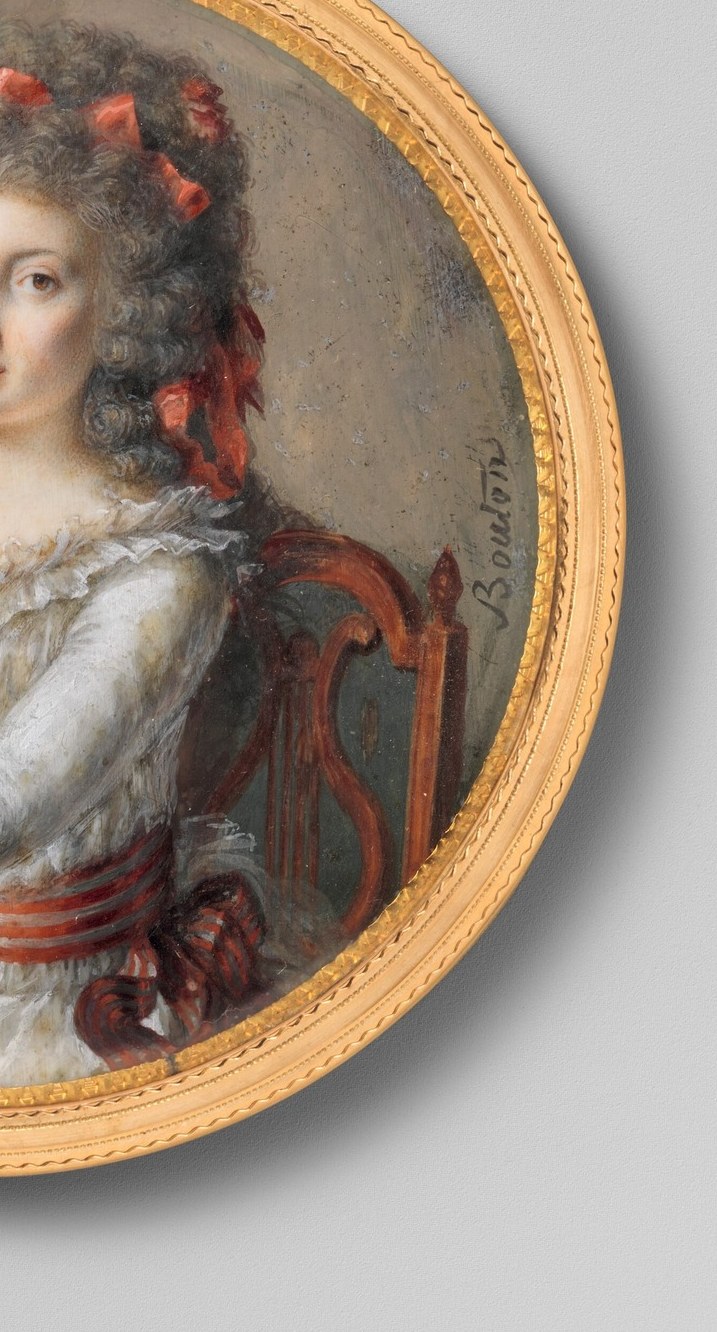
Look at the lace collar. Bouton built it thread by thread with a single-hair brush, working at a scale where most detail is invisible to the naked eye. The red-orange ornaments in her towering powdered hair are distinct enough to read as silk flowers or ribbons, a sharp chromatic choice that rewards the kind of close study a miniature expects. Her eyes meet yours directly, in a full-size portrait that can read as a performance, but here, held privately, it feels like a conversation.
Bouton was born in Cádiz in 1768 and trained under his father, a French miniaturist, before studying in Toulouse and Paris. He exhibited at the Paris Salon across two decades, worked in London, and in 1805 was appointed court painter to Queen Maria-Louisa of Spain. But the sitter's dress dates this piece to about 1790, his early Paris years, a moment before the Revolution fully upended the world that commissioned such delicate, intimate objects.
The miniature came to the Met in 1925 as a gift from Mrs. Louis V. Bell. It is catalogued under object number 25.106.17. A gold bezel and a small suspension ring confirm it was meant to be worn or displayed on a person, a private token, not a public statement. What do you imagine she was playing?
#arthistory #miniatureportrait #metmuseum
Details
Transcript
A woman plays her harp. But this painting is only three and a half inches wide. It was painted on a thin disc of ivory, meant for the palm of a hand. Now look at her collar. Every thread of lace is a single hair from a brush. And the flowers in her hair are distinct enough to identify. This kind of looking was meant to be slow, and private.