Fanciful Landscape by Doughty, Thomas
View the artwork: Fanciful Landscape →
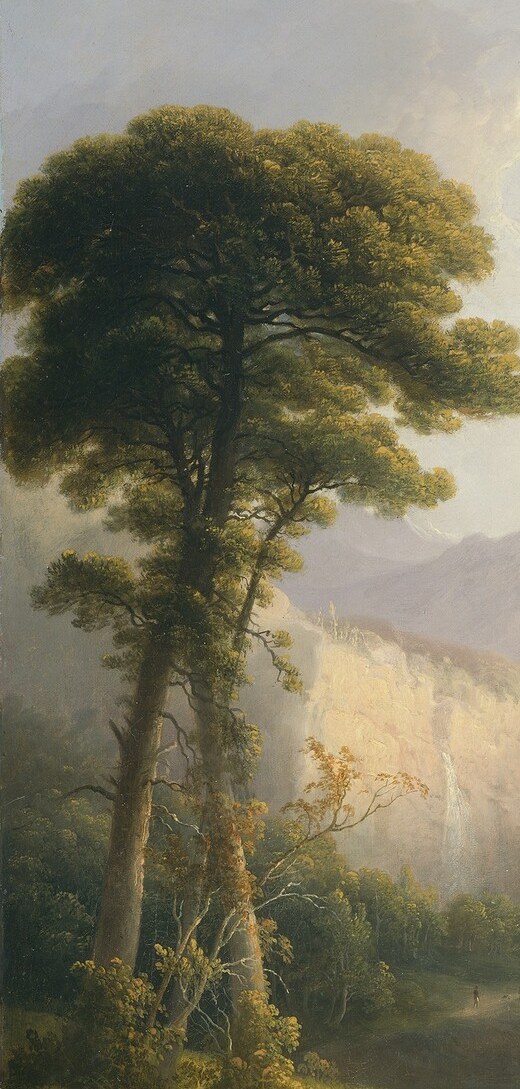
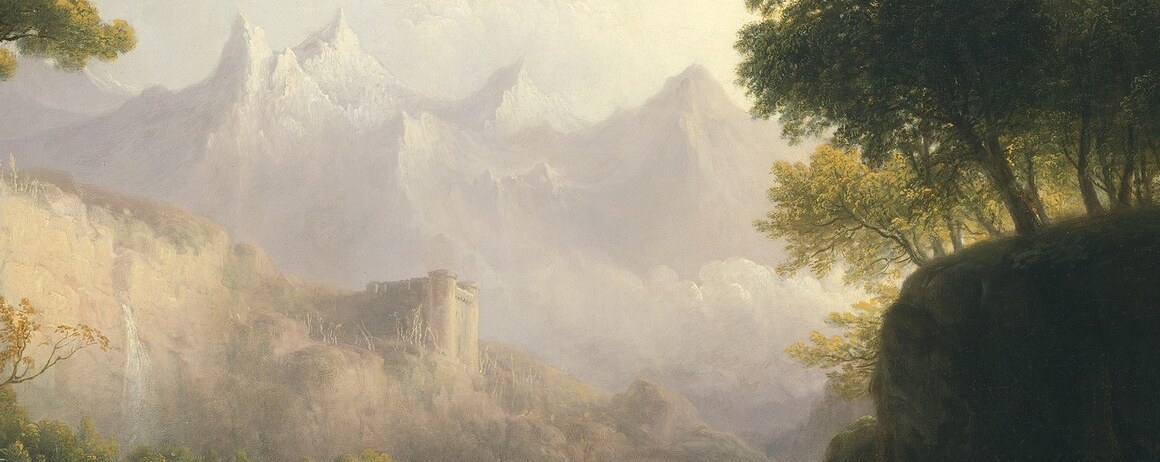
Thomas Doughty painted Fanciful Landscape in 1834, during a five-year Boston residency that was the most lucrative stretch of his career. The canvas is a knowing fabrication, an imagined valley assembled from European pictorial conventions he had absorbed by copying Old Masters in private collections, then applied to the American terrain he sketched on trips through the Northeast.
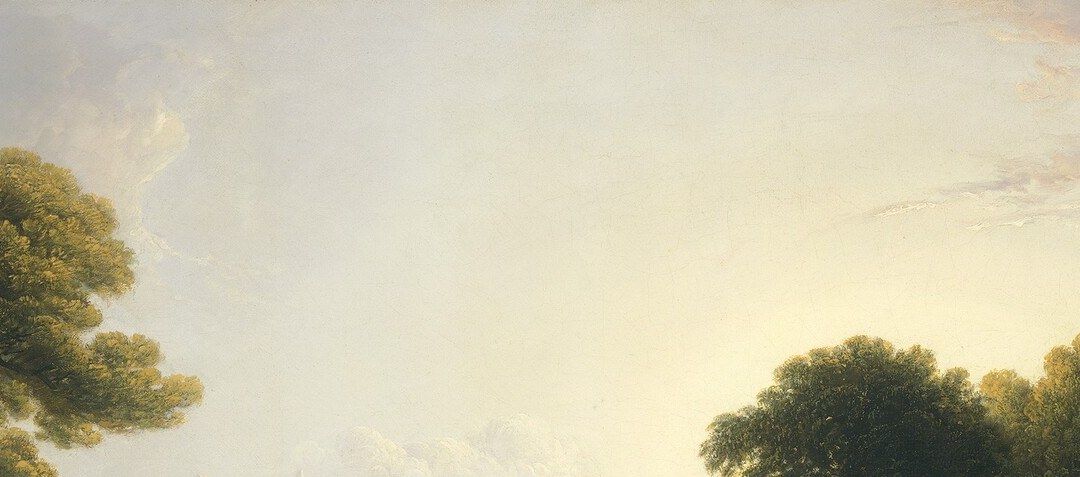
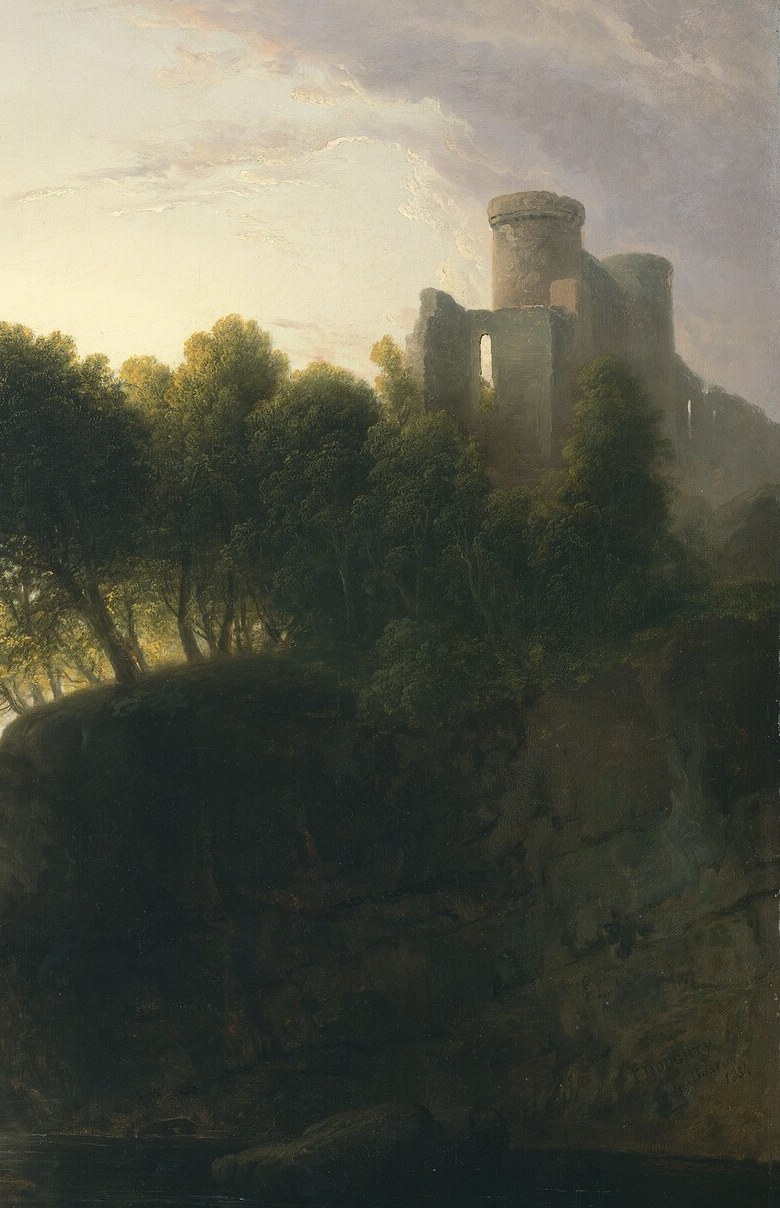
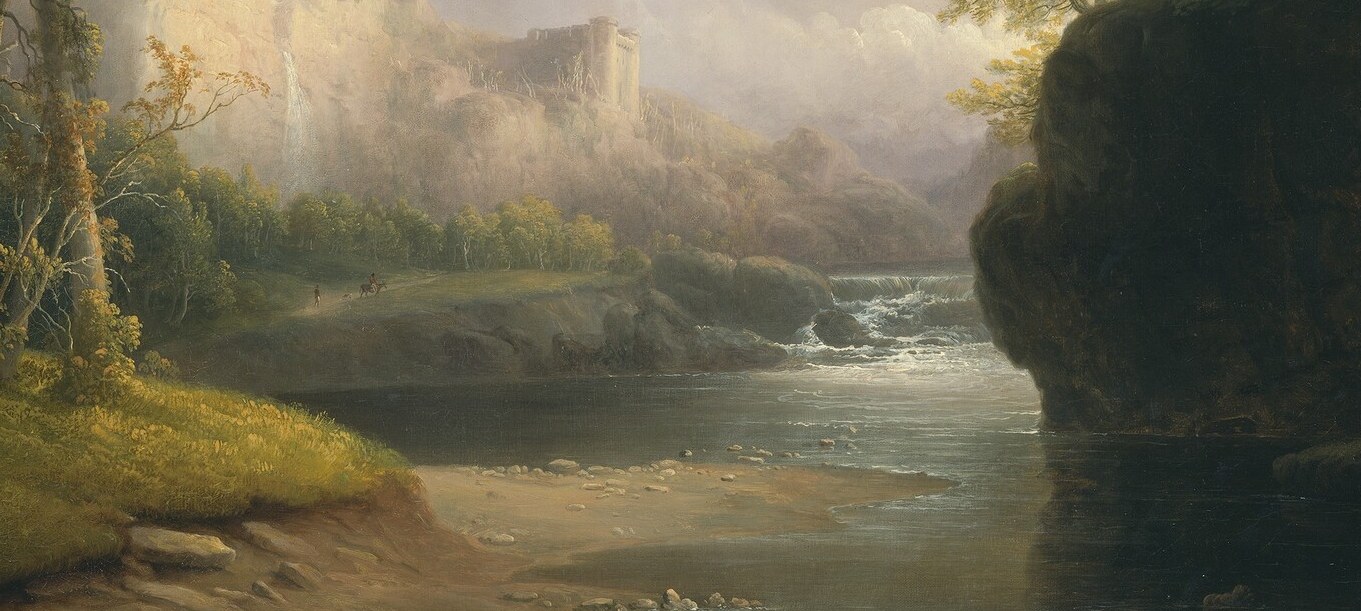
Run your eye from the golden sunburst in the sky down to the shimmering water beneath it. The whole painting is built around that vertical column of reflected light. Then notice the ruined Gothic tower on the right cliff, a memento-mori borrowed straight from Claude Lorrain, and the haze that swallows the middle distance. Doughty leaves the valley deliberately unfinished so your own imagination has to complete it.
The painting bears a full inscription in the lower right corner: T DOUGHTY / BOSTON / 1834. Doughty rarely signed with such documentary precision, which makes this canvas a reliable anchor point in his chronology. That same year, the critic and historian William Dunlap placed him in the first rank as a landscape painter, high praise during the formative years of American art.
The National Gallery of Art acquired the painting in 1963 through the Avalon Foundation. Before that, it may have belonged to William Warner Hoppin of Providence, who lent a Doughty landscape to an 1855 Rhode Island exhibition.
#arthistory #americanart #hudsonriverschool
Details
Transcript
Boston, 1834. The most successful years of this painter's life. He signs it proudly, with the city and date. The light is pure performance. Look into the burst. The water is its accomplice, throwing the gold back up. A ruined tower hangs on the right. Civilization yields. The valley is mostly haze. The imagination completes the scene. That same year, a critic declared him in the first rank of landscape painters.