Landscape with Hunters by Jan Wijnants
View the artwork: Landscape with Hunters →
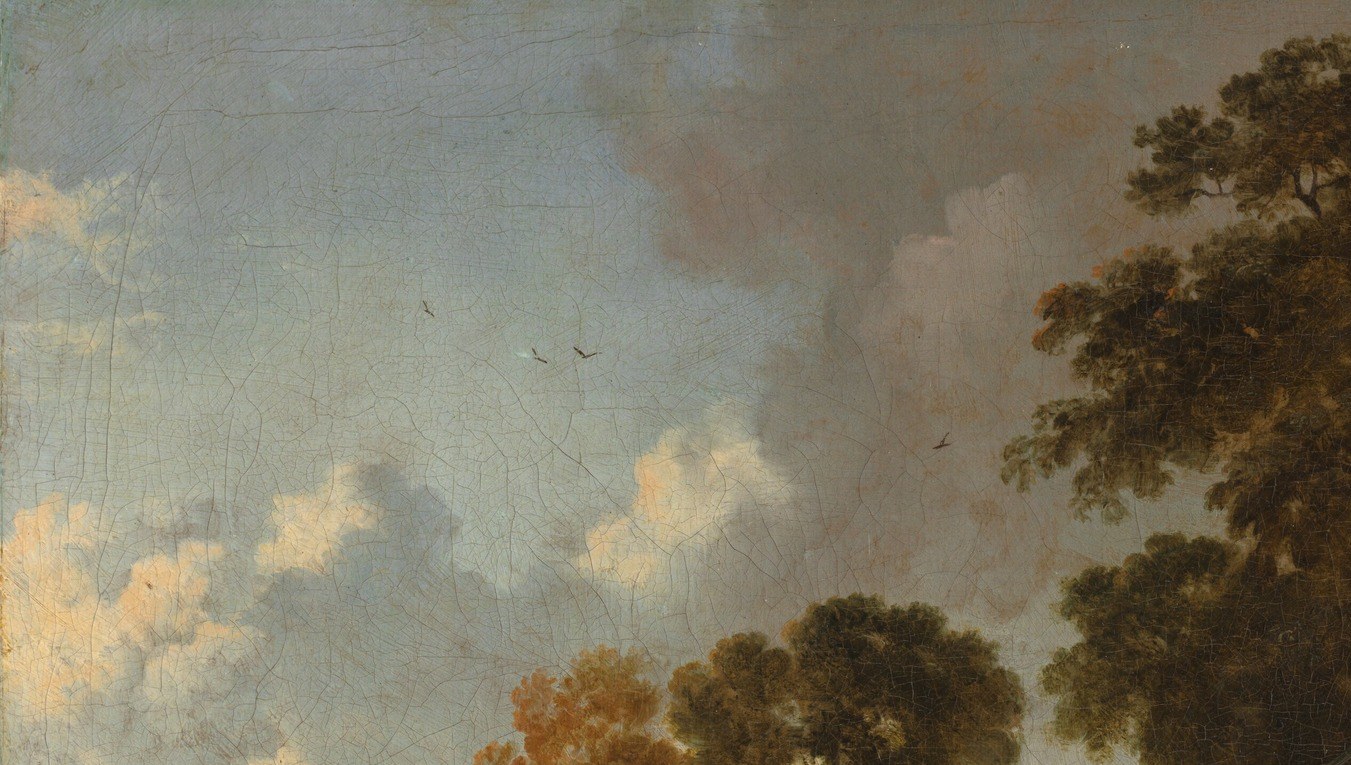
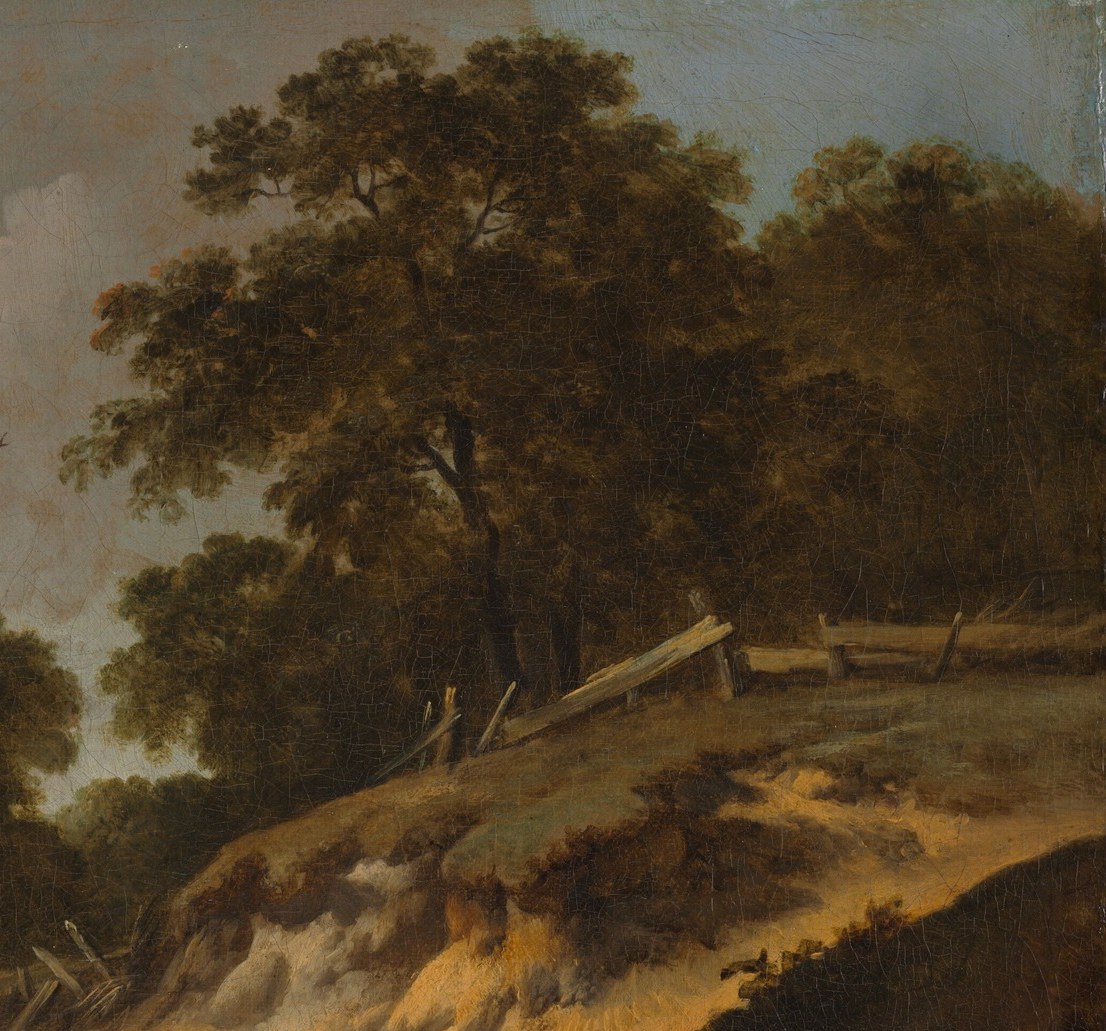
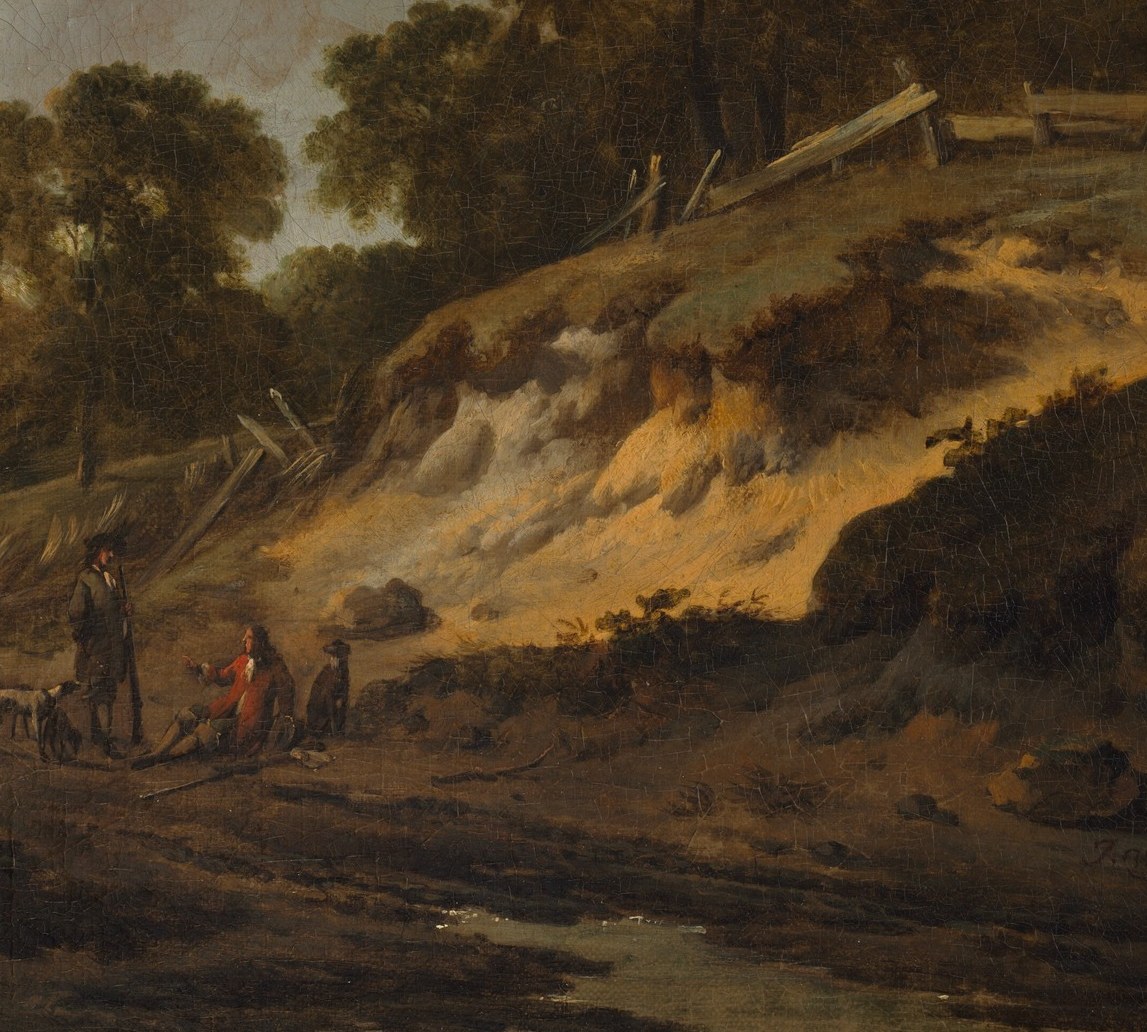
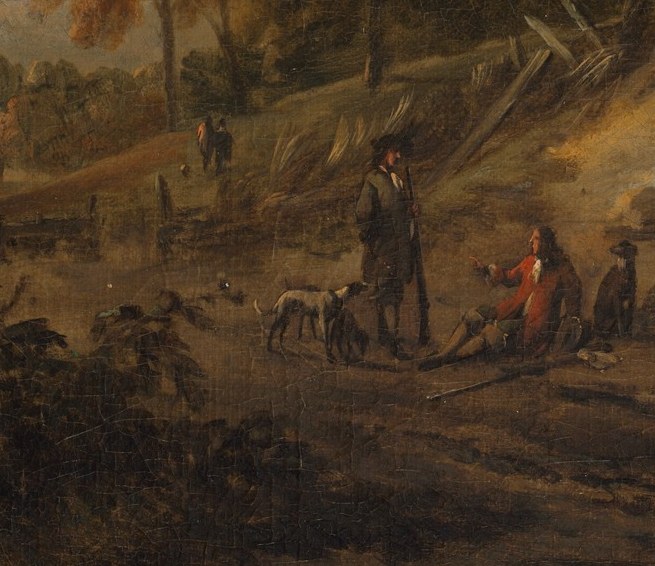
Jan Wijnants painted the same Haarlem dune over forty times, and this is one of the quietest. "Landscape with Hunters" (c. 1660-80) hangs in the Cleveland Museum of Art. Two men and their dogs rest beside a sandy embankment, utterly dwarfed by the terrain. The painting is not about the hunt, it is about the steady, unglamorous presence of the land itself.
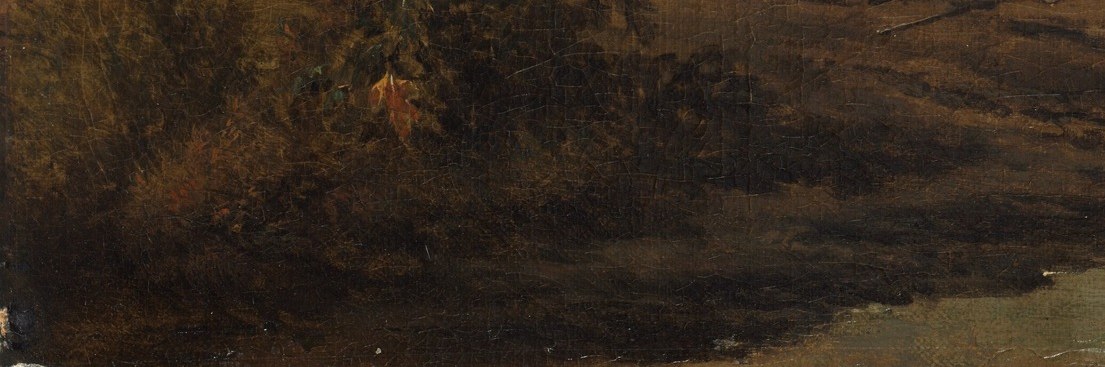
Look at the damp path in the foreground. Wijnants gave it the brightest note in the whole composition, a streak of reflected grey light that pulls your eye into the scene. Above it, the dune crest glows warm ochre against the dark oak canopy. The hunters are almost an afterthought, small figures in period dress, their dogs loose and tired. Everything in the painting insists that the landscape is the real subject.
Wijnants was born in Haarlem around 1632, the son of a Catholic art dealer. He entered the family trade, specialized in dune scenes, and moved to Amsterdam in 1660, where he trained Nicolaes de Vree and Adriaen van de Velde. His manner of rendering sandy terrain and diffused coastal light later left traces on Thomas Gainsborough and Wilhelm von Kobell. The painting arrived at the Cleveland Museum of Art in 2011 through the bequest of Dr. Paul J. Vignos Jr.
We know Wijnants died in 1684, but almost nothing else. No grave is recorded, no final work is firmly identified. For a man who painted the same stretch of earth again and again, the silence at the end feels oddly fitting. The path he painted still catches the light.
#arthistory #dutchgoldenage #janwijnants
Details
Transcript
He painted this dune more than forty times. Same sand, same trees, same pale light off the North Sea. The hunters barely matter. The landscape swallows them. His name was Jan Wijnants. He moved to Amsterdam in 1660. He trained Adriaen van de Velde here, and later Gainsborough copied his light. And after 1684, he simply disappears from the record. No grave, no last painting, just this path catching the last light.