Artwork
Gezicht op Brugge, Kruisvest
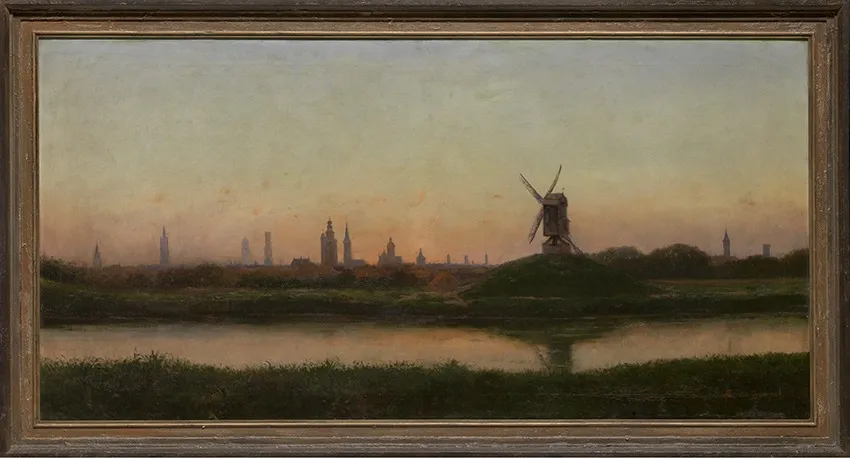
Gezicht op Brugge, Kruisvest is an oil painting by Bruno De Simpel. It dates from 1832 and is held in the collection of the Groeningemuseum.
About this work
Subject & Meaning
By emphasizing precise architectural details, the work serves as both a documentary record and a poetic tribute to Bruges' enduring identity.
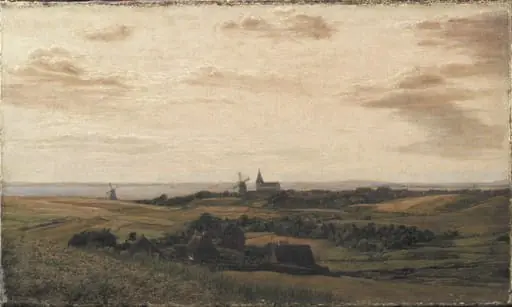
The painting depicts a view of Bruges' Kruisvest area, featuring the Sint-Annakerk, Jeruzalemkerk, a windmill, the Belfry of Bruges, a canal, and the Church of Our Lady. These elements together present an idealized cityscape that celebrates Bruges' historic architecture and waterways, reflecting 19th‑century Romantic interest in medieval urban scenery.
The composition symbolizes the city's prosperity and cultural heritage through recognizable landmarks, while the surrounding natural elements suggest harmony between urban life and the environment. By emphasizing precise architectural details, the work serves as both a documentary record and a poetic tribute to Bruges' enduring identity.
Technique & Style
Gezicht op Brugge, Kruisvest is executed in oil paint on canvas, a standard medium for nineteenth-century cityscape painting. The work takes the form of a wide horizontal composition, measuring 70.5 cm in height and 141 cm in width, a panoramic format well suited to its expansive urban subject. Its handling belongs to the cityscape genre tradition, depicting the Kruisvest area of Bruges along with landmarks such as the Sint-Annakerk, Jeruzalemkerk, a windmill, a canal, the Belfry of Bruges, the Church of Our Lady, and the Sint-Salvatorskathedraal. The painting is classified as a painting and is held in the Groeningemuseum collection.
No specific information about the artist's brushwork, surface condition, or stylistic school is documented in the available sources.
History & Provenance
The painting Gezicht op Brugge, Kruisvest was created in 1832 by Bruno De Simpel as an oil on canvas cityscape. It was acquired directly by the Groeningemuseum, where it remains in the collection today. The work depicts a view of the Kruisvest canal in Bruges, including the Sint-Annakerk, Jeruzalemkerk, a windmill, the Belfry of Bruges, the Church of Our Lady, and the Sint-Salvatorskathedraal. Its dimensions are 70.5 cm in height and 141 cm in width.
The painting Gezicht op Brugge, Kruisvest is held in the collection of the Groeningemuseum in Bruges. Created in 1832 by Bruno De Simpel, the work measures 70.5 cm in height and 141 cm in width. The provided sources confirm its location within this specific museum but do not list a specific inventory or accession number. Furthermore, no details regarding the exhibition history of this cityscape are available in the current documentation.
Context
The painting Gezicht op Brugge, Kruisvest occupies a distinctive position in Bruno De Simpel's oeuvre as a luminous cityscape that captures Bruges' historic skyline with meticulous detail. Executed in oil paint in 1832, its dimensions of 70.5 cm by 141 cm emphasize a horizontal format that guides the viewer's eye across the canal and architectural landmarks, including the Belfry of Bruges and Church of Our Lady. Scholarship highlights its role in documenting 19th-century urban landscapes, situating De Simpel within the broader Romantic movement's fascination with historic European cities.
The work's provenance at the Groeningemuseum underscores its significance as a representative example of the artist's engagement with local heritage and artistic tradition.
Contextual analysis places this cityscape within De Simpel's wider practice of topographical subjects, reflecting contemporary scholarly interest in the intersection of art and urban history. Its depiction of multiple religious and civic structures within a single composition illustrates the artist's nuanced approach to spatial depth and atmospheric perspective, contributing to ongoing discussions about 19th-century Belgian painting's evolution toward naturalistic representation.
The painting's reception in modern scholarship emphasizes its technical mastery and historical value, particularly in relation to other cityscapes by De Simpel that document Bruges' architectural legacy. This work remains a key reference point for understanding the artist's contribution to the visual documentation of urban environments during a period of growing interest in preserving European cultural landscapes.
Overview
Created in 1832, this oil painting by Belgian artist Bruno De Simpel presents a panoramic view of Brugge. The composition balances a pastoral foreground, a windmill perched on a gentle hill overlooking water, with a distant urban skyline that includes the city’s iconic Belfry and the Church of Our Lady. The work is part of the permanent collection of the Groeningemuseum.
Artist & collection

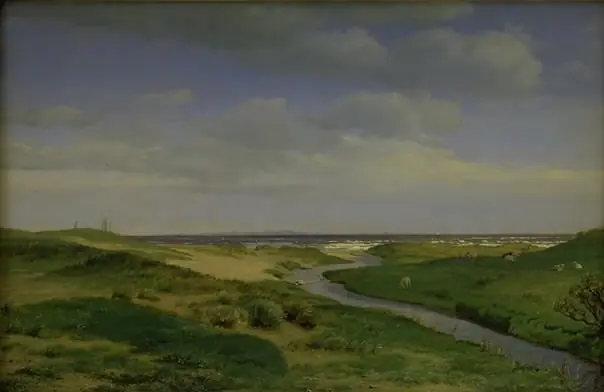
- View of the North Coast of Zealand at Dronningmølle
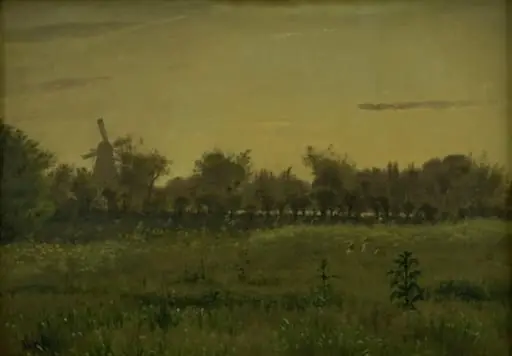 The Meadow near the Artist's House at Farimagsvej outside Copenhagen
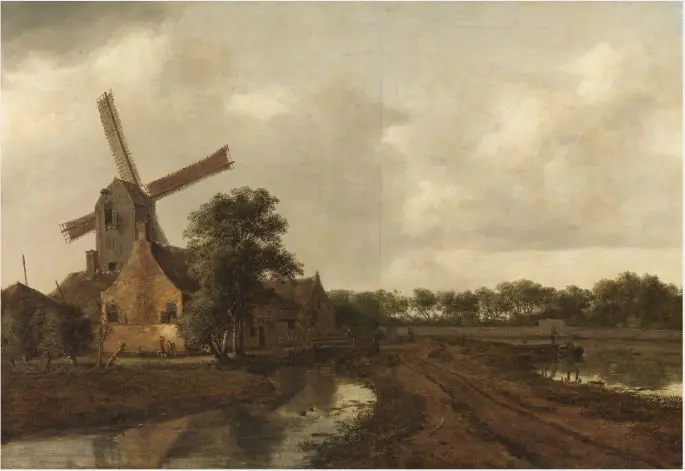 The Windmill
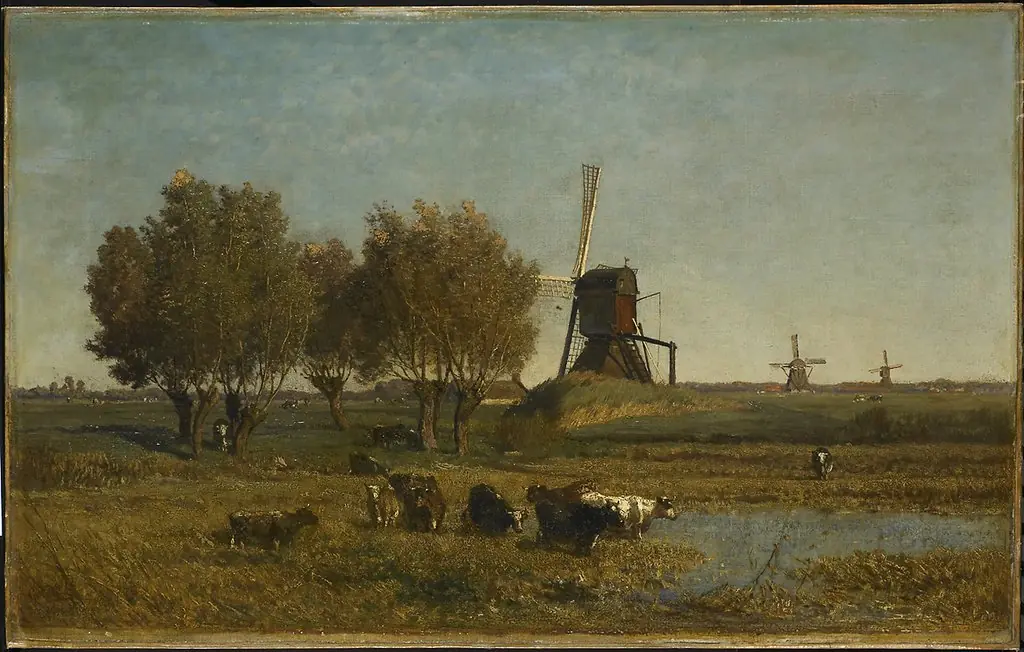 De Winkel near Abcoude
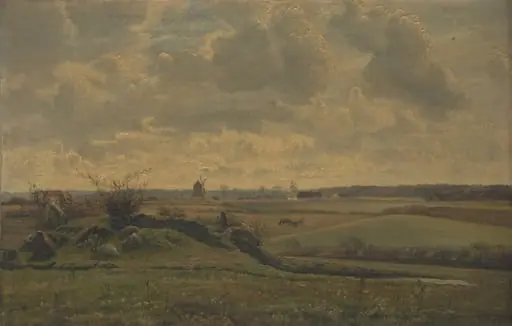 Landskab ved Gyrstinge
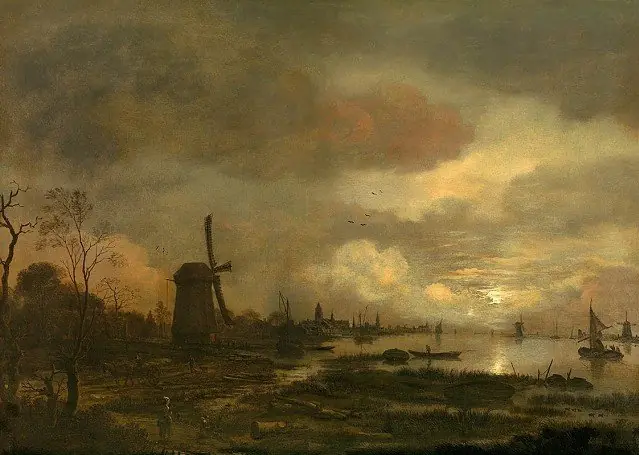 Landscape by moonlight
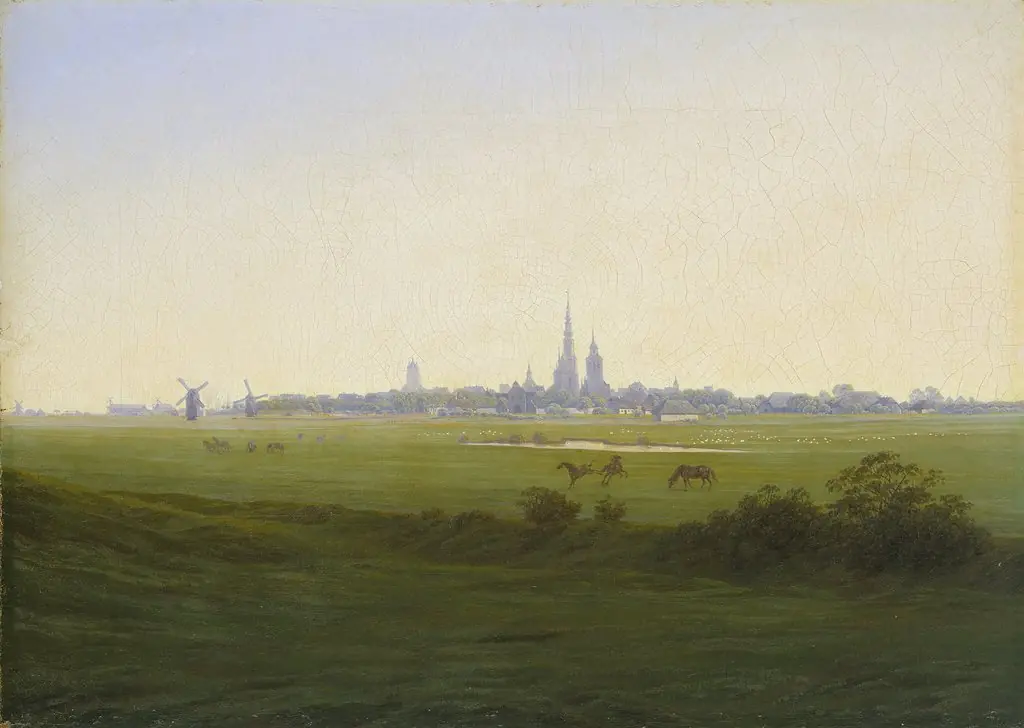 Meadows near Greifswald
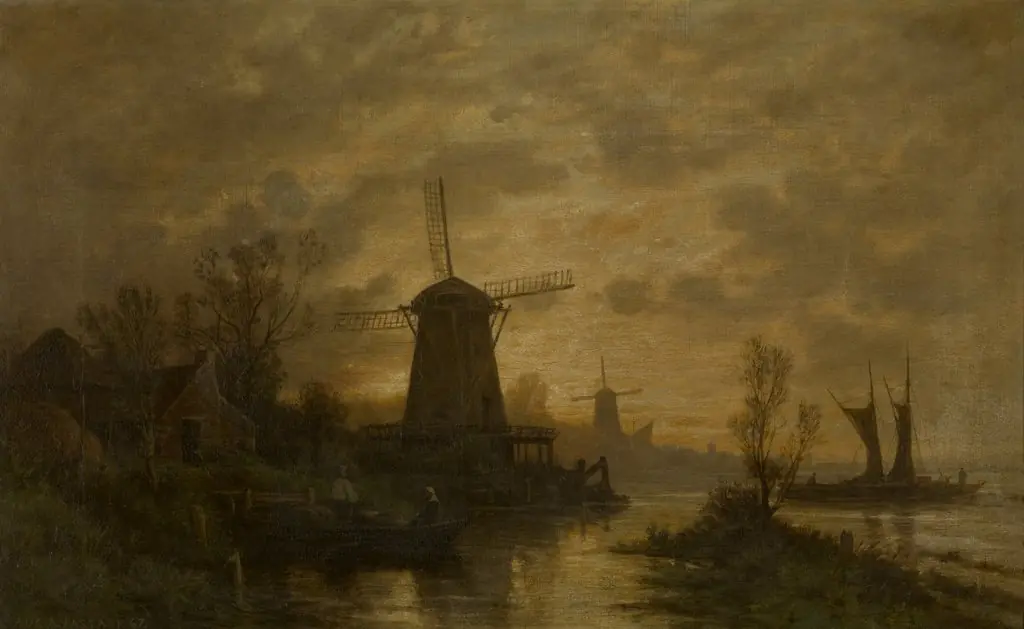 Windmills in Schiedam
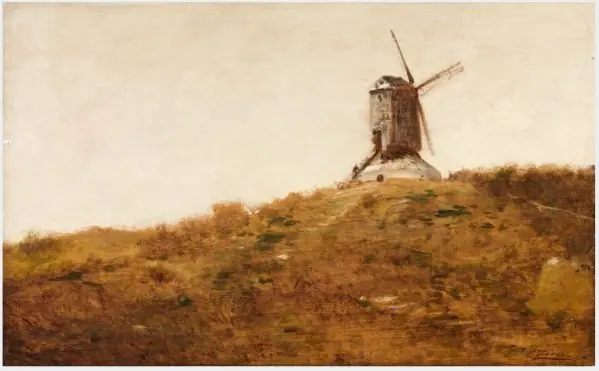 Windmill in Montmartre
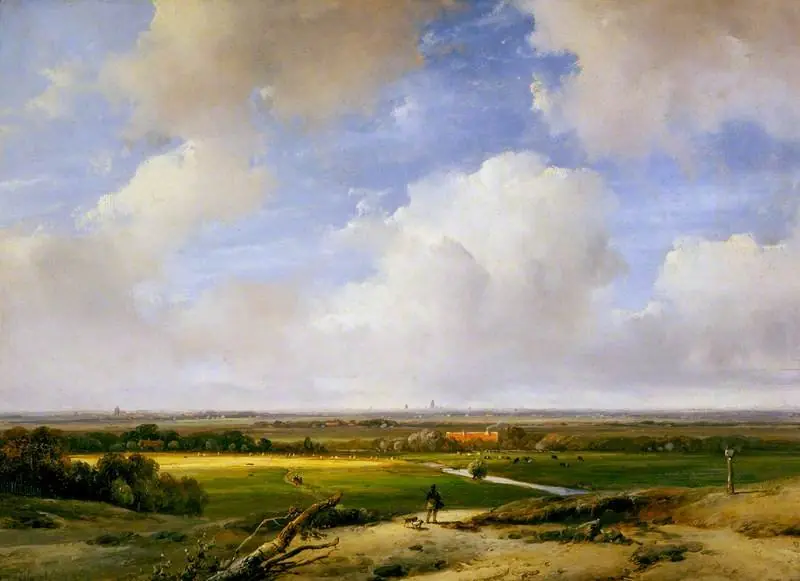 Landscape near Haarlem
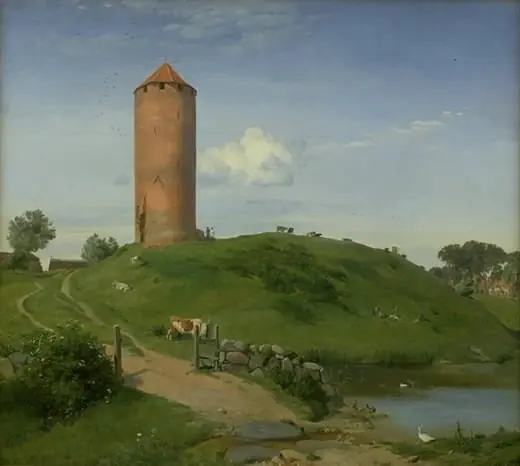 The Goose Tower in Vordingborg, Zealand
 A View towards Assens in Funen. In the Distance the Coast of Schleswig