Artwork
Untitled
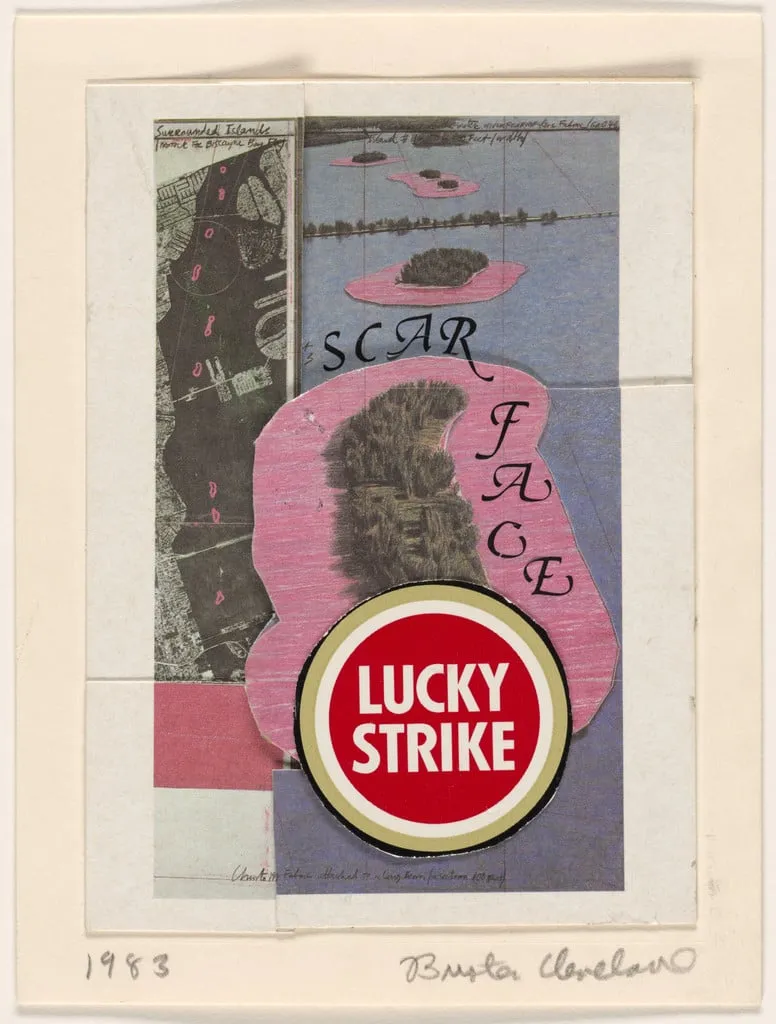
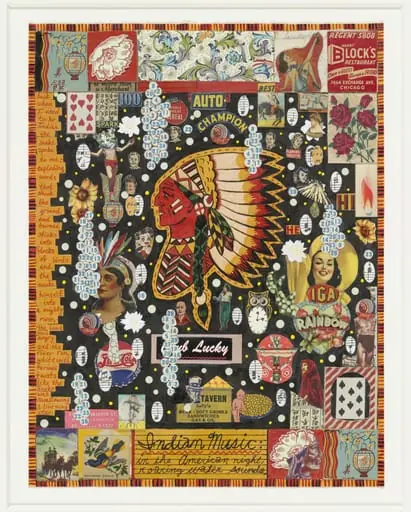
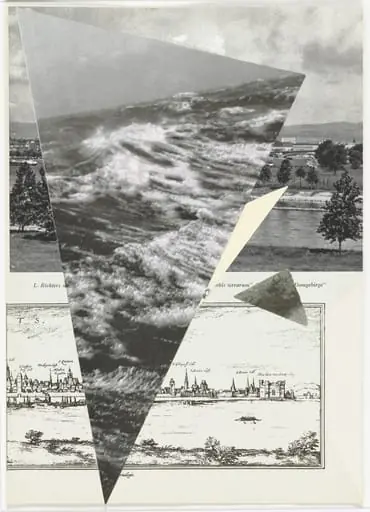
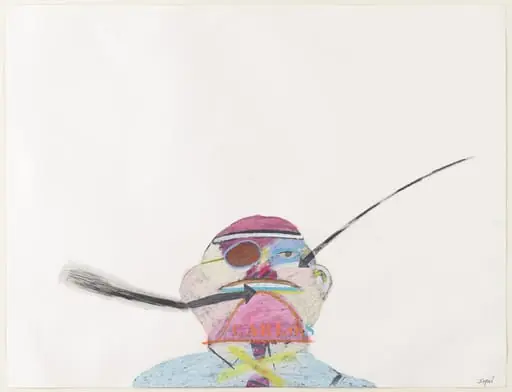
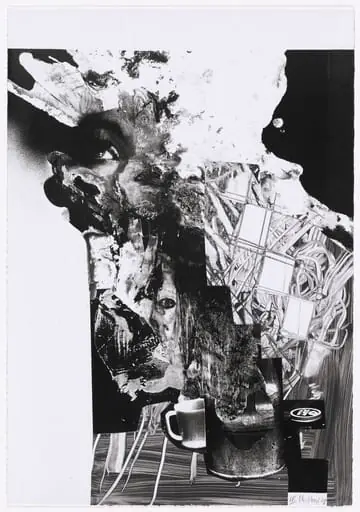
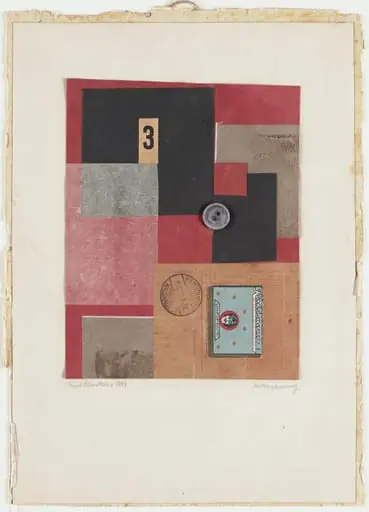
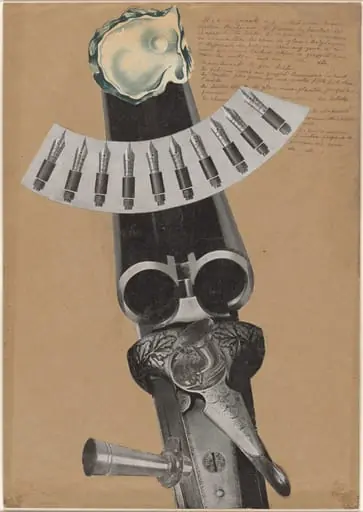
Untitled is a drawing by Buster Cleveland. It dates from 1990 and is held in the collection of the Museum of Modern Art.
About this work
Overview
Created in 1990 by Buster Cleveland, this work is a collage on paper composed of cut-and-pasted printed materials and presstype.
Created in 1990 by Buster Cleveland, this work is a collage on paper composed of cut-and-pasted printed materials and presstype. It resides in the collection of The Museum of Modern Art. The composition layers disparate visual and textual fragments, photographic snippets, handwritten elements, and commercial print, to construct an ambiguous, non-narrative field. Its materials are humble, its structure deliberate, inviting attention to the disjunctions between image and meaning.
Subject & Meaning
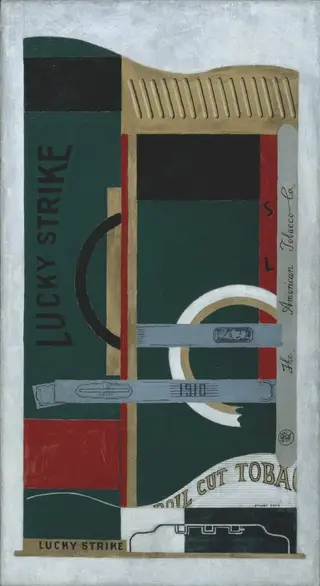
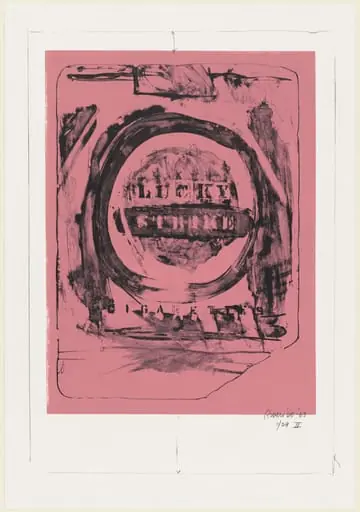
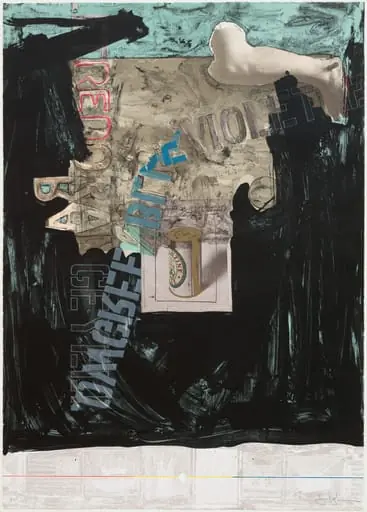
A pink oval suggests a face, but its eyes are replaced by a glued image of a squirrel, introducing an unsettling absurdity. Above, the phrases 'SCARFACE' and 'LUCKY STRIKE' overlap in contrasting red and black, evoking cultural symbols of violence and consumerism. A hooded figure in monochrome sketches the periphery, while floating islands in blue suggest isolation or displacement. The work resists clear interpretation, instead probing how identity and meaning are constructed from fragmented cultural debris.
Technique & Style
Cleveland employs collage as both method and metaphor, assembling printed paper, photographic fragments, and typographic elements without traditional composition. The textures vary, smooth ink, rough paper, uneven adhesive marks, emphasizing materiality. Colors are deliberately jarring: pink against blue, red against black.
The hand-cut edges and visible glue reinforce the work’s physicality, rejecting polish in favor of raw, intentional dissonance.
History & Provenance
The work was made in 1990 and entered The Museum of Modern Art’s collection shortly thereafter. No prior exhibition or ownership history is publicly documented beyond its acquisition by the museum. Its emergence coincides with a broader moment in late 20th-century art when collage and appropriation were used to interrogate media saturation and the instability of representation.
Context
Emerging in the early 1990s, the piece reflects a postmodern sensibility common among artists responding to media overload and the erosion of singular narratives. Cleveland’s use of commercial print, cigarette branding, mass-produced imagery, echoes contemporaries who mined advertising and pop culture for critical material. The work aligns with practices that treat the page as a site of cultural excavation rather than aesthetic harmony.
Legacy
Though not widely exhibited, the work contributes to a quieter lineage of collage-based practices that prioritize ambiguity over clarity. It exemplifies how everyday printed matter can be repurposed to question perception and cultural conditioning. Its presence in MoMA’s collection affirms its role in documenting how artists in the late 20th century reconfigured visual language to reflect fractured realities.
Artist & collection