Artwork
Doña Urraca
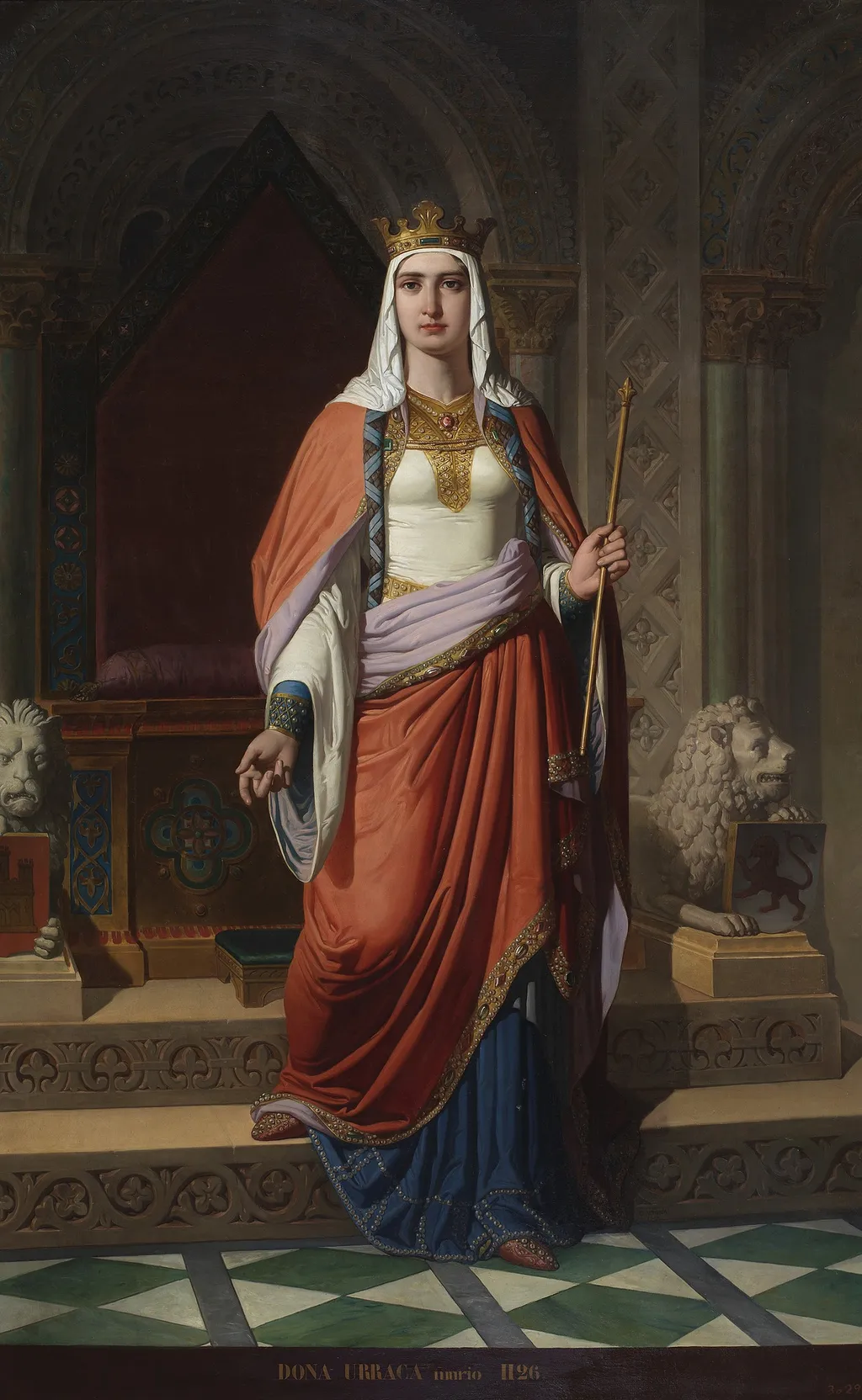
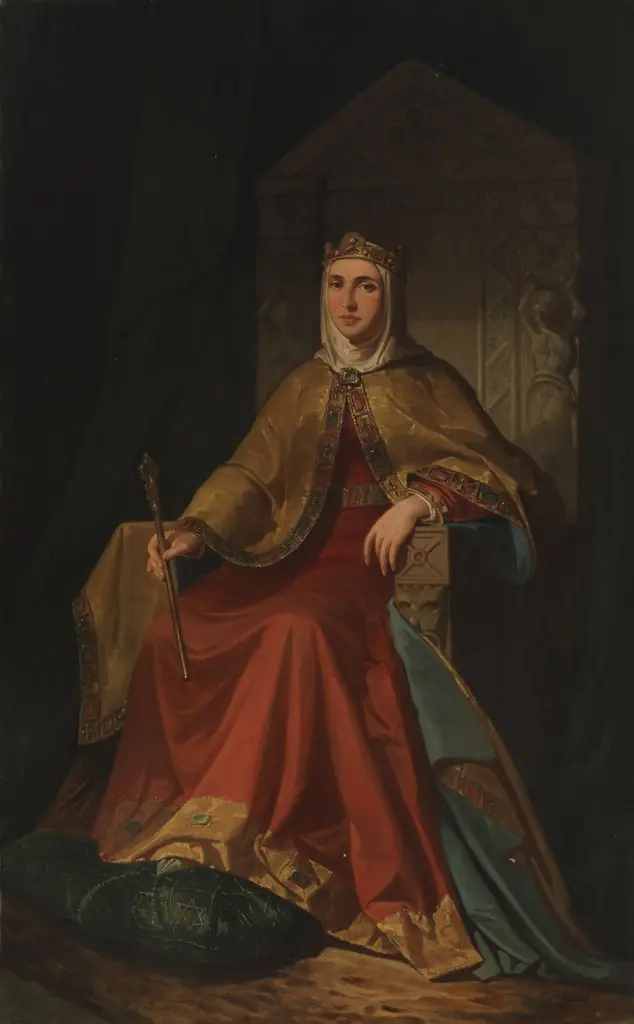
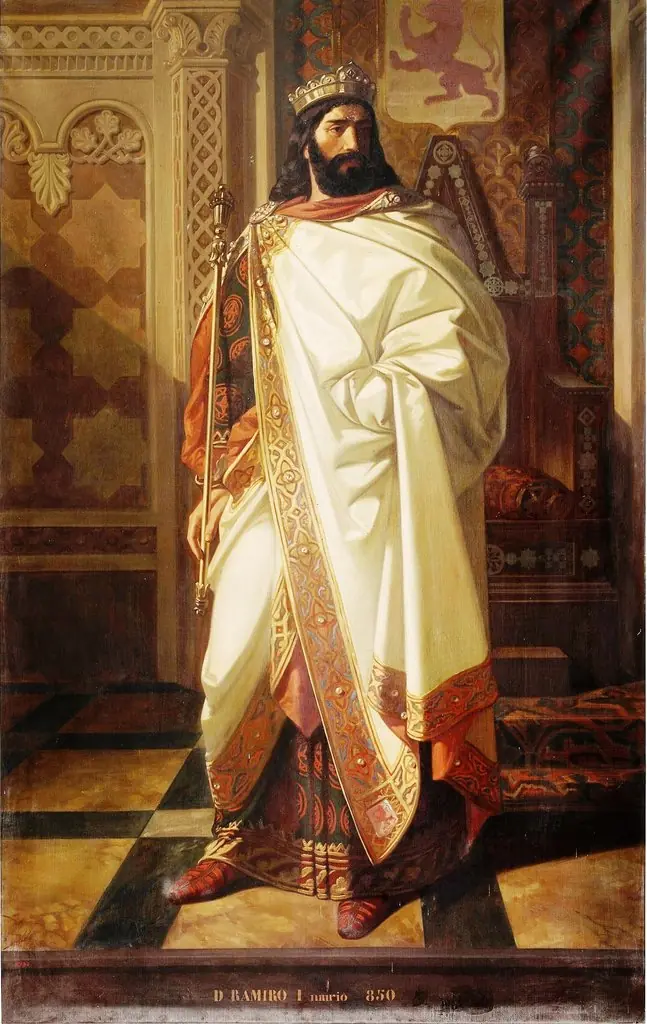
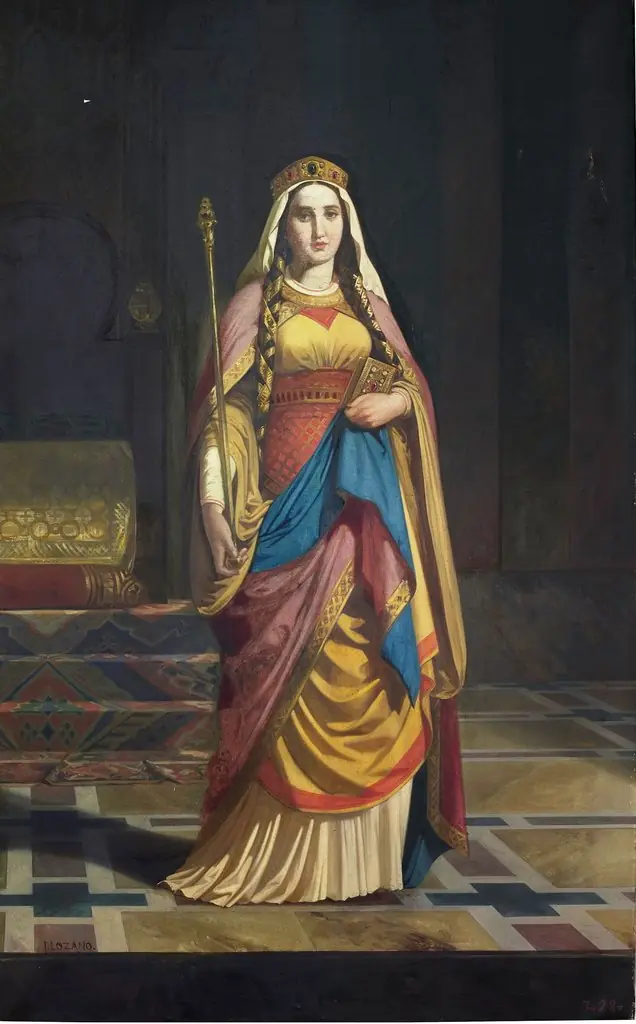
Doña Urraca is an oil painting by Carlos Múgica y Pérez. It dates from 1857 and is held in the collection of the Museo del Prado.
About this work
Subject & Meaning
These elements are accompanied by a coat of arms, collectively representing the authority and lineage associated with the historical figure of Doña Urraca.
Carlos Múgica y Pérez's 1857 oil painting, Doña Urraca, centers on regal iconography rather than a specific narrative scene. The composition explicitly depicts the symbols of monarchy, including a crown, a sceptre, and a throne. These elements are accompanied by a coat of arms, collectively representing the authority and lineage associated with the historical figure of Doña Urraca.
The work functions as an allegorical or heraldic study, using these traditional emblems to convey the status and power of the subject.
Technique & Style
Doña Urraca is an oil painting executed on canvas by Carlos Múgica y Pérez in 1857. The work measures 225 cm in height and 140.5 cm in width. Its formal composition depicts regal iconography, specifically featuring a coat of arms, a throne, a sceptre, and a crown.
The medium consists of oil paint applied to the canvas support, characteristic of mid-19th-century portraiture and ceremonial imagery.
History & Provenance
Doña Urraca is an oil painting on canvas by Carlos Múgica y Pérez, dated 1857. The work is held in the collection of the Museo del Prado, where it remains located. No further details regarding its commission, earlier ownership, or chain of custody are documented in the available sources.
The painting is held in the collection of the Museo del Prado, Madrid, with inventory number P004446.
It was included in the Museo del Prado’s permanent display as part of the Spanish nineteenth-century galleries, where it has remained since entering the collection.
Legacy
Doña Urraca, painted by Carlos Múgica y Pérez in 1857, entered the collection of the Museo del Prado where it remains on display. The work’s formal elements, a heraldic coat of arms, a throne, a sceptre and a crown, have been cited in scholarship as emblematic of 19th‑century Spanish aristocratic portraiture, shaping later interpretations of royal iconography in Spanish art. Its presence in a national museum has contributed to renewed scholarly attention to Múgica y Pérez’s role in nineteenth‑century Spanish painting.
Overview
Created in 1857, the oil work titled Doña Urraca is attributed to Spanish painter Carlos Múgica y Pérez. The canvas is part of the collection of the Museo del Prado, where it is displayed among the institution’s 19th‑century holdings. The composition centers on a female figure rendered in regal attire, surrounded by heraldic symbols that suggest authority and lineage.
Own this work as a print
Artist & collection
Artist
Carlos Múgica y Pérez (1821–1892) was an artist, born in Villanueva de Cameros.