Artwork
Roméo
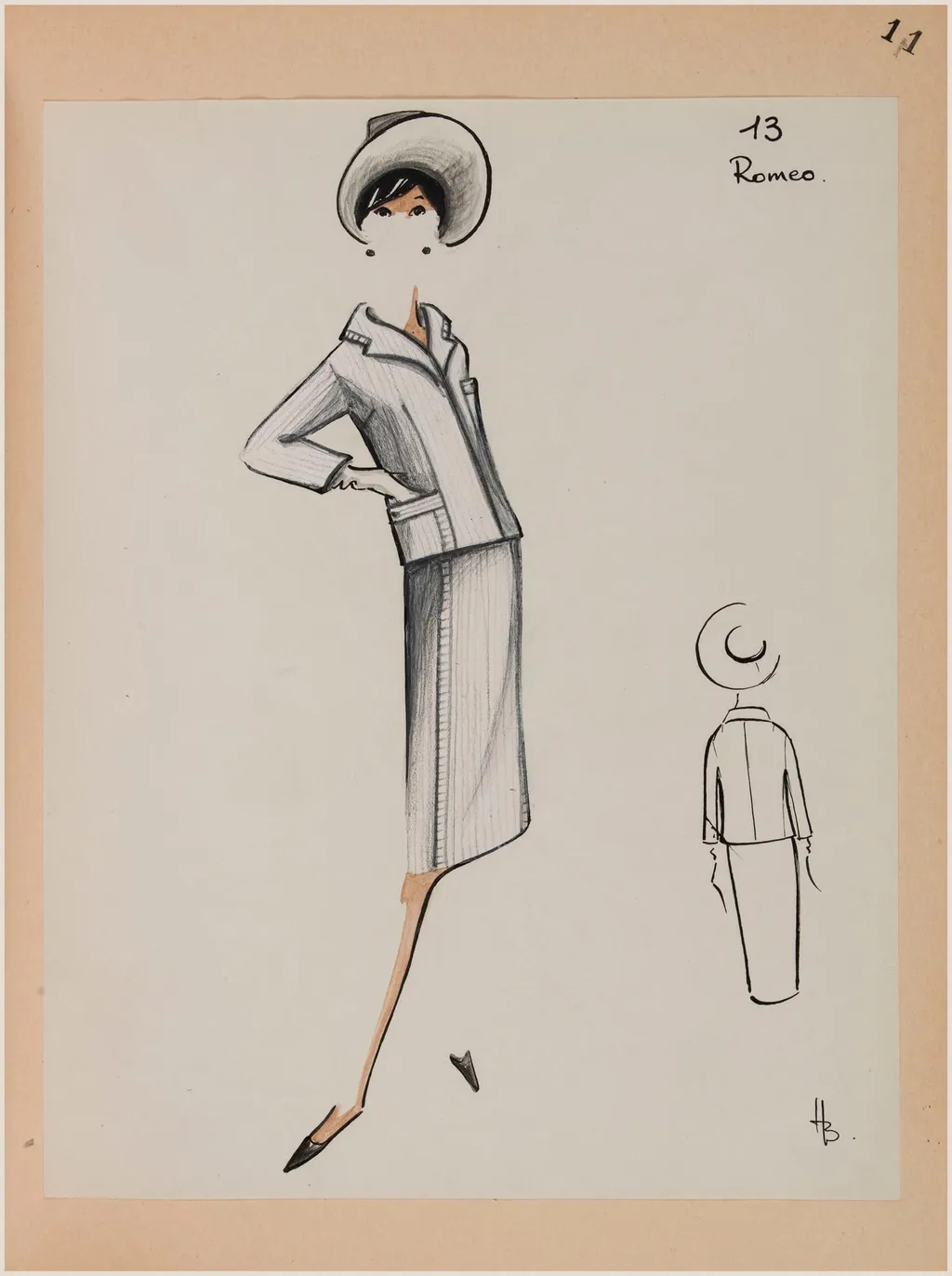
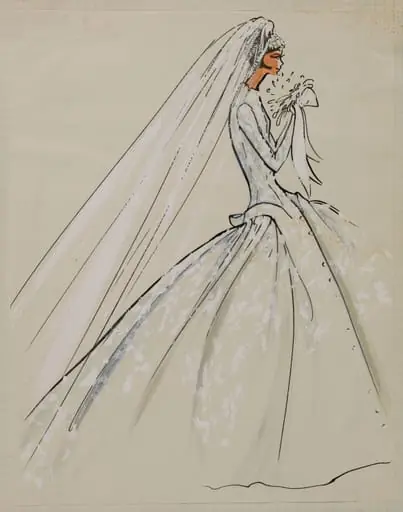
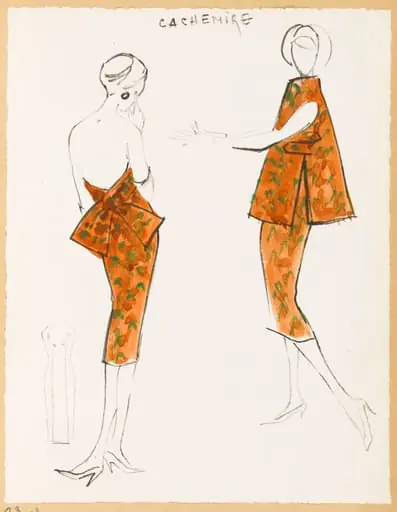
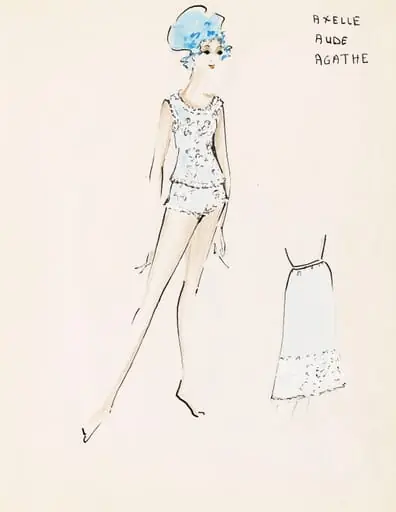
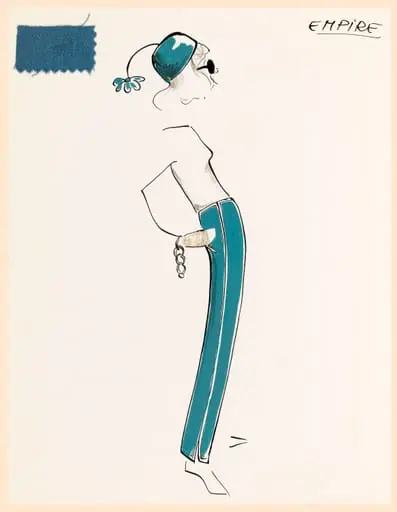
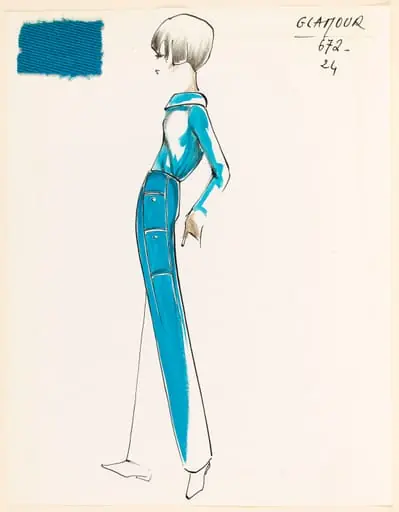
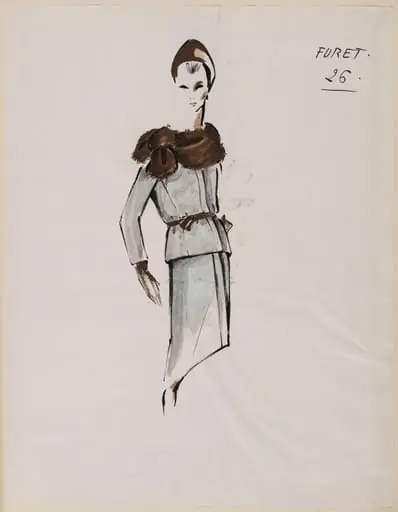
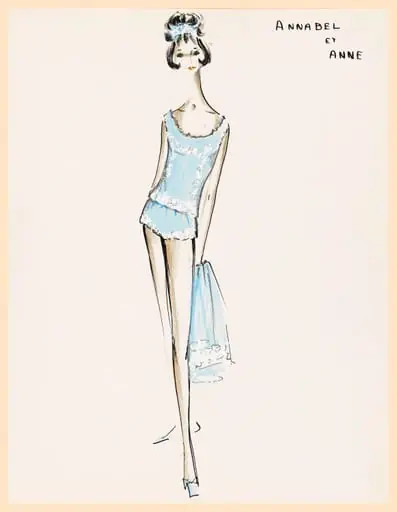
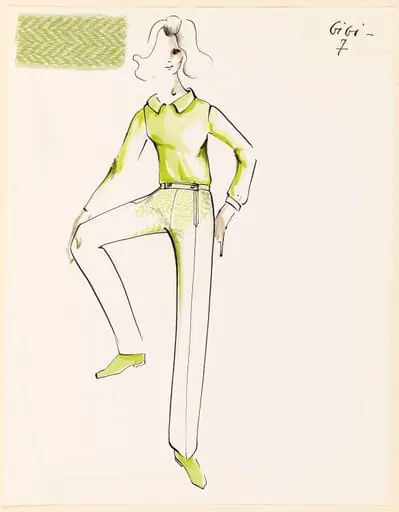
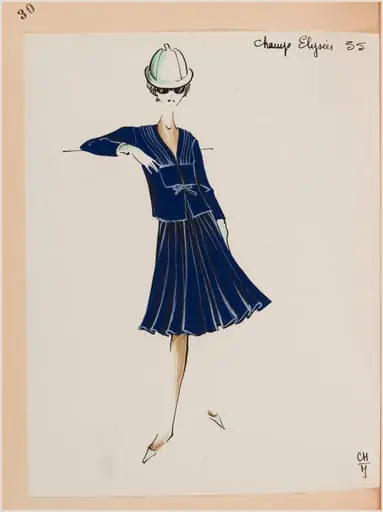
Roméo is a drawing by Carven. It dates from 1963 and is held in the collection of the Palais Galliera - Musée de la Mode de la Ville de Paris.
About this work
Overview
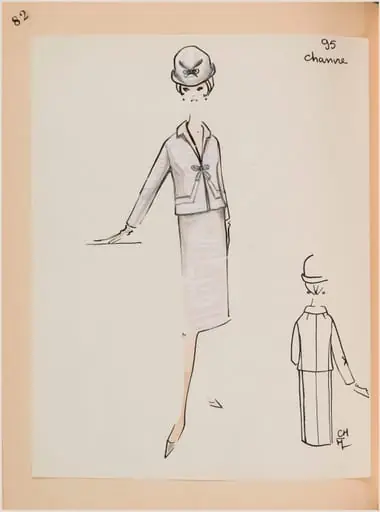
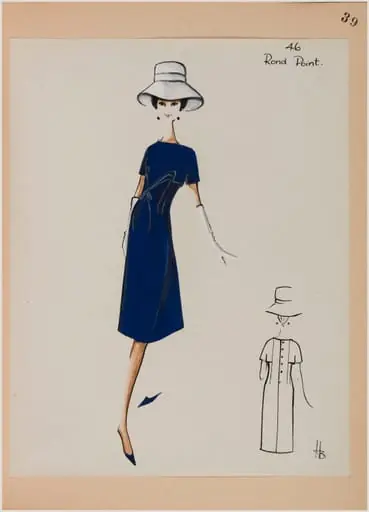
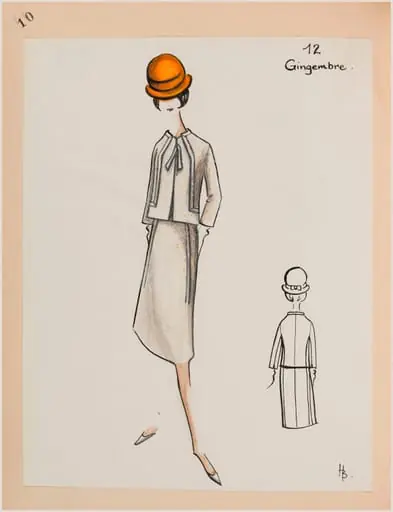
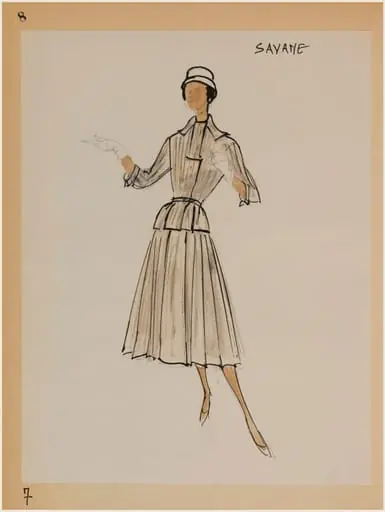
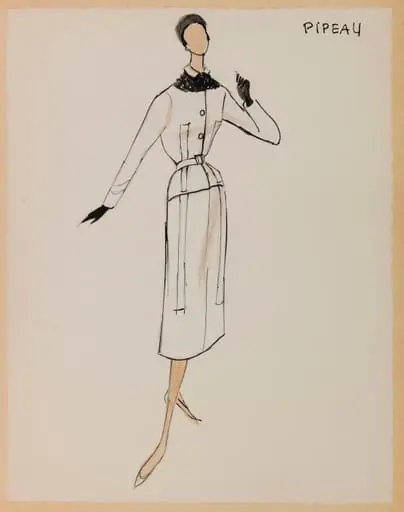
Roméo, executed in 1963 by the French fashion illustrator Carven, is part of the collection at the Museum of Ethnography. The image presents a single female figure dressed in an elegant ensemble, accompanied by a reverse‑view sketch that isolates the jacket and skirt. The work functions as both a fashion study and a graphic composition, reflecting mid‑century design interests.
Subject & Meaning
The central figure is a woman poised with a cigarette holder, her attire comprising a wide‑brimmed hat, a tailored jacket and a gently flared skirt. The inclusion of the rear sketch invites comparison of front and back silhouettes, emphasizing the garment’s structure and movement rather than narrative content.
Technique & Style
Carven employs clean, unadorned lines and simplified geometric shapes to delineate the clothing’s contours. The drawing balances precision with a light, playful quality typical of fashion illustration of the era, using minimal shading to suggest form while maintaining a graphic, almost diagrammatic clarity.
History & Provenance
Created in the early 1960s, Roméo entered the Museum of Ethnography’s holdings as part of its broader acquisition of fashion‑related visual material. The piece reflects Carven’s dual role as designer and illustrator, documenting contemporary dress while serving as a study in silhouette and proportion.
Artist & collection
Artist
These delicate ink-on-paper drawings capture the quiet poetry of everyday things: pinecones, reeds, apples.
Museum
Palais Galliera - Musée de la Mode de la Ville de Paris
Continue through works from the same source collection.