Artwork
Rose de sable
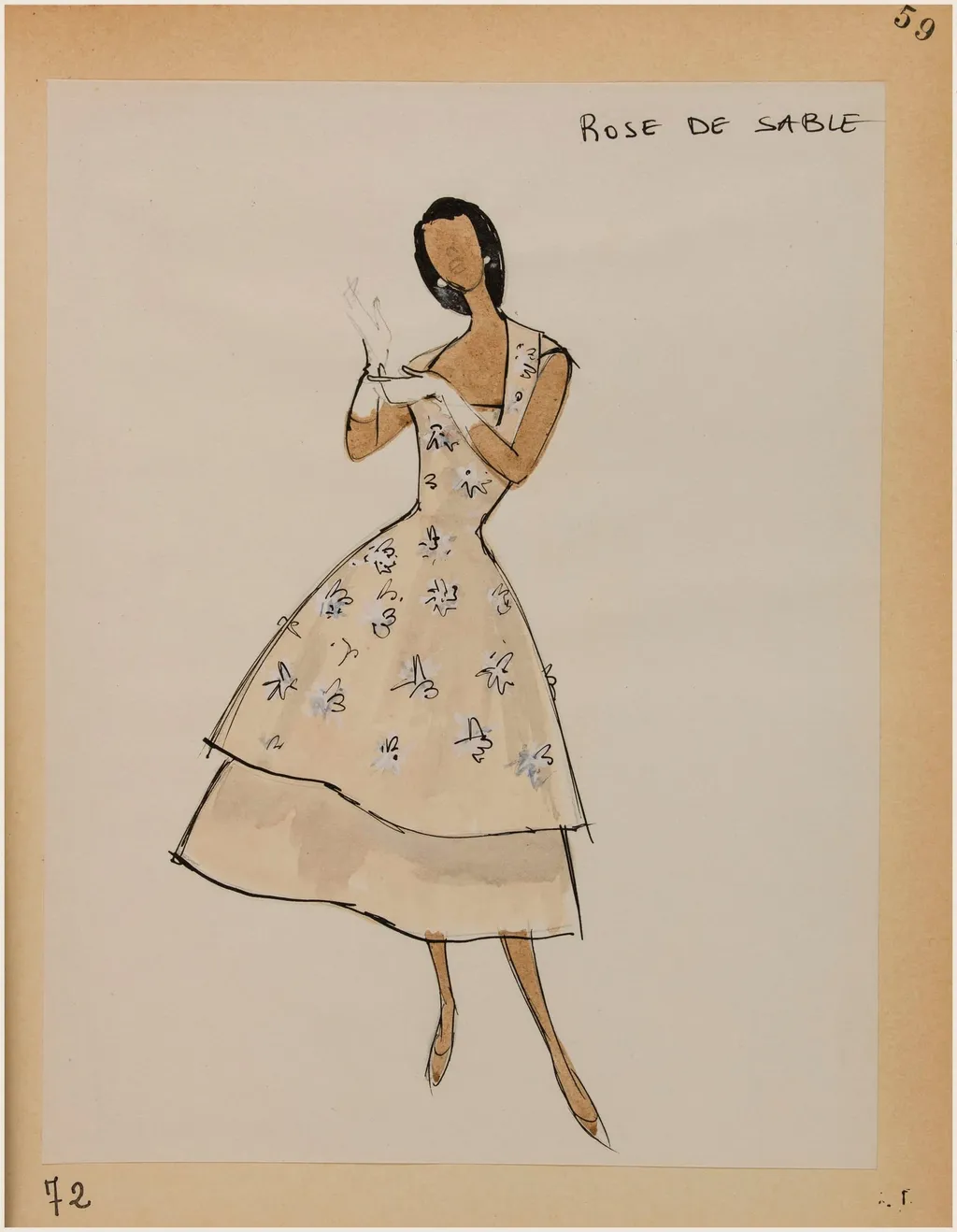
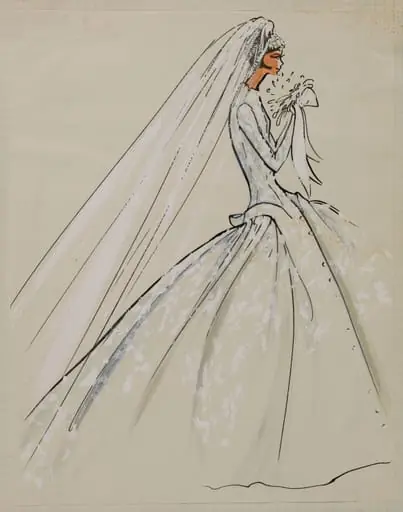
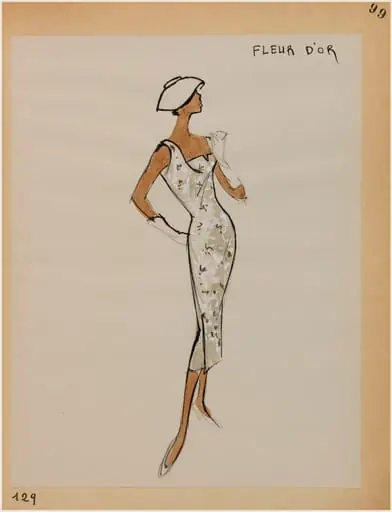
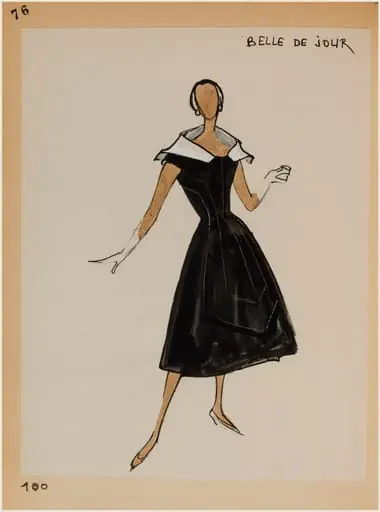
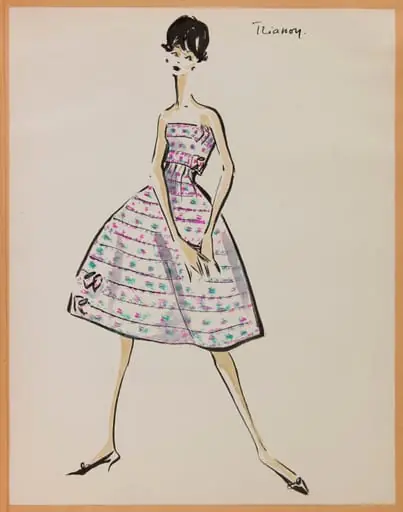
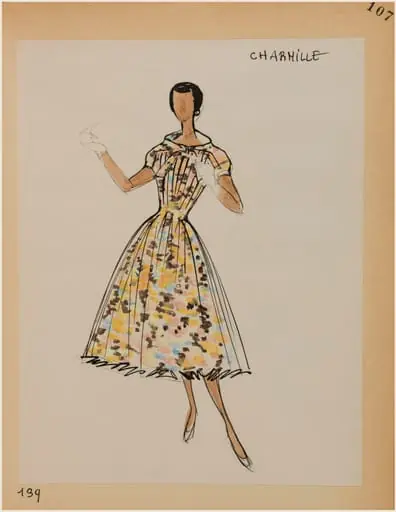
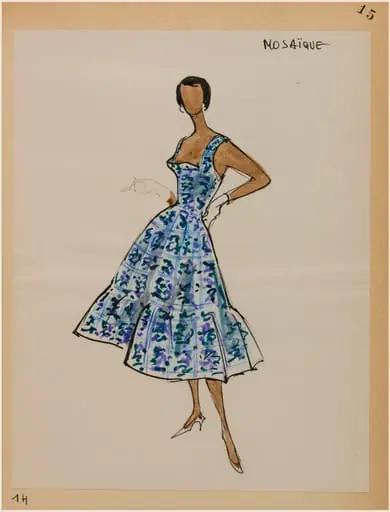
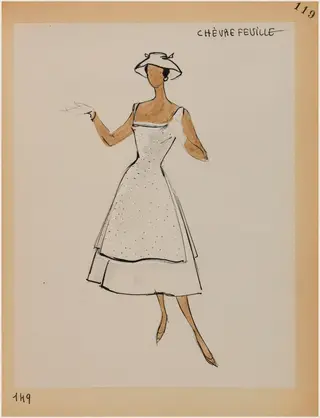
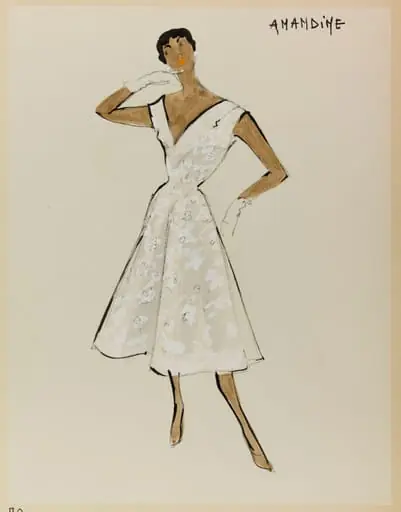
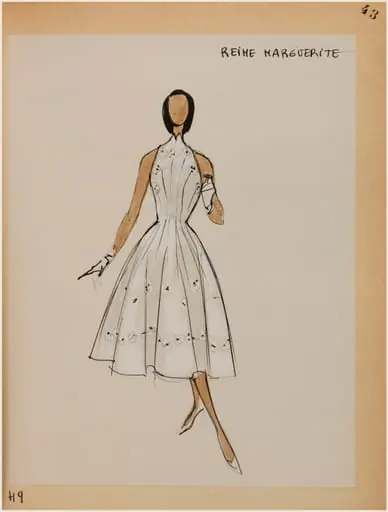
Rose de sable is a drawing by Carven. It dates from 1956 and is held in the collection of the Palais Galliera - Musée de la Mode de la Ville de Paris.
About this work
Overview
Created in 1956 by the French fashion illustrator Carven, Rose de sable is an image held in the collection of the Museum of Ethnography. The work presents a solitary female figure rendered in a loose, sketch‑like manner, emphasizing the fluidity of line and a restrained palette of soft browns and pale hues.
Subject & Meaning
The composition depicts a woman dressed in a simple, flared‑skirted dress, her gaze turned slightly away while she holds a cigarette in one hand. Subtle brushstrokes suggest floral motifs on the garment, and the title, translating to “rose of sand,” alludes to the work’s muted coloration and delicate, almost fleeting, presence.
Technique & Style
Carven employs rapid, gestural strokes that give the drawing the appearance of a fashion sketch rather than a finished portrait. The limited colour range, predominantly earth tones, combined with light, airy washes creates a sense of softness, while the quick application of detail conveys movement and immediacy.
History & Provenance
The piece entered the Museum of Ethnography’s holdings after its creation in the mid‑1950s, though the exact acquisition details remain undocumented. Its presence in an ethnographic context highlights the crossover between fashion illustration and broader cultural visual records of the period.
Context
During the 1950s, fashion illustration often served both commercial and artistic functions, capturing the spirit of post‑war modernity. Carven’s work reflects this dual role, merging the elegance of contemporary dress with a painterly approach that aligns with mid‑century artistic trends toward abstraction and spontaneity.
Artist & collection
Artist
These delicate ink-on-paper drawings capture the quiet poetry of everyday things: pinecones, reeds, apples.
Museum
Palais Galliera - Musée de la Mode de la Ville de Paris
Continue through works from the same source collection.