Artwork
Untitled
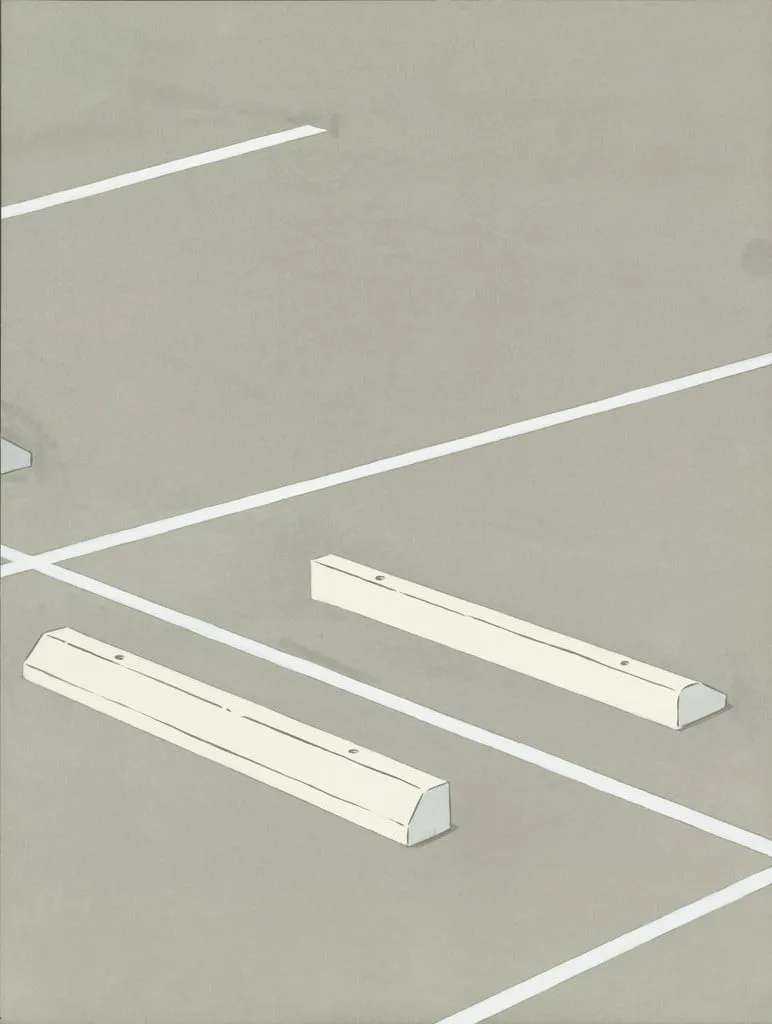
Untitled is a graphite drawing by Chris Ballantyne. It dates from 2003 and is held in the collection of the Museum of Modern Art.
About this work
Overview
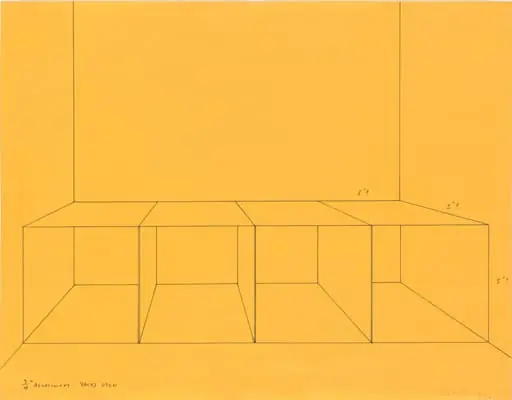
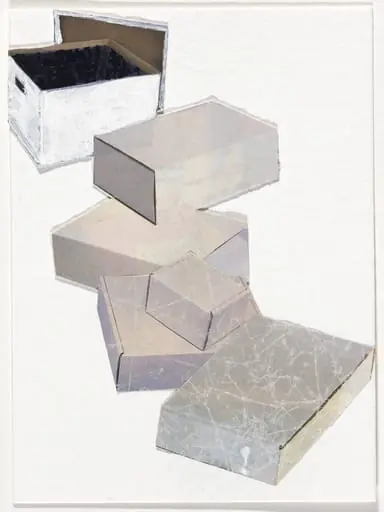
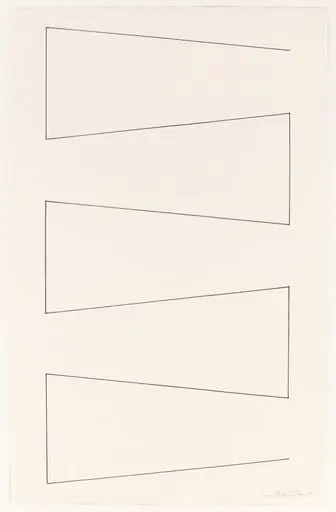
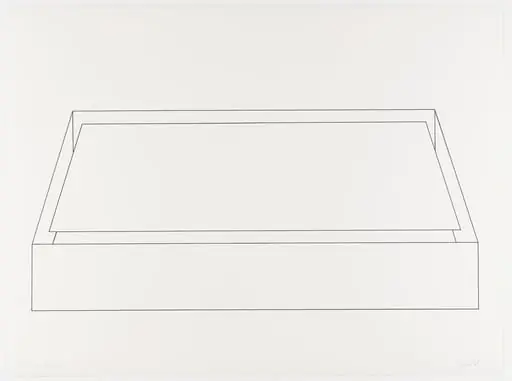
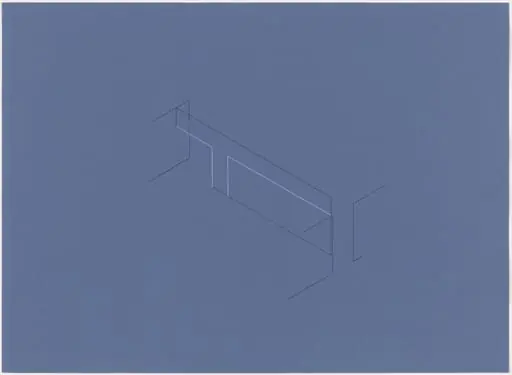
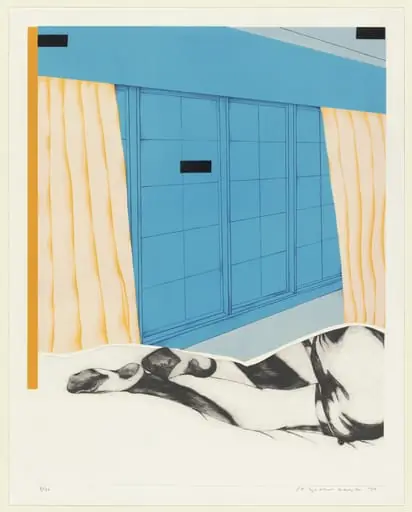
The composition centers on geometric forms arranged in a grid of painted lines, suggesting structured space without depicting vehicles or architecture.
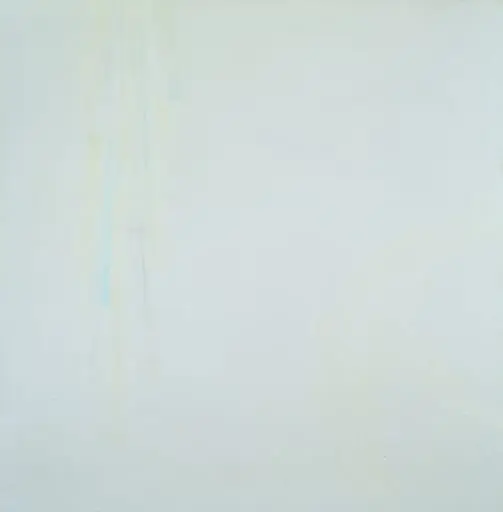
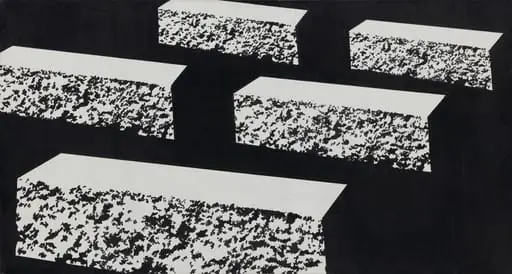
Created in 2003, this drawing by Chris Ballantyne uses synthetic polymer paint and pencil on paper to depict a sparse, abstracted parking lot. The composition centers on geometric forms arranged in a grid of painted lines, suggesting structured space without depicting vehicles or architecture. The muted gray background and stark white elements emphasize reduction and spatial relationships over narrative detail.
Subject & Meaning
The work presents three white, block-like forms positioned within marked parking spaces, their flat tops and angled fronts implying functional barriers. These forms suggest division or regulation within an ordered environment, evoking themes of urban control and institutional design. The absence of people or context invites contemplation of systems that govern public space, rather than telling a specific story.
Technique & Style
Ballantyne employs flat, unmodulated fields of synthetic polymer paint to define shapes, paired with precise pencil lines that delineate the parking grid. The minimal palette, gray and white, reinforces a restrained aesthetic. The technique avoids texture or brushwork, favoring clean edges and uniform surfaces, aligning the work with a minimalist tradition focused on form and spatial logic.
History & Provenance
The drawing entered the collection of The Museum of Modern Art in New York following its creation in 2003. It is one of several works by Ballantyne that explore architectural and urban structures through abstraction. Its acquisition reflects the museum’s interest in post-minimalist drawing practices that interrogate everyday environments through simplified visual language.
Context
Made during a period when many artists were re-examining the aesthetics of infrastructure and institutional design, the work resonates with contemporaneous practices that treated mundane urban elements as subjects worthy of formal inquiry. It aligns with broader trends in late 20th-century art that privileged conceptual clarity over emotional expression.
Legacy
The drawing contributes to an ongoing dialogue in contemporary drawing about how ordinary spaces can be reinterpreted through abstraction. Its inclusion in MoMA’s collection situates Ballantyne’s practice within a lineage of artists who use minimal means to reveal the underlying structures of the built environment, influencing later investigations into urban form.
Artist & collection