Artwork
Pinks
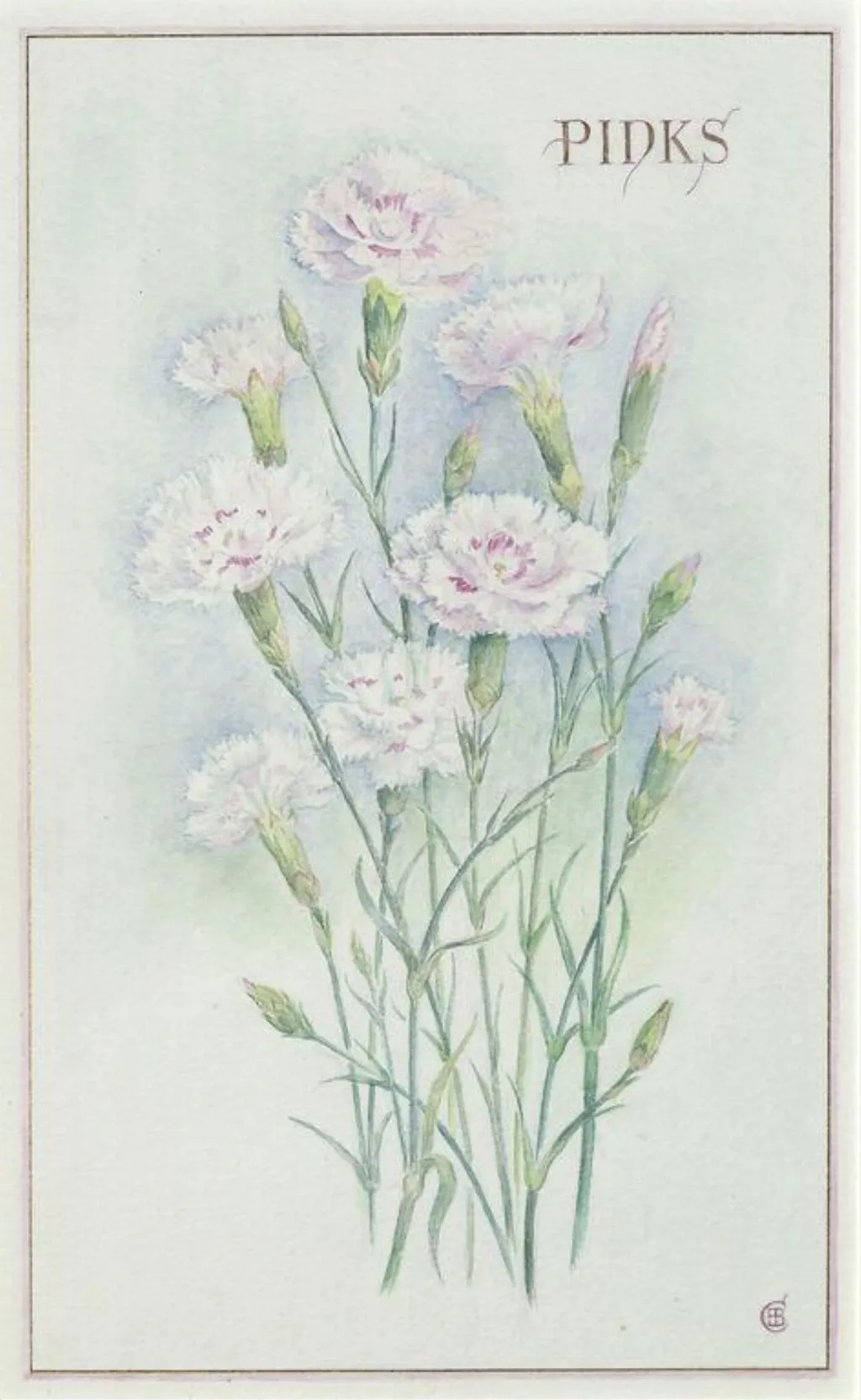
Pinks is a watercolor work on paper by Edith Bertha Crapper. It dates from 1950 and is held in the collection of the Victoria and Albert Museum.
About this work
Overview
The composition avoids ornamentation, focusing instead on the quiet presence of the blooms and their delicate interplay with light and space.
Created in 1950, Pinks is a watercolour painting by Edith Bertha Crapper depicting a modest arrangement of carnations. Executed with subtle washes and minimal detail, the work emphasizes quiet naturalism. The artist’s signature is present, affirming authorship.
The composition avoids ornamentation, focusing instead on the quiet presence of the blooms and their delicate interplay with light and space.
Subject & Meaning
The subject is a loose cluster of pink carnations, their petals fading from soft rose to near-white, with pale centers and slender green stems. There is no symbolic narrative or overt sentiment, only a contemplative observation of botanical form. The flowers appear freshly gathered, arranged without artifice, suggesting an intimate, everyday encounter with nature rather than a formal still life.
Technique & Style
Crapper employed light, translucent watercolour washes to suggest the fragility of petals and the softness of ambient light. Strokes are loose yet deliberate, allowing the paper’s texture to show through and enhance the sense of airiness. The background is a muted, diffused blue, subtly receding to isolate the flowers without competing for attention. No outlines or heavy shading are used, reinforcing the work’s understated aesthetic.
History & Provenance
The painting was completed in 1950 and remains in private hands. No public exhibition history or documented provenance is widely recorded. Its survival as a signed work suggests it was retained by the artist or a close associate.
It has not been included in major institutional collections to date, though it reflects the traditions of British watercolour practice of the mid-20th century.
Context
In post-war Britain, watercolour remained a favoured medium for intimate, observational art, particularly among women artists working outside the academic mainstream. Crapper’s Pinks aligns with this quiet tradition, emphasizing simplicity, natural observation, and technical restraint. It stands apart from the more dramatic or abstract trends of the era, instead valuing stillness and subtlety.
Legacy
Pinks contributes to a lesser-known body of mid-century British watercolours that prioritize quietude over spectacle. While not widely exhibited or studied, it exemplifies a sustained practice of botanical observation rooted in personal engagement rather than public display. Its preservation offers insight into the domestic and artistic rhythms of its time.
Artist & collection
Artist
Edith Bertha Crapper painted delicate watercolors of soft flowers and plants, often in gentle pinks, in the mid-1900s.

 Flowers
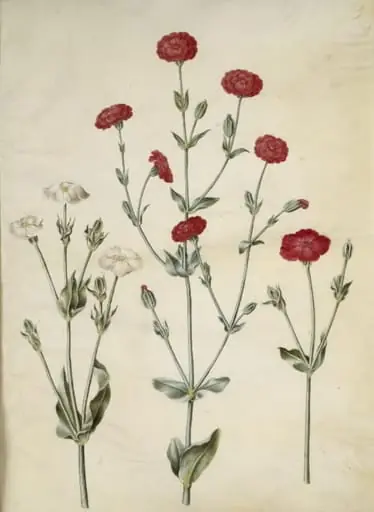 Silene coronaria (krone-limurt)
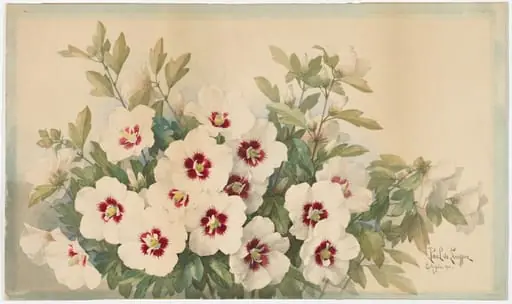 Rosasharn
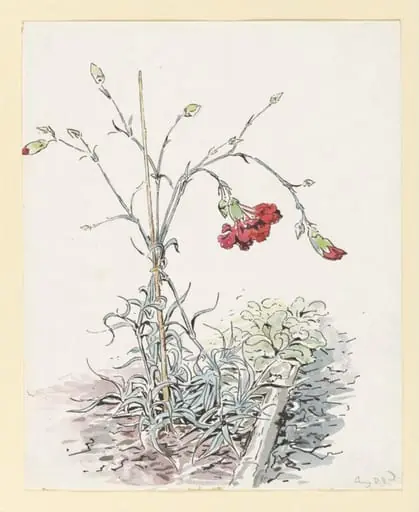 Carnations
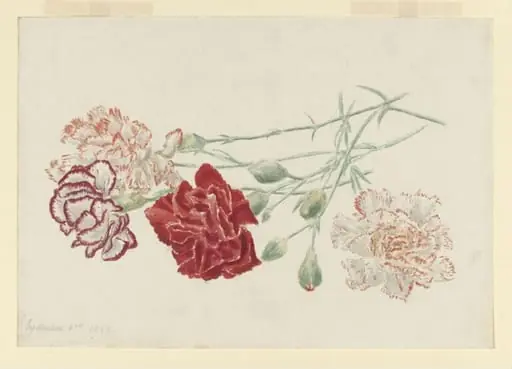 Drawing of laced carnations
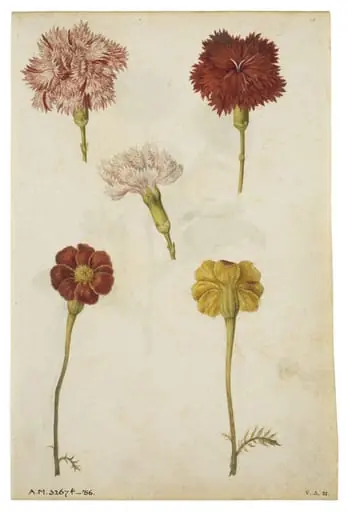 Clove pinks and marigold; Marigold
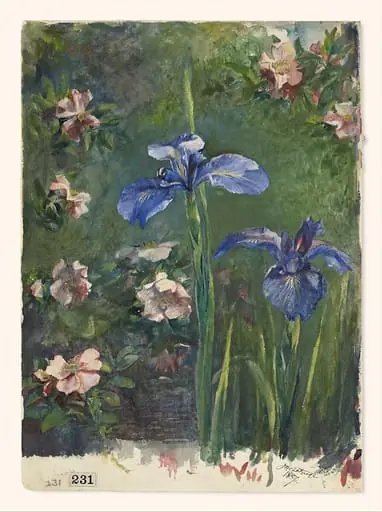 Wild Roses and Irises
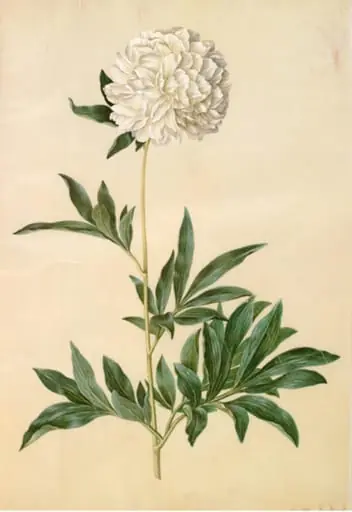 Paeonia lactiflora (silke-pæon)
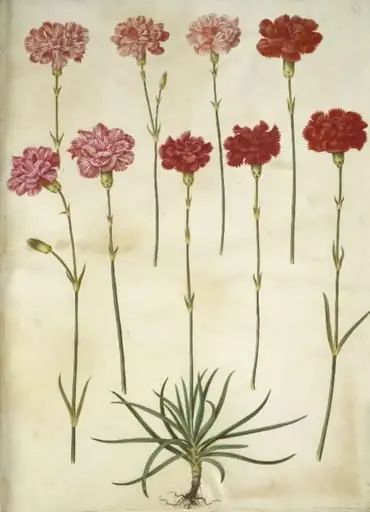 Dianthus caryophyllus (have-nellike)
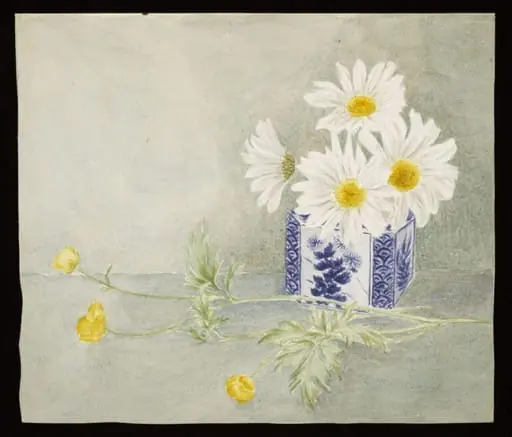 Untitled
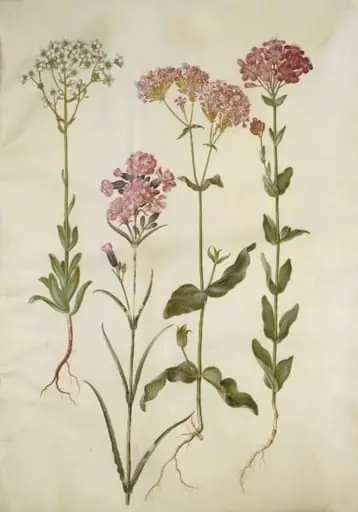 Saxifraga paniculata (klippe-stenbræk); Silene viscaria (almindelig tjærenellike); Silene armeria (knippe-limurt);
- Pink Roses in a Vase