Artwork
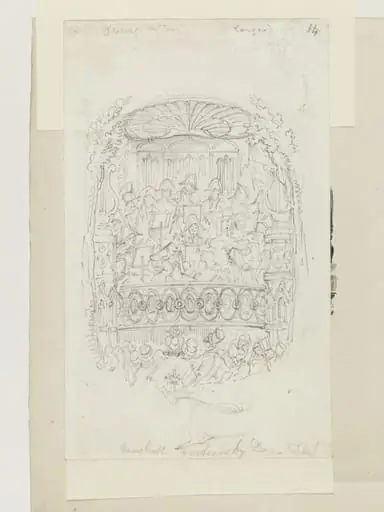
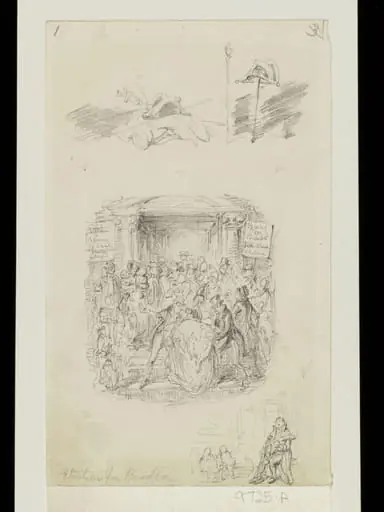
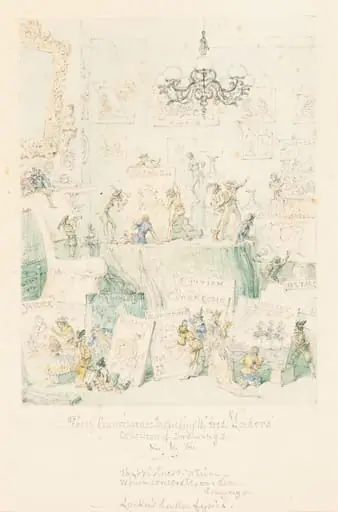
Preliminary drawing for 'The British Bee Hive'.
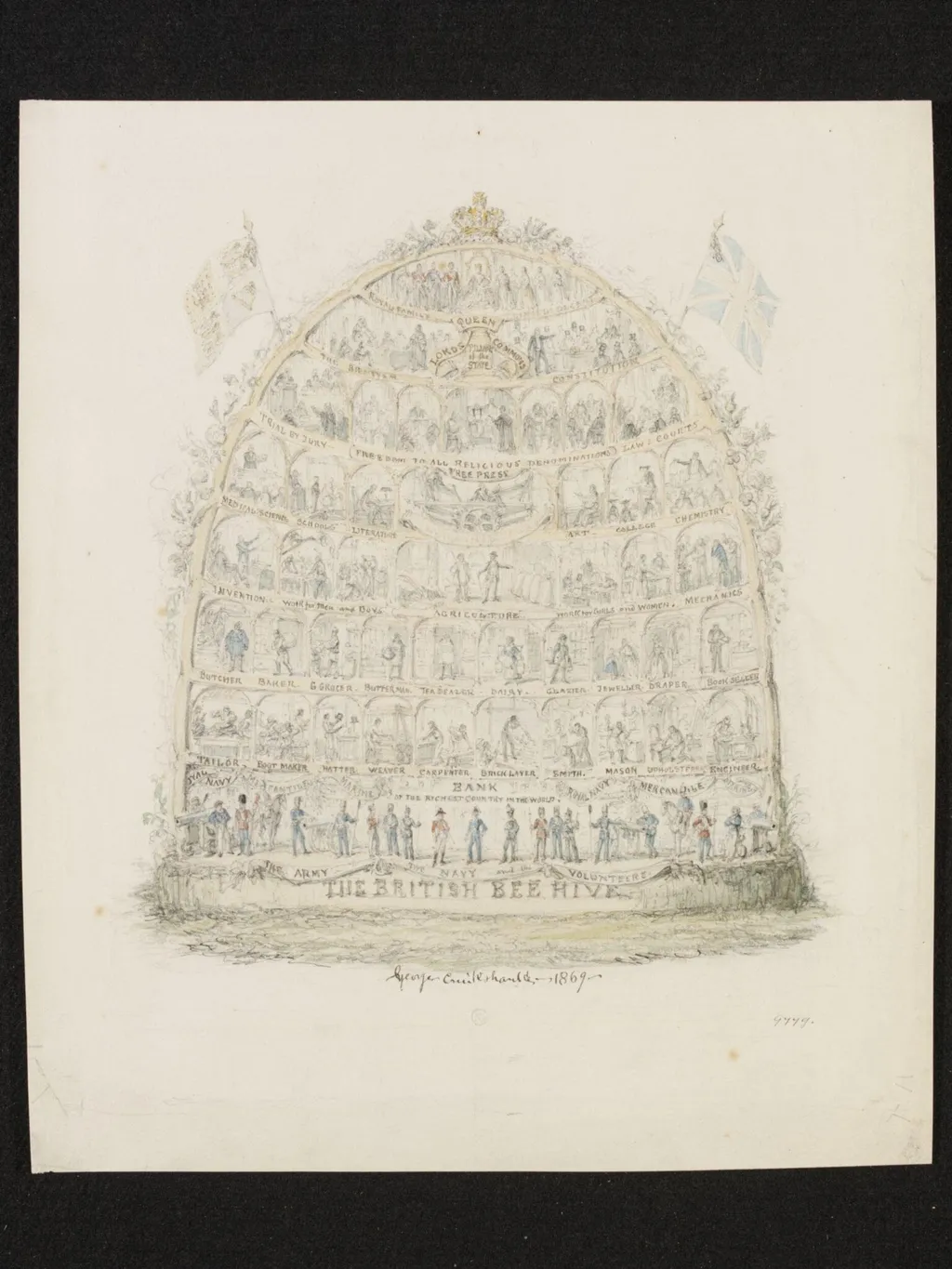
Preliminary drawing for 'The British Bee Hive'. is a drawing by George Cruikshank. It dates from 1850 and is held in the collection of the Victoria and Albert Museum.
About this work
Overview
The drawing was intended to be translated into a printed broadside, reflecting his long-standing engagement with social observation through visual satire.
Created around 1850, this preparatory sketch by George Cruikshank served as a study for the published print titled The British Bee Hive. As a leading British caricaturist, Cruikshank used detailed pen and ink to map out a complex allegory of national life. The drawing was intended to be translated into a printed broadside, reflecting his long-standing engagement with social observation through visual satire.
Subject & Meaning
The drawing depicts a beehive constructed from interconnected honeycomb cells, each housing a distinct social group, tailors, soldiers, bakers, scholars, engaged in their trades. Labels above the cells reference civic ideals such as 'Free Press' and 'Trial by Jury.' The composition suggests an orderly, interdependent society, likening civic function to the labor of bees. It presents a structured vision of British life, emphasizing collective contribution over individualism.
Technique & Style
Executed in fine pen and ink with minimal wash, the drawing demonstrates Cruikshank’s precision in line and dense composition. Figures are rendered with characteristic caricature exaggeration, yet remain legible within the grid-like structure. The artist’s ability to compress hundreds of small, labeled scenes into a single coherent whole reveals his mastery of narrative density and visual economy, hallmarks of his illustrative practice.
History & Provenance
The drawing entered the collection of the Victoria and Albert Museum as part of its holdings of British graphic art. It predates the final printed version, offering insight into Cruikshank’s working process. Its preservation reflects the museum’s interest in documenting the evolution of 19th-century print culture and the role of preparatory studies in commercial illustration.
Context
Produced during a period of rapid industrial and political change in Britain, the drawing responds to contemporary debates about national identity and civic order. Cruikshank’s work often engaged with reformist ideals, and this piece aligns with broader Victorian efforts to visualize social harmony. The hive metaphor, popular in political imagery of the time, reinforced notions of duty and collective progress.
Legacy
Though less widely known today than his earlier satires, this drawing exemplifies Cruikshank’s sustained interest in societal structure. It stands as a detailed record of mid-Victorian civic self-image, illustrating how visual artists contributed to public discourse through allegory. Its survival in a major national collection underscores its value as a document of both artistic process and cultural thought.
Own this work as a print
Artist & collection
Artist
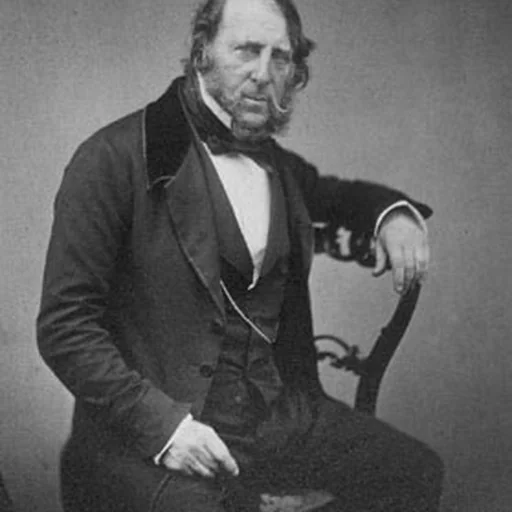
George Cruikshank or Cruickshank ( KRUUK-shank; 27 September 1792 – 1 February 1878) was a British caricaturist and book illustrator, praised as the "modern Hogarth" during his life.

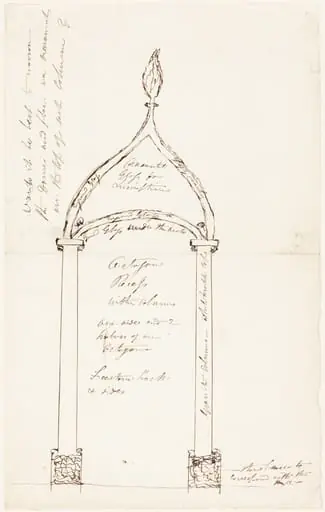 Sketch of Octagon Recess with Columns
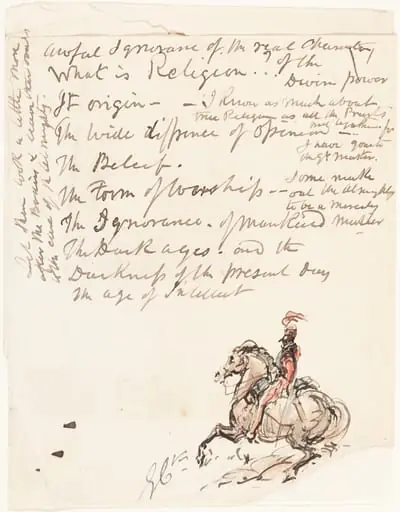 Sketch of Mounted Hussar
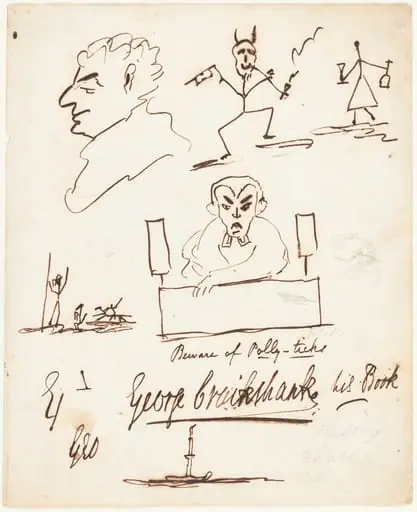 Satirical Sketches
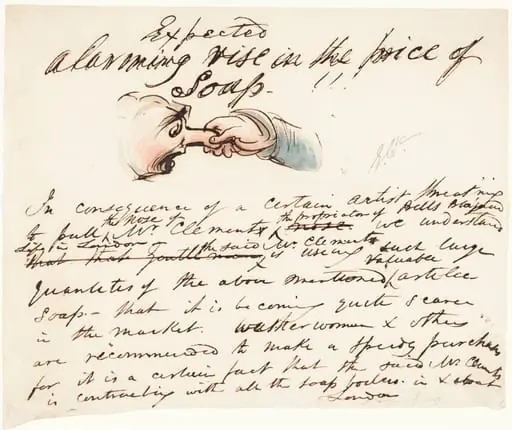 "Expected--alarming rise in the price of soap!"
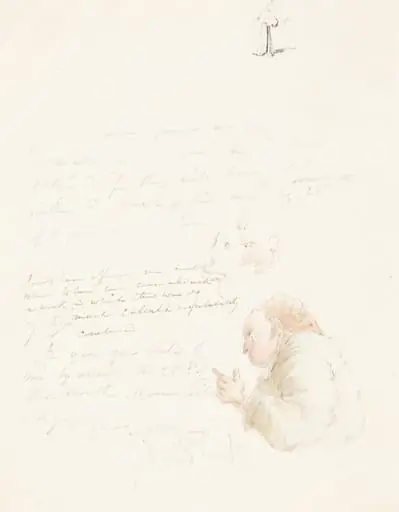 Half-Length of a Lawyer and Other Sketches
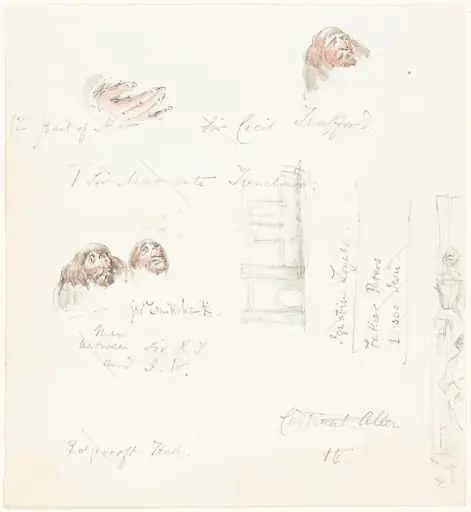 Sketches of Grotesque Faces
 Sketches of Head, Arm, and Kneeling Figure
- Fairy Connoisseurs Inspecting Mr. Frederick Locker's Collection of Drawings