Artwork
Farms in a Court
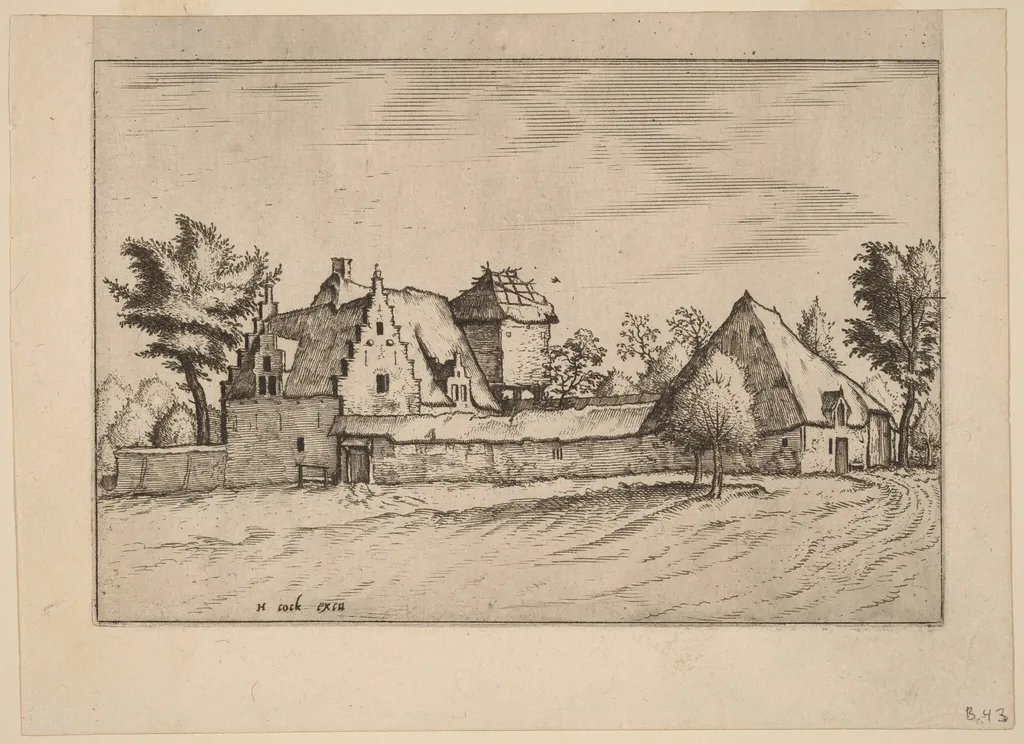
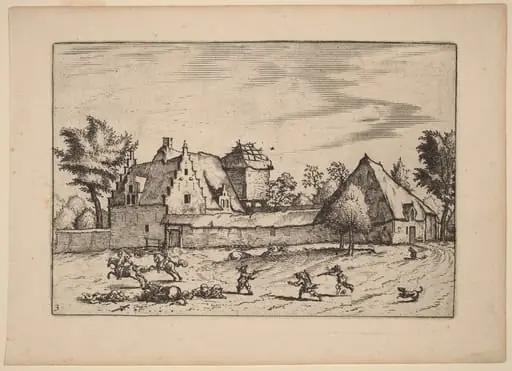
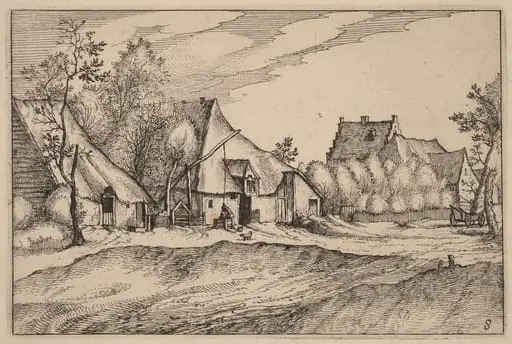
Farms in a Court is an ink print by the Renaissance artist Lucas van Doetechum. It dates from 1560 and is held in the collection of the National Gallery of Art.
About this work
Overview
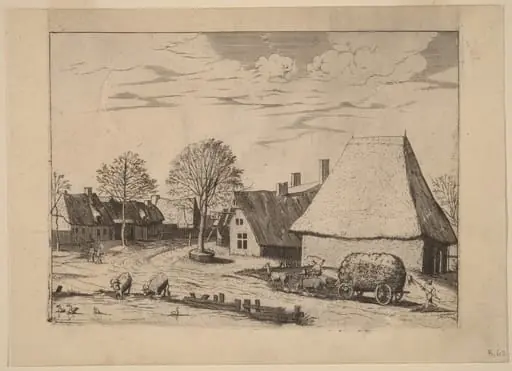
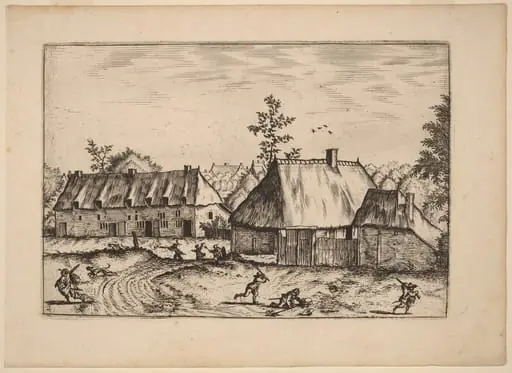
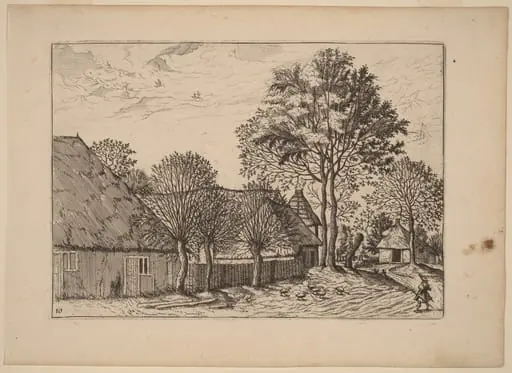
The composition depicts a rural farmyard scene centered on a farmhouse with a thatched roof, a small shuttered window, and a low brick wall.
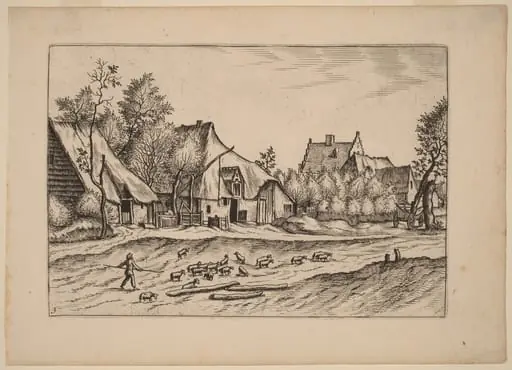
Farms in a Court is an etching retouched with engraving created by Lucas van Doetechum in 1560. The composition depicts a rural farmyard scene centered on a farmhouse with a thatched roof, a small shuttered window, and a low brick wall. The foreground is populated by domestic animals, including chickens and a dog, while two figures walk past a wooden gate on the left.
Van Doetechum employed a hybrid technique, first using acid to bite lines into the metal plate and subsequently carving additional details with an engraving tool to refine the image. This work exemplifies the artist's engagement with Dutch genre scenes during the mid-16th century, capturing everyday rural life with a focus on architectural and animal detail. The piece reflects the broader Netherlandish tradition of documenting vernacular architecture and peasant activities, executed with the precision characteristic of van Doetechum's printmaking practice.
Subject & Meaning
The composition depicts a farmyard enclosed by a low brick wall. A thatched farmhouse with a shuttered window anchors the scene, while chickens peck the ground, a dog watches, and two pedestrians pass through a wooden gate. The arrangement suggests everyday agrarian life, emphasizing the harmony between human activity and the surrounding livestock.
Technique & Style
Van Doetechum employed a dual process on a single copper plate. Initially, he applied acid to bite the primary outlines, producing the etching’s delicate lines and soft gradations. Subsequently, he incised additional details by hand with a burin, adding sharper edges and deeper shadows. This combination yields a nuanced surface where fine texture meets crisp definition.
History & Provenance
The print was produced in the mid‑sixteenth century, a period when Dutch artists increasingly explored domestic subjects. Though specific ownership records are scarce, the work survives in several European print collections, indicating its circulation among connoisseurs of the era. Its preservation attests to the durability of the metal‑plate technique employed by van Doetechum.
Own this work as a print
Artist & collection