Artwork
Untitled
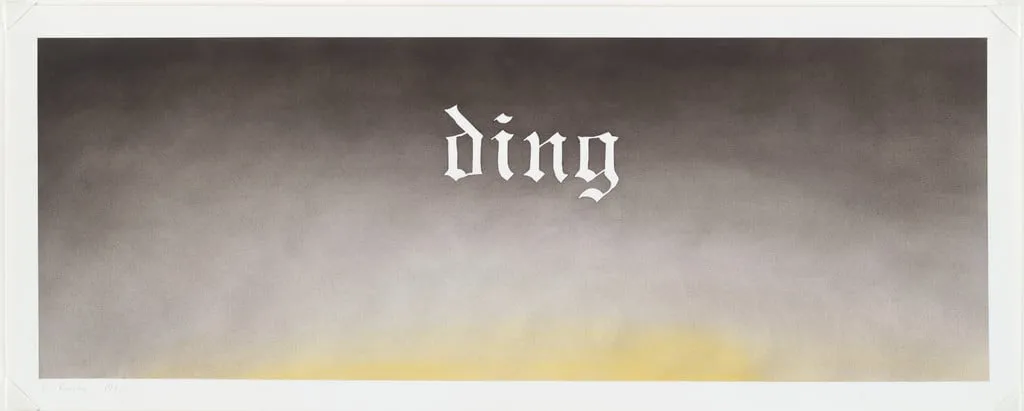
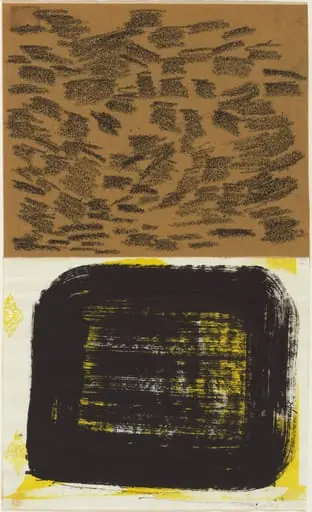
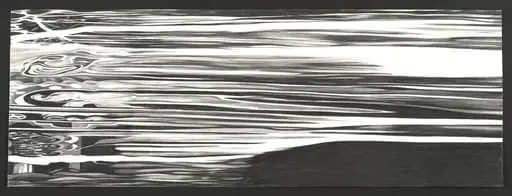
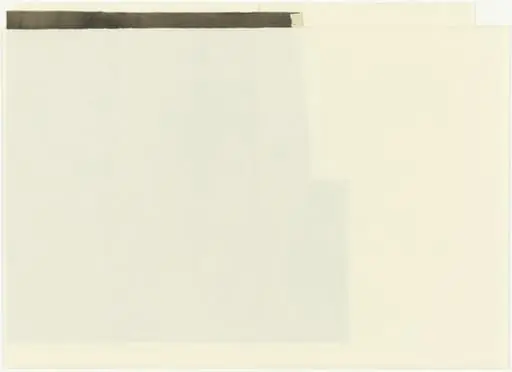
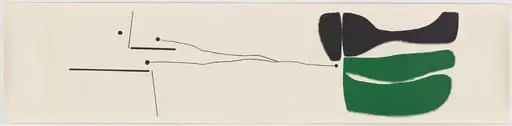
Untitled is a pastel drawing by Edward Ruscha. It dates from 1971 and is held in the collection of the Museum of Modern Art.
About this work
Overview
The work belongs to a series in which Ruscha experimented with explosive materials to produce unpredictable marks, merging chance with deliberate composition.
Created in 1971, this drawing by Edward Ruscha combines gunpowder and pastel on paper, reflecting his interest in nontraditional media. The work belongs to a series in which Ruscha experimented with explosive materials to produce unpredictable marks, merging chance with deliberate composition. Its modest scale and fragile medium contrast with the weight of its textual element, grounding the piece in both material innovation and linguistic ambiguity.
Subject & Meaning
The word 'ding' appears in stark white, Gothic script at the center, its form evoking both signage and typographic decay. The term, a hollow onomatopoeia, resists clear narrative, functioning more as a sonic residue than a statement. Paired with a muted, luminous ground suggesting dawn or dusk, the word feels suspended between presence and erasure, inviting contemplation on language’s fragility and the limits of meaning.
Technique & Style
Ruscha applied gunpowder to paper, then ignited it, allowing controlled explosions to leave charred, smoky traces that blend with soft pastel hues. The result is a textured surface where ash and pigment merge unpredictably, creating a subtle gradient from gray-brown to a faint yellow glow at the base. The hand-drawn letters, rendered in precise Gothic type, stand in deliberate contrast to the chaotic medium, emphasizing tension between control and accident.
History & Provenance
This work entered The Museum of Modern Art’s collection shortly after its creation, reflecting institutional recognition of Ruscha’s experimental approach during the early 1970s. It is one of several gunpowder drawings from this period, part of a broader shift in his practice toward material-based investigations. Its preservation underscores its significance within a body of work that redefined drawing as a site of process and material inquiry.
Context
Emerging from the Los Angeles art scene, Ruscha’s work responded to the visual culture of signage, advertising, and vernacular language. In the early 1970s, he increasingly turned to ephemeral materials to challenge the permanence traditionally associated with fine art. This piece aligns with contemporaneous explorations by artists using industrial or volatile substances, questioning authorship, durability, and the role of the artist as maker.
Legacy
Ruscha’s use of gunpowder in this drawing influenced later artists investigating process, destruction, and material transformation in drawing. The work remains a key example of how language and medium can be destabilized together, expanding the boundaries of what a drawing can be. Its quiet presence in MoMA’s collection continues to prompt reconsideration of art’s relationship to impermanence and linguistic ambiguity.
Artist & collection
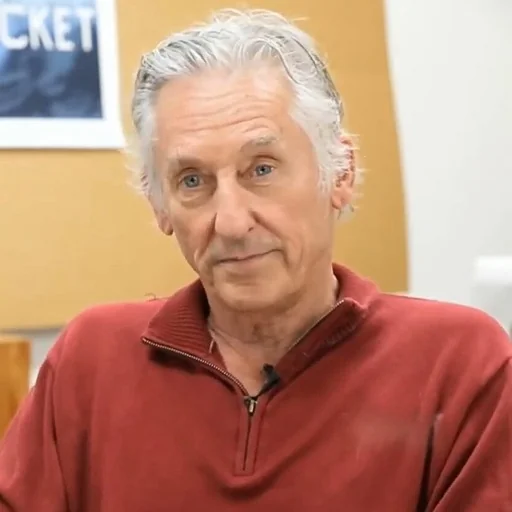
Artist
Edward Joseph Ruscha IV (, roo-SHAY; born December 16, 1937) is an American artist associated with the pop art movement.